MENU

Bibliography Options Menu

The Electronic Scholarly Publishing Project: Providing world-wide, free access to classic scientific papers and other scholarly materials, since 1993.
More About: ESP | OUR CONTENT | THIS WEBSITE | WHAT'S NEW | WHAT'S HOT
ESP: PubMed Auto Bibliography 19 Oct 2026 at 01:47 Created:
History of Genetics
Created with PubMed® Query: genetics (classical OR mendelian) genetics history[mesh] NOT pmcbook NOT ispreviousversion
Citations The Papers (from PubMed®)
RevDate: 2026-09-10
CmpDate: 2026-09-10
The first 25 years of the NICHD structural birth defects initiative.
Developmental biology, 539:135-139.
Initiated by NICHD and crafted with clinicians and laboratory scientists, the Structural Birth Defects (SBD) Initiative has supported research into the clinical, genetic, biochemical, mechanistic, developmental, and environmental basis of human disorders with structural anomalies for 25 years. The SBD Initiative has supported and continues to fund research teams studying a broad spectrum of single gene (Mendelian) disorders along with defining loci and susceptibility genes in oligogenic phenotypes, including genetic and environmental risk modifiers. The Initiative required and currently convenes biennial meetings of SBD investigators to share data, exchange ideas and initiate collaborations. In alternate years, online trainee symposia provide a platform for medical fellows, postdoctoral fellows and graduate students to present their data, with the goal of attracting and retaining this future generation of investigators in SBD research. In addition to determining their etiology, the SBD Initiative has supported remarkable progress in developing a fundamental mechanistic understanding of this diverse group of phenotypes. Together, scientific progress has led to translational benefits that include 1) widespread diagnostic testing for families with these disorders, both within the United States and across the world, and 2) pharmacological treatments for affected individuals. This progress has fulfilled the promise of the vision of the architects of the program, which is reviewed in this article, and continues to drive the field forward.
Additional Links: PMID-42595028
Publisher:
PubMed:
Citation:
show bibtex listing
hide bibtex listing
@article {pmid42595028,
year = {2026},
author = {Cohn, DH and Burdine, RD and Stottmann, R},
title = {The first 25 years of the NICHD structural birth defects initiative.},
journal = {Developmental biology},
volume = {539},
number = {},
pages = {135-139},
doi = {10.1016/j.ydbio.2026.08.005},
pmid = {42595028},
issn = {1095-564X},
mesh = {Humans ; *Congenital Abnormalities/genetics/diagnosis ; United States ; History, 21st Century ; Animals ; Phenotype ; },
abstract = {Initiated by NICHD and crafted with clinicians and laboratory scientists, the Structural Birth Defects (SBD) Initiative has supported research into the clinical, genetic, biochemical, mechanistic, developmental, and environmental basis of human disorders with structural anomalies for 25 years. The SBD Initiative has supported and continues to fund research teams studying a broad spectrum of single gene (Mendelian) disorders along with defining loci and susceptibility genes in oligogenic phenotypes, including genetic and environmental risk modifiers. The Initiative required and currently convenes biennial meetings of SBD investigators to share data, exchange ideas and initiate collaborations. In alternate years, online trainee symposia provide a platform for medical fellows, postdoctoral fellows and graduate students to present their data, with the goal of attracting and retaining this future generation of investigators in SBD research. In addition to determining their etiology, the SBD Initiative has supported remarkable progress in developing a fundamental mechanistic understanding of this diverse group of phenotypes. Together, scientific progress has led to translational benefits that include 1) widespread diagnostic testing for families with these disorders, both within the United States and across the world, and 2) pharmacological treatments for affected individuals. This progress has fulfilled the promise of the vision of the architects of the program, which is reviewed in this article, and continues to drive the field forward.},
}
MeSH Terms:
show MeSH Terms
hide MeSH Terms
Humans
*Congenital Abnormalities/genetics/diagnosis
United States
History, 21st Century
Animals
Phenotype
RevDate: 2026-09-09
CmpDate: 2026-09-09
Lifestyle Impacts the Oral Microbiome of Classical and Post-Classical Societies in Italy.
American journal of biological anthropology, 191(1):e70357.
OBJECTIVES: The fall of the Roman Empire (476 CE) profoundly affected the lives of its peoples due to the political, administrative, and territorial changes that occurred. The majority of written records of the time focus on the social élite, leaving larger parts of the population understudied. Here, we employ a bioarchaeological approach to understand how differences in lifestyle may be reflected in the oral microbiome of people from different social classes living before and after the fall.
MATERIAL AND METHODS: We analyzed shotgun sequencing data from dental calculus, the preserved oral microbiome, of 67 individuals belonging to different social classes from two Classical cemeteries (I-III century CE, Lucus Feroniae and Isola Sacra) and one post-Classical cemetery (IV-VIII century CE, Selvicciola), all located in proximity to the city of Rome, Italy.
RESULTS: We detect significant differences in the taxonomic and functional composition of the oral microbiome between the three sites, with the rural town of Lucus Feroniae standing out compared to its two counterparts. Reliable identification of dietary items was not possible.
DISCUSSION: The distinct oral microbiome of Lucus Feroniae could reflect differences in general health and subsistence practices, in line with previously published isotopic and morphological data. Its rural position may have mitigated the cyclical food crises that affected the contemporary Isola Sacra and the later community of Selvicciola, buffering it against the nutritional stress observed in these two locations. This finding supports the temporal stability of the dental calculus microbiome while highlighting the impact of lifestyle on the oral microbial communities.
Additional Links: PMID-42711992
Publisher:
PubMed:
Citation:
show bibtex listing
hide bibtex listing
@article {pmid42711992,
year = {2026},
author = {Farese, M and Moraitou, M and Jin, C and Forsythe, A and Micarelli, I and van der Valk, T and Manzi, G and Parducci, L and Tafuri, MA and Guschanski, K},
title = {Lifestyle Impacts the Oral Microbiome of Classical and Post-Classical Societies in Italy.},
journal = {American journal of biological anthropology},
volume = {191},
number = {1},
pages = {e70357},
doi = {10.1002/ajpa.70357},
pmid = {42711992},
issn = {2692-7691},
support = {//Bertil Lundman Foundation for Anthropological Studies (Swedish Phytogeographical Society)/ ; DOT1326JZS//Italian Ministry of University and Research (MUR)/ ; },
mesh = {Humans ; *Microbiota/genetics ; Italy ; History, Ancient ; *Life Style/history ; Dental Calculus/microbiology ; DNA, Ancient/analysis ; *Mouth/microbiology ; Roman World/history ; },
abstract = {OBJECTIVES: The fall of the Roman Empire (476 CE) profoundly affected the lives of its peoples due to the political, administrative, and territorial changes that occurred. The majority of written records of the time focus on the social élite, leaving larger parts of the population understudied. Here, we employ a bioarchaeological approach to understand how differences in lifestyle may be reflected in the oral microbiome of people from different social classes living before and after the fall.
MATERIAL AND METHODS: We analyzed shotgun sequencing data from dental calculus, the preserved oral microbiome, of 67 individuals belonging to different social classes from two Classical cemeteries (I-III century CE, Lucus Feroniae and Isola Sacra) and one post-Classical cemetery (IV-VIII century CE, Selvicciola), all located in proximity to the city of Rome, Italy.
RESULTS: We detect significant differences in the taxonomic and functional composition of the oral microbiome between the three sites, with the rural town of Lucus Feroniae standing out compared to its two counterparts. Reliable identification of dietary items was not possible.
DISCUSSION: The distinct oral microbiome of Lucus Feroniae could reflect differences in general health and subsistence practices, in line with previously published isotopic and morphological data. Its rural position may have mitigated the cyclical food crises that affected the contemporary Isola Sacra and the later community of Selvicciola, buffering it against the nutritional stress observed in these two locations. This finding supports the temporal stability of the dental calculus microbiome while highlighting the impact of lifestyle on the oral microbial communities.},
}
MeSH Terms:
show MeSH Terms
hide MeSH Terms
Humans
*Microbiota/genetics
Italy
History, Ancient
*Life Style/history
Dental Calculus/microbiology
DNA, Ancient/analysis
*Mouth/microbiology
Roman World/history
RevDate: 2004-11-17
CmpDate: 1997-10-02
Jean Brachet, l'hérédité générale and the origins of molecular embryology.
History and philosophy of the life sciences, 19(1):69-87.
Jean Brachet's research on microsomes and the role of RNA in protein synthesis during the 1940s and 50s is placed in the context of embryological views about the role of the cytoplasm in development, and plasmagene theory based on studies of non-Mendelian inheritance in microorganisms. I show how Brachet's subsequent conception of messenger RNA evolved in the context of his conceptions of the relations between plasmagenes and nuclear genes. His theorizing on cytoplasmic organelles and viruses is further situated in the bio-political controversy over the inheritance of acquired characteristics during the Lysenko controversy.
Additional Links: PMID-9284643
PubMed:
Citation:
show bibtex listing
hide bibtex listing
@article {pmid9284643,
year = {1997},
author = {Sapp, J},
title = {Jean Brachet, l'hérédité générale and the origins of molecular embryology.},
journal = {History and philosophy of the life sciences},
volume = {19},
number = {1},
pages = {69-87},
pmid = {9284643},
issn = {0391-9714},
mesh = {Animals ; Belgium ; History, 20th Century ; Humans ; Molecular Biology/*history ; Research/history ; },
abstract = {Jean Brachet's research on microsomes and the role of RNA in protein synthesis during the 1940s and 50s is placed in the context of embryological views about the role of the cytoplasm in development, and plasmagene theory based on studies of non-Mendelian inheritance in microorganisms. I show how Brachet's subsequent conception of messenger RNA evolved in the context of his conceptions of the relations between plasmagenes and nuclear genes. His theorizing on cytoplasmic organelles and viruses is further situated in the bio-political controversy over the inheritance of acquired characteristics during the Lysenko controversy.},
}
MeSH Terms:
show MeSH Terms
hide MeSH Terms
Animals
Belgium
History, 20th Century
Humans
Molecular Biology/*history
Research/history
RevDate: 2004-11-17
CmpDate: 1998-10-08
The evolution of the diagnosis and understanding of primitive and embryonic neoplasms in children: living through an epoch.
Modern pathology : an official journal of the United States and Canadian Academy of Pathology, Inc, 11(7):669-685.
Approximately 30% of malignant neoplasms in children are dysontogenetic tumors whose pathologic features resemble or recapitulate those of the developing organ or tissue of origin. Archetypes include classic neuroblastoma, Wilms' tumor, and embryonal rhabdomyosarcoma. This review traces the history of the principal types of dysontogenetic neoplasms and the primitive round cell tumors, Ewing's sarcoma, and peripheral primitive neuroectodermal tumor. Retinoblastoma, neuroblastoma, and Wilms' tumor were first described in the 19th century but with several different appellations than those we use today. Although some progress was made in the surgical management of Wilms' tumor during the 1940s and 1950s, most of these unique solid neoplasms of childhood were seen as essentially untreatable and inevitably fatal; surgery and perhaps irradiation were the principal therapeutic offerings. The folic acid analogue, aminopterin, was reported in 1948 as inducing the first complete but temporary remission in acute childhood leukemia. The chemotherapeutic era began shortly thereafter with effective chemotherapy in the management of Wilms' tumor with the introduction of dactinomycin. Pathologists were no longer restricted to being purveyors of the death sentence; they were now responsible for differentiating one type of primitive and embryonic neoplasm from another by using a variety of ancillary techniques, including tissue culture, electron microscopy, immunohistochemistry, and cytogenetics. Favorable or unfavorable morphologic types and subtypes of tumors were defined and, together with the pathologic staging, became incorporated into the therapeutic plan and prognostic assessment. During the past 40 years, these tumors progressed from being virtually treatment resistant to having an overall 5-year survival of 70% or greater. Through the cooperative efforts of pediatric hematologists/oncologists, pediatric surgeons, radiation therapists, and pathologists, the primitive and embryonic neoplasms of childhood are now viewed as some of the most treatable and curable of cancers.
Additional Links: PMID-9688189
PubMed:
Citation:
show bibtex listing
hide bibtex listing
@article {pmid9688189,
year = {1998},
author = {Dehner, LP},
title = {The evolution of the diagnosis and understanding of primitive and embryonic neoplasms in children: living through an epoch.},
journal = {Modern pathology : an official journal of the United States and Canadian Academy of Pathology, Inc},
volume = {11},
number = {7},
pages = {669-685},
pmid = {9688189},
issn = {0893-3952},
mesh = {Child ; Forecasting ; History, 19th Century ; History, 20th Century ; Humans ; Medical Oncology/history ; Molecular Biology ; Neoplasms, Complex and Mixed/epidemiology/*history/pathology/therapy ; Neoplasms, Germ Cell and Embryonal/epidemiology/*history/pathology/therapy ; Sarcoma/history/pathology ; },
abstract = {Approximately 30% of malignant neoplasms in children are dysontogenetic tumors whose pathologic features resemble or recapitulate those of the developing organ or tissue of origin. Archetypes include classic neuroblastoma, Wilms' tumor, and embryonal rhabdomyosarcoma. This review traces the history of the principal types of dysontogenetic neoplasms and the primitive round cell tumors, Ewing's sarcoma, and peripheral primitive neuroectodermal tumor. Retinoblastoma, neuroblastoma, and Wilms' tumor were first described in the 19th century but with several different appellations than those we use today. Although some progress was made in the surgical management of Wilms' tumor during the 1940s and 1950s, most of these unique solid neoplasms of childhood were seen as essentially untreatable and inevitably fatal; surgery and perhaps irradiation were the principal therapeutic offerings. The folic acid analogue, aminopterin, was reported in 1948 as inducing the first complete but temporary remission in acute childhood leukemia. The chemotherapeutic era began shortly thereafter with effective chemotherapy in the management of Wilms' tumor with the introduction of dactinomycin. Pathologists were no longer restricted to being purveyors of the death sentence; they were now responsible for differentiating one type of primitive and embryonic neoplasm from another by using a variety of ancillary techniques, including tissue culture, electron microscopy, immunohistochemistry, and cytogenetics. Favorable or unfavorable morphologic types and subtypes of tumors were defined and, together with the pathologic staging, became incorporated into the therapeutic plan and prognostic assessment. During the past 40 years, these tumors progressed from being virtually treatment resistant to having an overall 5-year survival of 70% or greater. Through the cooperative efforts of pediatric hematologists/oncologists, pediatric surgeons, radiation therapists, and pathologists, the primitive and embryonic neoplasms of childhood are now viewed as some of the most treatable and curable of cancers.},
}
MeSH Terms:
show MeSH Terms
hide MeSH Terms
Child
Forecasting
History, 19th Century
History, 20th Century
Humans
Medical Oncology/history
Molecular Biology
Neoplasms, Complex and Mixed/epidemiology/*history/pathology/therapy
Neoplasms, Germ Cell and Embryonal/epidemiology/*history/pathology/therapy
Sarcoma/history/pathology
RevDate: 2008-11-21
CmpDate: 2000-02-16
[Nobel prize in physiology or medicine for the discovery that proteins have intrinsic signals regulating their transport and localization within the cell].
Nederlands tijdschrift voor geneeskunde, 143(52):2604-2607.
The Nobel prize in Physiology or Medicine 1999 was awarded to Dr. Günter Blobel for the discovery that proteins contain one or more signals in their structure that act as address labels. These are recognized by one of various transport machineries that direct the protein to a specific location in the cell, or into the secretory pathway out of the cell. His work joined traditional morphology and classic biochemistry in the notion of molecular topology, and led to the insight that proteins contain domains that specifically recognize domains in other proteins, nucleic acids, lipids et cetera. Specificity of recognition is provided by information that resides in the amino acid sequence of the domain. This work has had a great impact on pathophysiology as we now understand that malfunction of proteins may be due to incorrect localization in the cell, and thus due to a defect in transport and targeting. Typical example is the mislocalization of CFTR protein in cystic fibrosis. In a broader sense, malfunctioning of proteins often results from defective interactions with other proteins. The major challenge in the post-genomic era will be the unravelling of all signals that govern interactions between the 140,000 different proteins that are encoded in our DNA, to understand functions of these macromolecular interactions in the cell, and finally to trace and cure diseases that are caused by defective signals and interactions.
Additional Links: PMID-10633804
PubMed:
Citation:
show bibtex listing
hide bibtex listing
@article {pmid10633804,
year = {1999},
author = {Matlin, KS and van Meer, G},
title = {[Nobel prize in physiology or medicine for the discovery that proteins have intrinsic signals regulating their transport and localization within the cell].},
journal = {Nederlands tijdschrift voor geneeskunde},
volume = {143},
number = {52},
pages = {2604-2607},
pmid = {10633804},
issn = {0028-2162},
mesh = {Biological Transport ; Cell Membrane/metabolism ; *Cell Physiological Phenomena ; Germany ; History, 20th Century ; *Molecular Biology/history ; *Nobel Prize ; Proteins/*metabolism ; Signal Transduction ; United States ; },
abstract = {The Nobel prize in Physiology or Medicine 1999 was awarded to Dr. Günter Blobel for the discovery that proteins contain one or more signals in their structure that act as address labels. These are recognized by one of various transport machineries that direct the protein to a specific location in the cell, or into the secretory pathway out of the cell. His work joined traditional morphology and classic biochemistry in the notion of molecular topology, and led to the insight that proteins contain domains that specifically recognize domains in other proteins, nucleic acids, lipids et cetera. Specificity of recognition is provided by information that resides in the amino acid sequence of the domain. This work has had a great impact on pathophysiology as we now understand that malfunction of proteins may be due to incorrect localization in the cell, and thus due to a defect in transport and targeting. Typical example is the mislocalization of CFTR protein in cystic fibrosis. In a broader sense, malfunctioning of proteins often results from defective interactions with other proteins. The major challenge in the post-genomic era will be the unravelling of all signals that govern interactions between the 140,000 different proteins that are encoded in our DNA, to understand functions of these macromolecular interactions in the cell, and finally to trace and cure diseases that are caused by defective signals and interactions.},
}
MeSH Terms:
show MeSH Terms
hide MeSH Terms
Biological Transport
Cell Membrane/metabolism
*Cell Physiological Phenomena
Germany
History, 20th Century
*Molecular Biology/history
*Nobel Prize
Proteins/*metabolism
Signal Transduction
United States
RevDate: 2013-11-21
CmpDate: 2003-06-18
The early history of the polarizing region: from classical embryology to molecular biology.
The International journal of developmental biology, 46(7):847-852.
The polarizing region of the developing limb bud is one of the best known examples of a cell-cell signalling centre that mediates patterning in vertebrate embryos. This article traces some highlights in the history of the polarizing region from its discovery by John Saunders and early work that defined polarizing activity through a period in which modelling was pre-eminent, right up to the discovery of defined molecules with polarizing activity. There is a particular focus on the discovery that retinoic acid could mimic signalling of the polarizing activity and this finding is then set in the context of more recent work which implicates Shh and BMPs in mediating polarizing activity.
Additional Links: PMID-12455619
PubMed:
Citation:
show bibtex listing
hide bibtex listing
@article {pmid12455619,
year = {2002},
author = {Tickle, C},
title = {The early history of the polarizing region: from classical embryology to molecular biology.},
journal = {The International journal of developmental biology},
volume = {46},
number = {7},
pages = {847-852},
pmid = {12455619},
issn = {0214-6282},
mesh = {Animals ; Extremities/*embryology ; Hedgehog Proteins ; History, 20th Century ; Limb Buds ; Molecular Biology/history ; Signal Transduction/physiology ; Trans-Activators/physiology ; Tretinoin/physiology ; Vertebrates/*embryology ; },
abstract = {The polarizing region of the developing limb bud is one of the best known examples of a cell-cell signalling centre that mediates patterning in vertebrate embryos. This article traces some highlights in the history of the polarizing region from its discovery by John Saunders and early work that defined polarizing activity through a period in which modelling was pre-eminent, right up to the discovery of defined molecules with polarizing activity. There is a particular focus on the discovery that retinoic acid could mimic signalling of the polarizing activity and this finding is then set in the context of more recent work which implicates Shh and BMPs in mediating polarizing activity.},
}
MeSH Terms:
show MeSH Terms
hide MeSH Terms
Animals
Extremities/*embryology
Hedgehog Proteins
History, 20th Century
Limb Buds
Molecular Biology/history
Signal Transduction/physiology
Trans-Activators/physiology
Tretinoin/physiology
Vertebrates/*embryology
RevDate: 2006-11-15
CmpDate: 2005-10-04
[Genosystematics: from E. Chargaff and A. N. Belozersky up to date].
Molekuliarnaia biologiia, 39(4):581-589.
A review of history of genosystematics (macromolecular systematics) from E. Chargaff and A. N. Belozersky up to date. The role of A.N. Belozersky and his collaborators in the development of this new branch of systematics is analyzed. Genosystematics was the source of valuable information clarifying some aspects of biological evolution. Its methods were successfully employed in microorganisms--(e.g., discovery of archaebacteria) and in eucaryote systematics (origin of plastids, falcification of "molecular clock" hypothesis, substantial changes in higher plants phylogenetics, etc.). However, attempts to employ some fragmentary and unreliable data obtained by genosystematics for modifying the existing phylogenetic schemes and systems of organisms failed. Nowadays genosystematics is like a newborn child suffering from children's diseases well-known to "classical" systematics. It is rather far from final conclusions describing the evolution of genotypes. Some of its recent achievments, e.g., elaboration of the concept of PhyloCode, allow to believe that this science is able to suggest revolutionary changes in Linnean systematics.
Additional Links: PMID-16083007
PubMed:
Citation:
show bibtex listing
hide bibtex listing
@article {pmid16083007,
year = {2005},
author = {Antonov, AS},
title = {[Genosystematics: from E. Chargaff and A. N. Belozersky up to date].},
journal = {Molekuliarnaia biologiia},
volume = {39},
number = {4},
pages = {581-589},
pmid = {16083007},
issn = {0026-8984},
mesh = {*Evolution, Molecular ; *Genomics ; History, 20th Century ; History, 21st Century ; Nucleic Acids/metabolism ; *Phylogeny ; },
abstract = {A review of history of genosystematics (macromolecular systematics) from E. Chargaff and A. N. Belozersky up to date. The role of A.N. Belozersky and his collaborators in the development of this new branch of systematics is analyzed. Genosystematics was the source of valuable information clarifying some aspects of biological evolution. Its methods were successfully employed in microorganisms--(e.g., discovery of archaebacteria) and in eucaryote systematics (origin of plastids, falcification of "molecular clock" hypothesis, substantial changes in higher plants phylogenetics, etc.). However, attempts to employ some fragmentary and unreliable data obtained by genosystematics for modifying the existing phylogenetic schemes and systems of organisms failed. Nowadays genosystematics is like a newborn child suffering from children's diseases well-known to "classical" systematics. It is rather far from final conclusions describing the evolution of genotypes. Some of its recent achievments, e.g., elaboration of the concept of PhyloCode, allow to believe that this science is able to suggest revolutionary changes in Linnean systematics.},
}
MeSH Terms:
show MeSH Terms
hide MeSH Terms
*Evolution, Molecular
*Genomics
History, 20th Century
History, 21st Century
Nucleic Acids/metabolism
*Phylogeny
RevDate: 2019-05-09
CmpDate: 2005-11-02
T cell traffic signals.
The Journal of experimental medicine, 202(4):460.
In 1990, Charles Mackay and colleagues combined classical physiology with modern molecular biology to provide the first concrete evidence that naive and memory T cells follow distinct migratory routes out of the bloodstream--a discovery that helped invigorate the field of lymphocyte homing.
Additional Links: PMID-16184630
PubMed:
Citation:
show bibtex listing
hide bibtex listing
@article {pmid16184630,
year = {2005},
author = {Van Epps, HL},
title = {T cell traffic signals.},
journal = {The Journal of experimental medicine},
volume = {202},
number = {4},
pages = {460},
pmid = {16184630},
issn = {0022-1007},
mesh = {Animals ; Cell Movement/*immunology ; History, 20th Century ; Humans ; *Immunologic Memory ; Lymphocyte Activation/*immunology ; Molecular Biology/history ; T-Lymphocytes/*immunology ; },
abstract = {In 1990, Charles Mackay and colleagues combined classical physiology with modern molecular biology to provide the first concrete evidence that naive and memory T cells follow distinct migratory routes out of the bloodstream--a discovery that helped invigorate the field of lymphocyte homing.},
}
MeSH Terms:
show MeSH Terms
hide MeSH Terms
Animals
Cell Movement/*immunology
History, 20th Century
Humans
*Immunologic Memory
Lymphocyte Activation/*immunology
Molecular Biology/history
T-Lymphocytes/*immunology
RevDate: 2009-03-09
CmpDate: 2009-08-28
Molecular evolution: concepts and the origin of disciplines.
Studies in history and philosophy of biological and biomedical sciences, 40(1):43-53.
This paper focuses on the consolidation of Molecular Evolution, a field originating in the 1960s at the interface of molecular biology, biochemistry, evolutionary biology, biophysics and studies on the origin of life and exobiology. The claim is made that Molecular Evolution became a discipline by integrating different sorts of scientific traditions: experimental, theoretical and comparative. The author critically incorporates Timothy Lenoir's treatment of disciplines (1997), as well as ideas developed by Stephen Toulmin (1962) on the same subject. On their account disciplines are spaces where the social and epistemic dimensions of science are deeply and complexly interwoven. However, a more detailed account of discipline formation and the dynamics of an emerging disciplinary field is lacking in their analysis. The present essay suggests focusing on the role of scientific concepts in the double configuration of disciplines: the social/political and the epistemic order. In the case of Molecular Evolution the concepts of molecular clock and informational molecules played a central role, both in differentiating molecular from classical evolutionists, and in promoting communication between the different sorts of traditions integrated in Molecular Evolution. The paper finishes with a reflection on the historicity of disciplines, and the historicity of our concepts of disciplines.
Additional Links: PMID-19268873
Publisher:
PubMed:
Citation:
show bibtex listing
hide bibtex listing
@article {pmid19268873,
year = {2009},
author = {Suárez-Díaz, E},
title = {Molecular evolution: concepts and the origin of disciplines.},
journal = {Studies in history and philosophy of biological and biomedical sciences},
volume = {40},
number = {1},
pages = {43-53},
doi = {10.1016/j.shpsc.2008.12.006},
pmid = {19268873},
issn = {1369-8486},
mesh = {Biological Science Disciplines/history ; *Evolution, Molecular ; History, 20th Century ; Molecular Biology/*history ; },
abstract = {This paper focuses on the consolidation of Molecular Evolution, a field originating in the 1960s at the interface of molecular biology, biochemistry, evolutionary biology, biophysics and studies on the origin of life and exobiology. The claim is made that Molecular Evolution became a discipline by integrating different sorts of scientific traditions: experimental, theoretical and comparative. The author critically incorporates Timothy Lenoir's treatment of disciplines (1997), as well as ideas developed by Stephen Toulmin (1962) on the same subject. On their account disciplines are spaces where the social and epistemic dimensions of science are deeply and complexly interwoven. However, a more detailed account of discipline formation and the dynamics of an emerging disciplinary field is lacking in their analysis. The present essay suggests focusing on the role of scientific concepts in the double configuration of disciplines: the social/political and the epistemic order. In the case of Molecular Evolution the concepts of molecular clock and informational molecules played a central role, both in differentiating molecular from classical evolutionists, and in promoting communication between the different sorts of traditions integrated in Molecular Evolution. The paper finishes with a reflection on the historicity of disciplines, and the historicity of our concepts of disciplines.},
}
MeSH Terms:
show MeSH Terms
hide MeSH Terms
Biological Science Disciplines/history
*Evolution, Molecular
History, 20th Century
Molecular Biology/*history
RevDate: 2010-02-25
CmpDate: 2009-08-28
Immobilized pH gradients.
Electrophoresis, 30 Suppl 1:S112-21.
In this short review, we give an account of the steps through which the protocols for operation with IPGs were set up in the early '80s. One of the main achievements by our group was the development of a computer program, pH GRADIENT, for the calculation of pH, buffering power and ionic strength of a mixture of monoprotic buffers titrated within any pH span and for the linearization of the desired pH gradient. Using this program, in 1984 we could devise formulations for IPGs covering up to six pH units, which was the subject of a publication in Electrophoresis (volume 5, pages 88-97). This was the starting point for the use of IPGs for the resolution of protein samples of any composition and for their application as first dimension of 2-DE separations. Currently IPGs are in common use in proteomics investigations, not only along classical protocols but also for sample prefractionation and in shotgun approaches. Much less frequently are they used for 1-DE analytical applications, a field for which in recent years much attention has instead more often focused on capillary electrophoresis/IEF procedures.
Additional Links: PMID-19517502
Publisher:
PubMed:
Citation:
show bibtex listing
hide bibtex listing
@article {pmid19517502,
year = {2009},
author = {Gianazza, E and Righetti, PG},
title = {Immobilized pH gradients.},
journal = {Electrophoresis},
volume = {30 Suppl 1},
number = {},
pages = {S112-21},
doi = {10.1002/elps.200800641},
pmid = {19517502},
issn = {1522-2683},
mesh = {Buffers ; Electrophoresis, Gel, Two-Dimensional/history/*methods ; History, 20th Century ; Hydrogen-Ion Concentration ; Proteomics/*methods ; Software ; },
abstract = {In this short review, we give an account of the steps through which the protocols for operation with IPGs were set up in the early '80s. One of the main achievements by our group was the development of a computer program, pH GRADIENT, for the calculation of pH, buffering power and ionic strength of a mixture of monoprotic buffers titrated within any pH span and for the linearization of the desired pH gradient. Using this program, in 1984 we could devise formulations for IPGs covering up to six pH units, which was the subject of a publication in Electrophoresis (volume 5, pages 88-97). This was the starting point for the use of IPGs for the resolution of protein samples of any composition and for their application as first dimension of 2-DE separations. Currently IPGs are in common use in proteomics investigations, not only along classical protocols but also for sample prefractionation and in shotgun approaches. Much less frequently are they used for 1-DE analytical applications, a field for which in recent years much attention has instead more often focused on capillary electrophoresis/IEF procedures.},
}
MeSH Terms:
show MeSH Terms
hide MeSH Terms
Buffers
Electrophoresis, Gel, Two-Dimensional/history/*methods
History, 20th Century
Hydrogen-Ion Concentration
Proteomics/*methods
Software
RevDate: 2026-01-28
CmpDate: 2013-01-09
On the road from classical to modern molecular biology.
Nature medicine, 18(10):1499-1502.
Additional Links: PMID-23042362
PubMed:
Citation:
show bibtex listing
hide bibtex listing
@article {pmid23042362,
year = {2012},
author = {Maniatis, T},
title = {On the road from classical to modern molecular biology.},
journal = {Nature medicine},
volume = {18},
number = {10},
pages = {1499-1502},
pmid = {23042362},
issn = {1546-170X},
mesh = {Awards and Prizes ; *Cloning, Molecular ; DNA, Complementary ; Genomic Library ; History, 20th Century ; History, 21st Century ; Molecular Biology/*history ; Sequence Analysis, DNA ; United States ; },
}
MeSH Terms:
show MeSH Terms
hide MeSH Terms
Awards and Prizes
*Cloning, Molecular
DNA, Complementary
Genomic Library
History, 20th Century
History, 21st Century
Molecular Biology/*history
Sequence Analysis, DNA
United States
RevDate: 2014-01-15
CmpDate: 2014-09-12
Histochemistry: historical development and current use in pathology.
Biotechnic & histochemistry : official publication of the Biological Stain Commission, 89(2):81-90.
We describe the history of the histochemical stains that contributed most to the development of modern pathology during the last two centuries. Histochemical stains are presented in a list, which provides the essential information about year, country and main use of each to enable the reader to follow the chronological and geographical history of histochemistry. In addition to the historical evaluation of histochemistry development, we investigate how many classical histochemical stains survive in a modern laboratory of pathology and how often they are used for diagnostic practice compared to immunohistochemical (IHC) techniques. A ratio of about one histochemical reaction to 13 IHC reactions was tabulated. Finally, our data make it possible to define different cultural approaches to the terminology of histochemical and IHC stains: the former were based on eponyms, which link the stain with the name of its inventor, while the latter use a more impersonal biological terminology.
Additional Links: PMID-23957702
Publisher:
PubMed:
Citation:
show bibtex listing
hide bibtex listing
@article {pmid23957702,
year = {2014},
author = {Riva, MA and Manzoni, M and Isimbaldi, G and Cesana, G and Pagni, F},
title = {Histochemistry: historical development and current use in pathology.},
journal = {Biotechnic & histochemistry : official publication of the Biological Stain Commission},
volume = {89},
number = {2},
pages = {81-90},
doi = {10.3109/10520295.2013.822559},
pmid = {23957702},
issn = {1473-7760},
mesh = {Histocytochemistry/*history/*trends ; History, 19th Century ; History, 20th Century ; History, 21st Century ; Pathology, Molecular/history/trends ; Staining and Labeling/history/trends ; },
abstract = {We describe the history of the histochemical stains that contributed most to the development of modern pathology during the last two centuries. Histochemical stains are presented in a list, which provides the essential information about year, country and main use of each to enable the reader to follow the chronological and geographical history of histochemistry. In addition to the historical evaluation of histochemistry development, we investigate how many classical histochemical stains survive in a modern laboratory of pathology and how often they are used for diagnostic practice compared to immunohistochemical (IHC) techniques. A ratio of about one histochemical reaction to 13 IHC reactions was tabulated. Finally, our data make it possible to define different cultural approaches to the terminology of histochemical and IHC stains: the former were based on eponyms, which link the stain with the name of its inventor, while the latter use a more impersonal biological terminology.},
}
MeSH Terms:
show MeSH Terms
hide MeSH Terms
Histocytochemistry/*history/*trends
History, 19th Century
History, 20th Century
History, 21st Century
Pathology, Molecular/history/trends
Staining and Labeling/history/trends
RevDate: 2022-03-09
CmpDate: 2015-03-30
The Monkey King: a personal view of the long journey towards a proteomic Nirvana.
Journal of proteomics, 107:39-49.
UNLABELLED: The review covers about fifty years of progress in "proteome" analysis, starting from primitive two-dimensional (2D) map attempts in the early sixties of last century. The polar star in 2D mapping arose in 1975 with the classic paper by O'Farrell in J Biol. Chem. It became the compass for all proteome navigators. Perfection came, though, only with the introduction of immobilized pH gradients, which fixed the polypeptide spots in the 2D plane. Great impetus in proteome analysis came with the introduction of informatic tools and creating databases, among which Swiss Prot remains the site of excellence. Towards the end of the nineties, 2D chromatography, epitomized by coupling strong cation exchangers with C18 resins, began to be a serious challenge to electrophoretic 2D mapping, although up to the present both techniques are still much in vogue and appear to give complementary results. Yet the migration of "proteomics" into the third millennium was made possible only by mass spectrometry (MS), which today represents the standard analytical tool in any lab dealing with proteomic analysis. Another major improvement has been the introduction of combinatorial peptide ligand libraries (CPLL), which, when properly used, enhance the visibility of low-abundance species by 3 to 4 orders of magnitude. Coupling MS to CPLLs permits the exploration of at least 8 orders of magnitude in dynamic range on any proteome.
BIOLOGICAL SIGNIFICANCE: The present review is a personal recollection highlighting the developments that led to present-day proteomics on a long march that lasted about 50years. It is meant to give to young scientists an overview on how science grows, which ones are the quantum jumps in science and which research is of particular significance in general and in the field of proteomics in particular. It also gives some real-life episodes of greater-than-life figures. As such, it can be viewed as a tutorial to stimulate the young generation to be creative (and use their imagination too!).This article is part of a Special Issue entitled: 20years of Proteomics in memory of Viatliano Pallini. Guest Editors: Luca Bini, Juan J. Calvete, Natacha Turck, Denis Hochstrasser and Jean-Charles Sanchez.
Additional Links: PMID-24316443
Publisher:
PubMed:
Citation:
show bibtex listing
hide bibtex listing
@article {pmid24316443,
year = {2014},
author = {Righetti, PG},
title = {The Monkey King: a personal view of the long journey towards a proteomic Nirvana.},
journal = {Journal of proteomics},
volume = {107},
number = {},
pages = {39-49},
doi = {10.1016/j.jprot.2013.11.026},
pmid = {24316443},
issn = {1876-7737},
mesh = {Databases, Protein/history/trends ; History, 20th Century ; History, 21st Century ; Humans ; Peptide Library ; Proteomics/*history/instrumentation/*methods/*trends ; },
abstract = {UNLABELLED: The review covers about fifty years of progress in "proteome" analysis, starting from primitive two-dimensional (2D) map attempts in the early sixties of last century. The polar star in 2D mapping arose in 1975 with the classic paper by O'Farrell in J Biol. Chem. It became the compass for all proteome navigators. Perfection came, though, only with the introduction of immobilized pH gradients, which fixed the polypeptide spots in the 2D plane. Great impetus in proteome analysis came with the introduction of informatic tools and creating databases, among which Swiss Prot remains the site of excellence. Towards the end of the nineties, 2D chromatography, epitomized by coupling strong cation exchangers with C18 resins, began to be a serious challenge to electrophoretic 2D mapping, although up to the present both techniques are still much in vogue and appear to give complementary results. Yet the migration of "proteomics" into the third millennium was made possible only by mass spectrometry (MS), which today represents the standard analytical tool in any lab dealing with proteomic analysis. Another major improvement has been the introduction of combinatorial peptide ligand libraries (CPLL), which, when properly used, enhance the visibility of low-abundance species by 3 to 4 orders of magnitude. Coupling MS to CPLLs permits the exploration of at least 8 orders of magnitude in dynamic range on any proteome.
BIOLOGICAL SIGNIFICANCE: The present review is a personal recollection highlighting the developments that led to present-day proteomics on a long march that lasted about 50years. It is meant to give to young scientists an overview on how science grows, which ones are the quantum jumps in science and which research is of particular significance in general and in the field of proteomics in particular. It also gives some real-life episodes of greater-than-life figures. As such, it can be viewed as a tutorial to stimulate the young generation to be creative (and use their imagination too!).This article is part of a Special Issue entitled: 20years of Proteomics in memory of Viatliano Pallini. Guest Editors: Luca Bini, Juan J. Calvete, Natacha Turck, Denis Hochstrasser and Jean-Charles Sanchez.},
}
MeSH Terms:
show MeSH Terms
hide MeSH Terms
Databases, Protein/history/trends
History, 20th Century
History, 21st Century
Humans
Peptide Library
Proteomics/*history/instrumentation/*methods/*trends
RevDate: 2014-05-02
CmpDate: 2014-05-15
Bridging the lab-field divide? The "eco" in ecological genomics.
History and philosophy of the life sciences, 35(4):577-598.
The emerging field of ecological genomics promises to bring about a marriage between ecological and laboratory-based, genomic investigations. In this paper, I will reflect on this promise by exploring how ecology and genomics are integrated in the two approaches that currently dominate this field: the organism-centred approach, focusing on individual (model) organisms, and the metagenomic approach, concentrating on (the metagenome of) entire microbial communities composed of a variety of species. I will show that both approaches have already taken some important steps in bridging the gap between genomics and ecology. Since the introduction of next-generation sequencing methodology in 2007, the organism-centred approach does not need to stick to classical model organisms like Arabidopsis anymore. Instead, it is now able to apply genomic tools to ecologically interesting species (e.g. amphibians, reptiles, birds) as well. The metagenomic approach has been able to give ecology a more prominent place in its investigations, in another way. Contrary to classical microbiology (the field from which it originates), it does not study microbial communities under controlled laboratory settings, but under nature's own conditions. However, in the marriage between genomics and ecology, genomics still appears to be the dominant partner, especially in the case of the organism-centred approach that continues to study the new ecological models in artificial lab environments. Moreover, the organism-centred and metagenomic approaches employ a gene-centred perspective in understanding critical ecological interactions, thus strengthening a reductionist rather than a holistic (systems-oriented) approach.
Additional Links: PMID-24783673
PubMed:
Citation:
show bibtex listing
hide bibtex listing
@article {pmid24783673,
year = {2013},
author = {van der Hout, S},
title = {Bridging the lab-field divide? The "eco" in ecological genomics.},
journal = {History and philosophy of the life sciences},
volume = {35},
number = {4},
pages = {577-598},
pmid = {24783673},
issn = {0391-9714},
mesh = {Ecology/*history/methods ; Genomics/*history/methods ; History, 20th Century ; History, 21st Century ; Metagenome ; },
abstract = {The emerging field of ecological genomics promises to bring about a marriage between ecological and laboratory-based, genomic investigations. In this paper, I will reflect on this promise by exploring how ecology and genomics are integrated in the two approaches that currently dominate this field: the organism-centred approach, focusing on individual (model) organisms, and the metagenomic approach, concentrating on (the metagenome of) entire microbial communities composed of a variety of species. I will show that both approaches have already taken some important steps in bridging the gap between genomics and ecology. Since the introduction of next-generation sequencing methodology in 2007, the organism-centred approach does not need to stick to classical model organisms like Arabidopsis anymore. Instead, it is now able to apply genomic tools to ecologically interesting species (e.g. amphibians, reptiles, birds) as well. The metagenomic approach has been able to give ecology a more prominent place in its investigations, in another way. Contrary to classical microbiology (the field from which it originates), it does not study microbial communities under controlled laboratory settings, but under nature's own conditions. However, in the marriage between genomics and ecology, genomics still appears to be the dominant partner, especially in the case of the organism-centred approach that continues to study the new ecological models in artificial lab environments. Moreover, the organism-centred and metagenomic approaches employ a gene-centred perspective in understanding critical ecological interactions, thus strengthening a reductionist rather than a holistic (systems-oriented) approach.},
}
MeSH Terms:
show MeSH Terms
hide MeSH Terms
Ecology/*history/methods
Genomics/*history/methods
History, 20th Century
History, 21st Century
Metagenome
RevDate: 2014-12-20
CmpDate: 2015-08-18
MBE citation classics (2015 edition).
Molecular biology and evolution, 32(1):1-3.
Additional Links: PMID-25527615
Publisher:
PubMed:
Citation:
show bibtex listing
hide bibtex listing
@article {pmid25527615,
year = {2015},
author = {Kumar, S},
title = {MBE citation classics (2015 edition).},
journal = {Molecular biology and evolution},
volume = {32},
number = {1},
pages = {1-3},
doi = {10.1093/molbev/msu339},
pmid = {25527615},
issn = {1537-1719},
mesh = {Bibliometrics ; *Biological Evolution ; History, 20th Century ; History, 21st Century ; Humans ; *Molecular Biology/history ; Periodicals as Topic/*statistics & numerical data ; },
}
MeSH Terms:
show MeSH Terms
hide MeSH Terms
Bibliometrics
*Biological Evolution
History, 20th Century
History, 21st Century
Humans
*Molecular Biology/history
Periodicals as Topic/*statistics & numerical data
RevDate: 2026-03-05
CmpDate: 2015-08-24
From Tusko to Titin: the role for comparative physiology in an era of molecular discovery.
American journal of physiology. Regulatory, integrative and comparative physiology, 308(12):R983-9.
As we approach the centenary of the term "comparative physiology," we reexamine its role in modern biology. Finding inspiration in Krogh's classic 1929 paper, we first look back to some timeless contributions to the field. The obvious and fascinating variation among animals is much more evident than is their shared physiological unity, which transcends both body size and specific adaptations. The "unity in diversity" reveals general patterns and principles of physiology that are invisible when examining only one species. Next, we examine selected contemporary contributions to comparative physiology, which provides the context in which reductionist experiments are best interpreted. We discuss the sometimes surprising insights provided by two comparative "athletes" (pronghorn and rattlesnakes), which demonstrate 1) animals are not isolated molecular mechanisms but highly integrated physiological machines, a single "rate-limiting" step may be exceptional; and 2) extremes in nature are rarely the result of novel mechanisms, but rather employ existing solutions in novel ways. Furthermore, rattlesnake tailshaker muscle effectively abolished the conventional view of incompatibility of simultaneous sustained anaerobic glycolysis and oxidative ATP production. We end this review by looking forward, much as Krogh did, to suggest that a comparative approach may best lend insights in unraveling how skeletal muscle stores and recovers mechanical energy when operating cyclically. We discuss and speculate on the role of the largest known protein, titin (the third muscle filament), as a dynamic spring capable of storing and recovering elastic recoil potential energy in skeletal muscle.
Additional Links: PMID-25855309
Publisher:
PubMed:
Citation:
show bibtex listing
hide bibtex listing
@article {pmid25855309,
year = {2015},
author = {Lindstedt, SL and Nishikawa, KC},
title = {From Tusko to Titin: the role for comparative physiology in an era of molecular discovery.},
journal = {American journal of physiology. Regulatory, integrative and comparative physiology},
volume = {308},
number = {12},
pages = {R983-9},
doi = {10.1152/ajpregu.00405.2014},
pmid = {25855309},
issn = {1522-1490},
mesh = {Animals ; Connectin/*metabolism ; Crotalus/*metabolism ; Elephants/*physiology ; Energy Metabolism ; Energy Transfer ; Hallucinogens/administration & dosage ; History, 20th Century ; Humans ; Lysergic Acid Diethylamide/administration & dosage ; Male ; Molecular Biology/*trends ; *Muscle Contraction ; Muscle, Skeletal/*metabolism ; Physical Endurance ; Physiology, Comparative/history/*trends ; Ruminants/*metabolism ; },
abstract = {As we approach the centenary of the term "comparative physiology," we reexamine its role in modern biology. Finding inspiration in Krogh's classic 1929 paper, we first look back to some timeless contributions to the field. The obvious and fascinating variation among animals is much more evident than is their shared physiological unity, which transcends both body size and specific adaptations. The "unity in diversity" reveals general patterns and principles of physiology that are invisible when examining only one species. Next, we examine selected contemporary contributions to comparative physiology, which provides the context in which reductionist experiments are best interpreted. We discuss the sometimes surprising insights provided by two comparative "athletes" (pronghorn and rattlesnakes), which demonstrate 1) animals are not isolated molecular mechanisms but highly integrated physiological machines, a single "rate-limiting" step may be exceptional; and 2) extremes in nature are rarely the result of novel mechanisms, but rather employ existing solutions in novel ways. Furthermore, rattlesnake tailshaker muscle effectively abolished the conventional view of incompatibility of simultaneous sustained anaerobic glycolysis and oxidative ATP production. We end this review by looking forward, much as Krogh did, to suggest that a comparative approach may best lend insights in unraveling how skeletal muscle stores and recovers mechanical energy when operating cyclically. We discuss and speculate on the role of the largest known protein, titin (the third muscle filament), as a dynamic spring capable of storing and recovering elastic recoil potential energy in skeletal muscle.},
}
MeSH Terms:
show MeSH Terms
hide MeSH Terms
Animals
Connectin/*metabolism
Crotalus/*metabolism
Elephants/*physiology
Energy Metabolism
Energy Transfer
Hallucinogens/administration & dosage
History, 20th Century
Humans
Lysergic Acid Diethylamide/administration & dosage
Male
Molecular Biology/*trends
*Muscle Contraction
Muscle, Skeletal/*metabolism
Physical Endurance
Physiology, Comparative/history/*trends
Ruminants/*metabolism
RevDate: 2019-11-13
CmpDate: 2016-08-23
Jacques Monod and Chance and Necessity.
Critical reviews in eukaryotic gene expression, 25(3):239-243.
Charles Darwin proposed the theory that evolution of live organisms is based on random variation and natural selection. Jacques Monod, in his classic book Chance and Necessity, published 45 years ago, presented his thesis that the biosphere does not contain a predictable class of objects or events, but constitutes a particular occurrence, compatible indeed with the first principles but not deducible from those principles. The biosphere is therefore essentially unpredictable. In his book, Monod expounded at length on the conflict between science and religion. He saw religion as a collection of primitive myths that had been blown to shreds by science. At every turn, Monod emphasized the role of chance in human existence, an idea that is antithetical to essentially every religious doctrine that places humans as some inevitable intention of a Creator.
Additional Links: PMID-26558946
Publisher:
PubMed:
Citation:
show bibtex listing
hide bibtex listing
@article {pmid26558946,
year = {2015},
author = {Ribatti, D},
title = {Jacques Monod and Chance and Necessity.},
journal = {Critical reviews in eukaryotic gene expression},
volume = {25},
number = {3},
pages = {239-243},
doi = {10.1615/critreveukaryotgeneexpr.2015013929},
pmid = {26558946},
issn = {2162-6502},
mesh = {*Biological Evolution ; History, 20th Century ; Humans ; Molecular Biology/*history ; },
abstract = {Charles Darwin proposed the theory that evolution of live organisms is based on random variation and natural selection. Jacques Monod, in his classic book Chance and Necessity, published 45 years ago, presented his thesis that the biosphere does not contain a predictable class of objects or events, but constitutes a particular occurrence, compatible indeed with the first principles but not deducible from those principles. The biosphere is therefore essentially unpredictable. In his book, Monod expounded at length on the conflict between science and religion. He saw religion as a collection of primitive myths that had been blown to shreds by science. At every turn, Monod emphasized the role of chance in human existence, an idea that is antithetical to essentially every religious doctrine that places humans as some inevitable intention of a Creator.},
}
MeSH Terms:
show MeSH Terms
hide MeSH Terms
*Biological Evolution
History, 20th Century
Humans
Molecular Biology/*history
RevDate: 2015-12-30
CmpDate: 2016-09-27
MBE Citation Classics (2016 Edition).
Molecular biology and evolution, 33(1):1-3.
Additional Links: PMID-26709393
Publisher:
PubMed:
Citation:
show bibtex listing
hide bibtex listing
@article {pmid26709393,
year = {2016},
author = {Kumar, S},
title = {MBE Citation Classics (2016 Edition).},
journal = {Molecular biology and evolution},
volume = {33},
number = {1},
pages = {1-3},
doi = {10.1093/molbev/msv279},
pmid = {26709393},
issn = {1537-1719},
mesh = {*Biological Evolution ; History, 20th Century ; History, 21st Century ; Humans ; *Molecular Biology ; Publications/history ; Research ; },
}
MeSH Terms:
show MeSH Terms
hide MeSH Terms
*Biological Evolution
History, 20th Century
History, 21st Century
Humans
*Molecular Biology
Publications/history
Research
RevDate: 2026-01-27
CmpDate: 2018-07-17
Julian Lewis (1946-2014): A 'serious hero'.
Journal of medical biography, 26(1):33-37.
Julian Lewis was a gifted medical researcher and writer. His early background was the Classics; then Physics and Math; finally, Molecular Cell Biology. He worked on important questions in early embryonic patterning and the cell communication system, and so cancer research, at King's College London, the Imperial Cancer Research Fund Oxford, and finally, Cancer Research UK London. He was a lifelong coauthor of the international textbook Molecular Biology of the Cell. His final personal battle with cancer was brave and not hidden. Awards included the Waddington Medal, a European Molecular Biology Organization membership, and a Fellowship of the Royal Society.
Additional Links: PMID-26839290
Publisher:
PubMed:
Citation:
show bibtex listing
hide bibtex listing
@article {pmid26839290,
year = {2018},
author = {Raff, HB},
title = {Julian Lewis (1946-2014): A 'serious hero'.},
journal = {Journal of medical biography},
volume = {26},
number = {1},
pages = {33-37},
doi = {10.1177/0967772016629012},
pmid = {26839290},
issn = {1758-1087},
mesh = {Cell Biology/*history ; Cell Communication ; England ; History, 20th Century ; History, 21st Century ; Molecular Biology/*history ; },
abstract = {Julian Lewis was a gifted medical researcher and writer. His early background was the Classics; then Physics and Math; finally, Molecular Cell Biology. He worked on important questions in early embryonic patterning and the cell communication system, and so cancer research, at King's College London, the Imperial Cancer Research Fund Oxford, and finally, Cancer Research UK London. He was a lifelong coauthor of the international textbook Molecular Biology of the Cell. His final personal battle with cancer was brave and not hidden. Awards included the Waddington Medal, a European Molecular Biology Organization membership, and a Fellowship of the Royal Society.},
}
MeSH Terms:
show MeSH Terms
hide MeSH Terms
Cell Biology/*history
Cell Communication
England
History, 20th Century
History, 21st Century
Molecular Biology/*history
RevDate: 2023-10-04
CmpDate: 2018-05-03
Toward dynamic structural biology: Two decades of single-molecule Förster resonance energy transfer.
Science (New York, N.Y.), 359(6373):.
Classical structural biology can only provide static snapshots of biomacromolecules. Single-molecule Förster resonance energy transfer (smFRET) paved the way for studying dynamics in macromolecular structures under biologically relevant conditions. Since its first implementation in 1996, smFRET experiments have confirmed previously hypothesized mechanisms and provided new insights into many fundamental biological processes, such as DNA maintenance and repair, transcription, translation, and membrane transport. We review 22 years of contributions of smFRET to our understanding of basic mechanisms in biochemistry, molecular biology, and structural biology. Additionally, building on current state-of-the-art implementations of smFRET, we highlight possible future directions for smFRET in applications such as biosensing, high-throughput screening, and molecular diagnostics.
Additional Links: PMID-29348210
PubMed:
Citation:
show bibtex listing
hide bibtex listing
@article {pmid29348210,
year = {2018},
author = {Lerner, E and Cordes, T and Ingargiola, A and Alhadid, Y and Chung, S and Michalet, X and Weiss, S},
title = {Toward dynamic structural biology: Two decades of single-molecule Förster resonance energy transfer.},
journal = {Science (New York, N.Y.)},
volume = {359},
number = {6373},
pages = {},
pmid = {29348210},
issn = {1095-9203},
support = {R01 GM069709/GM/NIGMS NIH HHS/United States ; R01 GM095904/GM/NIGMS NIH HHS/United States ; },
mesh = {Fluorescence Resonance Energy Transfer/history/*methods ; History, 20th Century ; History, 21st Century ; Molecular Biology/trends ; *Nucleic Acid Conformation ; *Protein Conformation ; Single Molecule Imaging/history/*methods ; },
abstract = {Classical structural biology can only provide static snapshots of biomacromolecules. Single-molecule Förster resonance energy transfer (smFRET) paved the way for studying dynamics in macromolecular structures under biologically relevant conditions. Since its first implementation in 1996, smFRET experiments have confirmed previously hypothesized mechanisms and provided new insights into many fundamental biological processes, such as DNA maintenance and repair, transcription, translation, and membrane transport. We review 22 years of contributions of smFRET to our understanding of basic mechanisms in biochemistry, molecular biology, and structural biology. Additionally, building on current state-of-the-art implementations of smFRET, we highlight possible future directions for smFRET in applications such as biosensing, high-throughput screening, and molecular diagnostics.},
}
MeSH Terms:
show MeSH Terms
hide MeSH Terms
Fluorescence Resonance Energy Transfer/history/*methods
History, 20th Century
History, 21st Century
Molecular Biology/trends
*Nucleic Acid Conformation
*Protein Conformation
Single Molecule Imaging/history/*methods
RevDate: 2021-01-10
CmpDate: 2020-04-02
Relief food subsistence revealed by microparticle and proteomic analyses of dental calculus from victims of the Great Irish Famine.
Proceedings of the National Academy of Sciences of the United States of America, 116(39):19380-19385.
Food and diet were class markers in 19th-century Ireland, which became evident as nearly 1 million people, primarily the poor and destitute, died as a consequence of the notorious Great Famine of 1845 to 1852. Famine took hold after a blight (Phytophthora infestans) destroyed virtually the only means of subsistence-the potato crop-for a significant proportion of the population. This study seeks to elucidate the variability of diet in mid-19th-century Ireland through microparticle and proteomic analysis of human dental calculus samples (n = 42) from victims of the famine. The samples derive from remains of people who died between August 1847 and March 1851 while receiving poor relief as inmates in the union workhouse in the city of Kilkenny (52°39' N, -7°15' W). The results corroborate the historical accounts of food provisions before and during the famine, with evidence of corn (maize), potato, and cereal starch granules from the microparticle analysis and milk protein from the proteomic analysis. Unexpectedly, there is also evidence of egg protein-a food source generally reserved only for export and the better-off social classes-which highlights the variability of the prefamine experience for those who died. Through historical contextualization, this study shows how the notoriously monotonous potato diet of the poor was opportunistically supplemented by other foodstuffs. While the Great Irish Famine was one of the worst subsistence crises in history, it was foremost a social disaster induced by the lack of access to food and not the lack of food availability.
Additional Links: PMID-31501337
PubMed:
Citation:
show bibtex listing
hide bibtex listing
@article {pmid31501337,
year = {2019},
author = {Geber, J and Tromp, M and Scott, A and Bouwman, A and Nanni, P and Grossmann, J and Hendy, J and Warinner, C},
title = {Relief food subsistence revealed by microparticle and proteomic analyses of dental calculus from victims of the Great Irish Famine.},
journal = {Proceedings of the National Academy of Sciences of the United States of America},
volume = {116},
number = {39},
pages = {19380-19385},
pmid = {31501337},
issn = {1091-6490},
support = {/WT_/Wellcome Trust/United Kingdom ; 096435/Z/11/Z/WT_/Wellcome Trust/United Kingdom ; },
mesh = {Adolescent ; Adult ; Dental Calculus/*chemistry/history ; Diet/*history ; Dietary Carbohydrates/analysis/history ; Dietary Proteins/analysis/history ; Famine/*history ; Female ; Fossils ; History, 19th Century ; Humans ; Ireland/epidemiology ; Male ; Middle Aged ; Poverty/*history ; Proteomics ; Young Adult ; },
abstract = {Food and diet were class markers in 19th-century Ireland, which became evident as nearly 1 million people, primarily the poor and destitute, died as a consequence of the notorious Great Famine of 1845 to 1852. Famine took hold after a blight (Phytophthora infestans) destroyed virtually the only means of subsistence-the potato crop-for a significant proportion of the population. This study seeks to elucidate the variability of diet in mid-19th-century Ireland through microparticle and proteomic analysis of human dental calculus samples (n = 42) from victims of the famine. The samples derive from remains of people who died between August 1847 and March 1851 while receiving poor relief as inmates in the union workhouse in the city of Kilkenny (52°39' N, -7°15' W). The results corroborate the historical accounts of food provisions before and during the famine, with evidence of corn (maize), potato, and cereal starch granules from the microparticle analysis and milk protein from the proteomic analysis. Unexpectedly, there is also evidence of egg protein-a food source generally reserved only for export and the better-off social classes-which highlights the variability of the prefamine experience for those who died. Through historical contextualization, this study shows how the notoriously monotonous potato diet of the poor was opportunistically supplemented by other foodstuffs. While the Great Irish Famine was one of the worst subsistence crises in history, it was foremost a social disaster induced by the lack of access to food and not the lack of food availability.},
}
MeSH Terms:
show MeSH Terms
hide MeSH Terms
Adolescent
Adult
Dental Calculus/*chemistry/history
Diet/*history
Dietary Carbohydrates/analysis/history
Dietary Proteins/analysis/history
Famine/*history
Female
Fossils
History, 19th Century
Humans
Ireland/epidemiology
Male
Middle Aged
Poverty/*history
Proteomics
Young Adult
RevDate: 2022-12-07
CmpDate: 2020-05-28
The genomic ancestry of the Scandinavian Battle Axe Culture people and their relation to the broader Corded Ware horizon.
Proceedings. Biological sciences, 286(1912):20191528.
The Neolithic period is characterized by major cultural transformations and human migrations, with lasting effects across Europe. To understand the population dynamics in Neolithic Scandinavia and the Baltic Sea area, we investigate the genomes of individuals associated with the Battle Axe Culture (BAC), a Middle Neolithic complex in Scandinavia resembling the continental Corded Ware Culture (CWC). We sequenced 11 individuals (dated to 3330-1665 calibrated before common era (cal BCE)) from modern-day Sweden, Estonia, and Poland to 0.26-3.24× coverage. Three of the individuals were from CWC contexts and two from the central-Swedish BAC burial 'Bergsgraven'. By analysing these genomes together with the previously published data, we show that the BAC represents a group different from other Neolithic populations in Scandinavia, revealing stratification among cultural groups. Similar to continental CWC, the BAC-associated individuals display ancestry from the Pontic-Caspian steppe herders, as well as smaller components originating from hunter-gatherers and Early Neolithic farmers. Thus, the steppe ancestry seen in these Scandinavian BAC individuals can be explained only by migration into Scandinavia. Furthermore, we highlight the reuse of megalithic tombs of the earlier Funnel Beaker Culture (FBC) by people related to BAC. The BAC groups likely mixed with resident middle Neolithic farmers (e.g. FBC) without substantial contributions from Neolithic foragers.
Additional Links: PMID-31594508
PubMed:
Citation:
show bibtex listing
hide bibtex listing
@article {pmid31594508,
year = {2019},
author = {Malmström, H and Günther, T and Svensson, EM and Juras, A and Fraser, M and Munters, AR and Pospieszny, Ł and Tõrv, M and Lindström, J and Götherström, A and Storå, J and Jakobsson, M},
title = {The genomic ancestry of the Scandinavian Battle Axe Culture people and their relation to the broader Corded Ware horizon.},
journal = {Proceedings. Biological sciences},
volume = {286},
number = {1912},
pages = {20191528},
pmid = {31594508},
issn = {1471-2954},
mesh = {Baltic States ; Base Sequence ; *Culture ; DNA, Ancient ; Europe ; Farmers ; Genomics ; *History, Ancient ; *Human Migration ; Humans ; Poland ; Population Dynamics ; Scandinavian and Nordic Countries ; Sweden ; White People ; },
abstract = {The Neolithic period is characterized by major cultural transformations and human migrations, with lasting effects across Europe. To understand the population dynamics in Neolithic Scandinavia and the Baltic Sea area, we investigate the genomes of individuals associated with the Battle Axe Culture (BAC), a Middle Neolithic complex in Scandinavia resembling the continental Corded Ware Culture (CWC). We sequenced 11 individuals (dated to 3330-1665 calibrated before common era (cal BCE)) from modern-day Sweden, Estonia, and Poland to 0.26-3.24× coverage. Three of the individuals were from CWC contexts and two from the central-Swedish BAC burial 'Bergsgraven'. By analysing these genomes together with the previously published data, we show that the BAC represents a group different from other Neolithic populations in Scandinavia, revealing stratification among cultural groups. Similar to continental CWC, the BAC-associated individuals display ancestry from the Pontic-Caspian steppe herders, as well as smaller components originating from hunter-gatherers and Early Neolithic farmers. Thus, the steppe ancestry seen in these Scandinavian BAC individuals can be explained only by migration into Scandinavia. Furthermore, we highlight the reuse of megalithic tombs of the earlier Funnel Beaker Culture (FBC) by people related to BAC. The BAC groups likely mixed with resident middle Neolithic farmers (e.g. FBC) without substantial contributions from Neolithic foragers.},
}
MeSH Terms:
show MeSH Terms
hide MeSH Terms
Baltic States
Base Sequence
*Culture
DNA, Ancient
Europe
Farmers
Genomics
*History, Ancient
*Human Migration
Humans
Poland
Population Dynamics
Scandinavian and Nordic Countries
Sweden
White People
RevDate: 2025-04-11
CmpDate: 2024-08-09
Theory vs. experiment: The rise of the dynamic view of proteins.
Studies in history and philosophy of science, 106:86-98.
Over the past century, the scientific conception of the protein has evolved significantly. This paper focuses on the most recent stage of this evolution, namely, the origin of the dynamic view of proteins and the challenge it posed to the static view of classical molecular biology. Philosophers and scientists have offered two hypotheses to explain the origin of the dynamic view and its slow reception by structural biologists. Some have argued that the shift from the static to the dynamic view was a Kuhnian revolution, driven by the accumulation of dynamic anomalies, while others have argued that the shift was caused by new empirical findings made possible by technological advances. I analyze this scientific episode and ultimately reject both of these empiricist accounts. I argue that focusing primarily on technological advances and empirical discoveries overlooks the important role of theory in driving this scientific change. I show how the application of general thermodynamic principles to proteins gave rise to the dynamic view, and a commitment to these principles then led early adopters to seek out the empirical examples of protein dynamics, which would eventually convince their peers. My analysis of this historical case shows that empiricist accounts of modern scientific progress-at least those that aim to explain developments in the molecular life sciences-need to be tempered in order to capture the interplay between theory and experiment.
Additional Links: PMID-38906074
Publisher:
PubMed:
Citation:
show bibtex listing
hide bibtex listing
@article {pmid38906074,
year = {2024},
author = {Neal, JP},
title = {Theory vs. experiment: The rise of the dynamic view of proteins.},
journal = {Studies in history and philosophy of science},
volume = {106},
number = {},
pages = {86-98},
doi = {10.1016/j.shpsa.2024.05.009},
pmid = {38906074},
issn = {0039-3681},
mesh = {*Proteins/history/chemistry ; History, 20th Century ; Molecular Biology/history ; Thermodynamics ; History, 19th Century ; },
abstract = {Over the past century, the scientific conception of the protein has evolved significantly. This paper focuses on the most recent stage of this evolution, namely, the origin of the dynamic view of proteins and the challenge it posed to the static view of classical molecular biology. Philosophers and scientists have offered two hypotheses to explain the origin of the dynamic view and its slow reception by structural biologists. Some have argued that the shift from the static to the dynamic view was a Kuhnian revolution, driven by the accumulation of dynamic anomalies, while others have argued that the shift was caused by new empirical findings made possible by technological advances. I analyze this scientific episode and ultimately reject both of these empiricist accounts. I argue that focusing primarily on technological advances and empirical discoveries overlooks the important role of theory in driving this scientific change. I show how the application of general thermodynamic principles to proteins gave rise to the dynamic view, and a commitment to these principles then led early adopters to seek out the empirical examples of protein dynamics, which would eventually convince their peers. My analysis of this historical case shows that empiricist accounts of modern scientific progress-at least those that aim to explain developments in the molecular life sciences-need to be tempered in order to capture the interplay between theory and experiment.},
}
MeSH Terms:
show MeSH Terms
hide MeSH Terms
*Proteins/history/chemistry
History, 20th Century
Molecular Biology/history
Thermodynamics
History, 19th Century
RevDate: 2026-08-13
CmpDate: 2026-07-07
James D. Watson (1928-2025): Influencer of science and society.
Proceedings of the National Academy of Sciences of the United States of America, 123(7):e2600779123.
James Dewey Watson who died on November 7, 2025, at the age of 97, was a towering figure in 20th century life science. With Francis Crick, he determined the structure of DNA, laying the foundation of modern biology; he made Cold Spring Harbor Laboratory one of the world's great biomedical research institutes and a center for professional education in molecular biology and neuroscience; he established the Human Genome Project and ensured that research on the associated ethical, legal, and social issues was part of the project; he created a classic textbook that revolutionized the style of the genre; and he wrote one of the most interesting and controversial books on science for scientists and nonscientists alike.
Additional Links: PMID-41642975
PubMed:
Citation:
show bibtex listing
hide bibtex listing
@article {pmid41642975,
year = {2026},
author = {Witkowski, J and Stillman, B},
title = {James D. Watson (1928-2025): Influencer of science and society.},
journal = {Proceedings of the National Academy of Sciences of the United States of America},
volume = {123},
number = {7},
pages = {e2600779123},
pmid = {41642975},
issn = {1091-6490},
mesh = {History, 20th Century ; History, 21st Century ; Humans ; *Science/history ; Neurosciences/history ; Human Genome Project/history ; },
abstract = {James Dewey Watson who died on November 7, 2025, at the age of 97, was a towering figure in 20th century life science. With Francis Crick, he determined the structure of DNA, laying the foundation of modern biology; he made Cold Spring Harbor Laboratory one of the world's great biomedical research institutes and a center for professional education in molecular biology and neuroscience; he established the Human Genome Project and ensured that research on the associated ethical, legal, and social issues was part of the project; he created a classic textbook that revolutionized the style of the genre; and he wrote one of the most interesting and controversial books on science for scientists and nonscientists alike.},
}
MeSH Terms:
show MeSH Terms
hide MeSH Terms
History, 20th Century
History, 21st Century
Humans
*Science/history
Neurosciences/history
Human Genome Project/history
RevDate: 2004-11-17
CmpDate: 1977-11-25
One hundred years of cytogenetic studies in health and disease.
American journal of mental deficiency, 82(2):109-116.
Cytologic observations have greatly contributed to our understanding of the modes of transmission, expression, and action of genetic determinants in tissues and organisms. While the elucidation of chromosome migration and distribution during gametogenesis (i.e., the segregation and independent assortment of chromosomes in the germ cells) provided a physical basis and a mechanism for the implementation of Mendelian principles, cytogenetics did not illuminate our practical knowledge of human biology until it was applied to eukaryotic somatic cells with ease, speed, and accuracy. As a result of these achievements of the late 1950s, the study of the chromosome complement is now routinely available. Karyotypic analysis established that genetic imbalances such as trisomies and deletions account for one-fifth or more of all spontaneous abortions and for one-fifth of all serious but viable birth defects, most of them with impaired mental development. Most chromosome errors are the result of a gametal or zygotic mishap and can be detected by fetal cell sampling through amniocentesis. In recent years more refined techniques (chromosome banding methods) have further increased the level of resolution at which anomalies can be detected. These techniques, along with the development of methods to hybridize somatic cells, have greatly assisted in the assignment of particular genes to particular chromosomes.
Additional Links: PMID-333914
PubMed:
Citation:
show bibtex listing
hide bibtex listing
@article {pmid333914,
year = {1977},
author = {Engel, E},
title = {One hundred years of cytogenetic studies in health and disease.},
journal = {American journal of mental deficiency},
volume = {82},
number = {2},
pages = {109-116},
pmid = {333914},
issn = {0002-9351},
mesh = {Amniocentesis ; Chromosome Aberrations/diagnosis/*genetics ; Chromosome Disorders ; Chromosome Mapping ; *Cytogenetics ; Female ; Genes ; Genetics, Medical ; History, 18th Century ; History, 20th Century ; Humans ; Karyotyping ; Leukemia/*genetics ; Male ; X Chromosome ; Y Chromosome ; },
abstract = {Cytologic observations have greatly contributed to our understanding of the modes of transmission, expression, and action of genetic determinants in tissues and organisms. While the elucidation of chromosome migration and distribution during gametogenesis (i.e., the segregation and independent assortment of chromosomes in the germ cells) provided a physical basis and a mechanism for the implementation of Mendelian principles, cytogenetics did not illuminate our practical knowledge of human biology until it was applied to eukaryotic somatic cells with ease, speed, and accuracy. As a result of these achievements of the late 1950s, the study of the chromosome complement is now routinely available. Karyotypic analysis established that genetic imbalances such as trisomies and deletions account for one-fifth or more of all spontaneous abortions and for one-fifth of all serious but viable birth defects, most of them with impaired mental development. Most chromosome errors are the result of a gametal or zygotic mishap and can be detected by fetal cell sampling through amniocentesis. In recent years more refined techniques (chromosome banding methods) have further increased the level of resolution at which anomalies can be detected. These techniques, along with the development of methods to hybridize somatic cells, have greatly assisted in the assignment of particular genes to particular chromosomes.},
}
MeSH Terms:
show MeSH Terms
hide MeSH Terms
Amniocentesis
Chromosome Aberrations/diagnosis/*genetics
Chromosome Disorders
Chromosome Mapping
*Cytogenetics
Female
Genes
Genetics, Medical
History, 18th Century
History, 20th Century
Humans
Karyotyping
Leukemia/*genetics
Male
X Chromosome
Y Chromosome
RevDate: 2019-05-09
CmpDate: 1978-03-21
Heritability in retrospect.
The Journal of heredity, 68(5):297-300.
The origin of the word heritability remains unknown. Its usage has evolved through three stages, becoming more restrictive in its meaning along the way. In the initial stage, 1832 and possibly earlier, heritability was used to denote the hereditary transmission of characteristics or material things, simply having the capability (legally or biologically) of being inherited. The second stage, beginning around the turn of this century, followed Johannsen's classical definition of nongenetic or environmental fluctuations distinct from genotypic differences, and usage closely approximated "broad sense heritability" and Johannsen's Erblichkeit. Finally, in 1936, we come to the modern day usage of narrow sense heritability, the ratio of additive genetic variance to the total phenotypic variance within a population, and credit Dr. J.L. Lush with its origin.
Additional Links: PMID-340503
Publisher:
PubMed:
Citation:
show bibtex listing
hide bibtex listing
@article {pmid340503,
year = {1977},
author = {Bell, AE},
title = {Heritability in retrospect.},
journal = {The Journal of heredity},
volume = {68},
number = {5},
pages = {297-300},
doi = {10.1093/oxfordjournals.jhered.a108840},
pmid = {340503},
issn = {0022-1503},
mesh = {Animals ; Genetics/*history ; History, 19th Century ; History, 20th Century ; Humans ; *Terminology as Topic ; },
abstract = {The origin of the word heritability remains unknown. Its usage has evolved through three stages, becoming more restrictive in its meaning along the way. In the initial stage, 1832 and possibly earlier, heritability was used to denote the hereditary transmission of characteristics or material things, simply having the capability (legally or biologically) of being inherited. The second stage, beginning around the turn of this century, followed Johannsen's classical definition of nongenetic or environmental fluctuations distinct from genotypic differences, and usage closely approximated "broad sense heritability" and Johannsen's Erblichkeit. Finally, in 1936, we come to the modern day usage of narrow sense heritability, the ratio of additive genetic variance to the total phenotypic variance within a population, and credit Dr. J.L. Lush with its origin.},
}
MeSH Terms:
show MeSH Terms
hide MeSH Terms
Animals
Genetics/*history
History, 19th Century
History, 20th Century
Humans
*Terminology as Topic
RevDate: 2026-01-28
CmpDate: 1978-04-26
"Osteopetrosis" in the Fairbank Collection.
The Journal of bone and joint surgery. British volume, 60(1):53-55.
The "osteopetrosis" section of the Fairbank Collection in the Radiology Museum of the Royal National Orthopaedic Hospital contains radiographs and case notes of twenty-two patients. This material has been reviewed in terms of modern concepts in an attempt to obtain a long-term follow-up and a firm diagnosis in each individual. Nine patients proved to have the classical autosomal dominant form of osteopetrosis, four had the malignant autosomal recessive type, craniometaphyseal dysplasia was present in two kindreds and isolated individuals had pyknodysostosis, atypical craniodiaphyseal dysplasia and craniosclerosis with osteopathia striata. As these conditions differ greatly in their clinical and genetic prognoses, diagnostic categorisation is of practical importance.
Additional Links: PMID-342533
Publisher:
PubMed:
Citation:
show bibtex listing
hide bibtex listing
@article {pmid342533,
year = {1978},
author = {Horan, FT and Beighton, PH},
title = {"Osteopetrosis" in the Fairbank Collection.},
journal = {The Journal of bone and joint surgery. British volume},
volume = {60},
number = {1},
pages = {53-55},
doi = {10.1302/0301-620X.60B1.342533},
pmid = {342533},
issn = {0301-620X},
mesh = {Adolescent ; Adult ; Body Height ; Child ; Child, Preschool ; Facial Bones/diagnostic imaging ; Female ; Follow-Up Studies ; Genes, Dominant ; History of Medicine ; History, Ancient ; Humans ; Infant ; London ; Male ; *Museums ; Osteopetrosis/complications/diagnostic imaging/genetics/*history ; Radiography ; Skull/diagnostic imaging ; },
abstract = {The "osteopetrosis" section of the Fairbank Collection in the Radiology Museum of the Royal National Orthopaedic Hospital contains radiographs and case notes of twenty-two patients. This material has been reviewed in terms of modern concepts in an attempt to obtain a long-term follow-up and a firm diagnosis in each individual. Nine patients proved to have the classical autosomal dominant form of osteopetrosis, four had the malignant autosomal recessive type, craniometaphyseal dysplasia was present in two kindreds and isolated individuals had pyknodysostosis, atypical craniodiaphyseal dysplasia and craniosclerosis with osteopathia striata. As these conditions differ greatly in their clinical and genetic prognoses, diagnostic categorisation is of practical importance.},
}
MeSH Terms:
show MeSH Terms
hide MeSH Terms
Adolescent
Adult
Body Height
Child
Child, Preschool
Facial Bones/diagnostic imaging
Female
Follow-Up Studies
Genes, Dominant
History of Medicine
History, Ancient
Humans
Infant
London
Male
*Museums
Osteopetrosis/complications/diagnostic imaging/genetics/*history
Radiography
Skull/diagnostic imaging
RevDate: 2017-09-08
CmpDate: 1978-05-08
Classic pages in obstetrics and gynecology. The chromosome number in man. Joe Hin Tjio and Albert Levan. Hereditas, vol. 42, pp. 1-6, 1956.
American journal of obstetrics and gynecology, 130(6):722.
Additional Links: PMID-345812
PubMed:
Citation:
show bibtex listing
hide bibtex listing
@article {pmid345812,
year = {1978},
author = {Longo, LD},
title = {Classic pages in obstetrics and gynecology. The chromosome number in man. Joe Hin Tjio and Albert Levan. Hereditas, vol. 42, pp. 1-6, 1956.},
journal = {American journal of obstetrics and gynecology},
volume = {130},
number = {6},
pages = {722},
pmid = {345812},
issn = {0002-9378},
mesh = {*Chromosomes, Human ; Genetics/*history ; History, 20th Century ; Humans ; },
}
MeSH Terms:
show MeSH Terms
hide MeSH Terms
*Chromosomes, Human
Genetics/*history
History, 20th Century
Humans
RevDate: 2018-11-13
CmpDate: 1980-07-26
The eighth Frederick H. Verhoeff Lecture. presented by saiichi mishima, MD Behçet's disease in Japan: ophthalmologic aspects.
Transactions of the American Ophthalmological Society, 77:225-279.
The problems of Behçet's disease in Japan have been reviewed with particular emphasis on the ophthalmologic aspects: the historical background for the Japanese works, diagnostic critieria, epidemiology, some statistics, ocular symptomatology, ocular histopathology, etiology, pathophysiology, and treatment. Behçet's disease is the most frequent entity in endogenous uveitis in Japan. Patients are found throughout the country, and the prevalence rate averages seven to eight per 100,000 population: the rate is higher in the northern than in the southern districts. The diagnosis is made on the basis of a combination of clinical symptoms that are divided into the major and minor criteria symptoms. The major criteria comprise the ocular involvement, aphthous ulcers of the oral mucous membrane, genital ulcers, and skin lesions. These symptoms recur often as attacks and the disease follows a chronic course. The ocular involvement is found in 83% to 95% in males and 67% to 73% in females; the male to female ratio in the number of patients is 1.78. Both into the anterior segment type and the fundus and panophthalmic types. The anterior segment type shows serous iridocyclitis with the classic type of hypopyon appearing in about 12% of the attacks. This type is found in about 20%, more often in females than in males, and the visual prognosis is more favorable than in the fundus and panophthalmic types. In the latter two types, attacks of retinal angitis resulting in intensive retinal edema, yellowish-white exudate, and hemorrhages recur particularly in the macular region, and the visual prognosis is poor. More than 50% of male patients lose visual acuity to less than 0.1 in five years, but this is the case in only 10% of female patients. Consequently, Behçet's disease is the cause of blindness in about 12% of acquired blindness in adults. The ocular histopathology during the attack is characterized by severe angitis with intensive infiltration of neutrophil leucocytes largely in the uveal tract and the retina; the latter is severely affected and loss of visual cells and other neural elements results. The etiology of this disease still remains unknown but genetic predisposition is suggested since this disease is strongly linked with HL-A-B5. Environmental factors are also considered. Various abnormalities are found in the blood chemistry, blood cells (particularly in neutrophil leucocytes), immunologic mechanism, fibrinolytic and blood clotting system, and hormonal system. Chemotractic factors are found in the aqueous humor. These changes are particulary enhanced just before and during the ocular attacks. Systemic corticosteroids are deleterious to the visual prognosis, but cyclophosphamide and colchicine appear to suppress attacks and help patients maintain the visual acuity. However, these drugs are toxic, particulary to the reproductive organs, and the patients must be informed of this side effect and be allowed to make a decision before they are used.
Additional Links: PMID-397657
PubMed:
Citation:
show bibtex listing
hide bibtex listing
@article {pmid397657,
year = {1979},
author = {Mishima, S and Masuda, K and Izawa, Y and Mochizuki, M and Namba, K},
title = {The eighth Frederick H. Verhoeff Lecture. presented by saiichi mishima, MD Behçet's disease in Japan: ophthalmologic aspects.},
journal = {Transactions of the American Ophthalmological Society},
volume = {77},
number = {},
pages = {225-279},
pmid = {397657},
issn = {0065-9533},
mesh = {Adolescent ; Adult ; Aged ; Behcet Syndrome/*diagnosis/epidemiology/history ; Child ; Child, Preschool ; Colchicine/therapeutic use ; Cyclophosphamide/therapeutic use ; Europe ; Eye/pathology ; Eye Diseases/complications ; Female ; Fluorescein Angiography ; History, 20th Century ; Humans ; Immunity ; Japan ; Male ; Middle Aged ; Uveitis/complications/*diagnosis/therapy ; },
abstract = {The problems of Behçet's disease in Japan have been reviewed with particular emphasis on the ophthalmologic aspects: the historical background for the Japanese works, diagnostic critieria, epidemiology, some statistics, ocular symptomatology, ocular histopathology, etiology, pathophysiology, and treatment. Behçet's disease is the most frequent entity in endogenous uveitis in Japan. Patients are found throughout the country, and the prevalence rate averages seven to eight per 100,000 population: the rate is higher in the northern than in the southern districts. The diagnosis is made on the basis of a combination of clinical symptoms that are divided into the major and minor criteria symptoms. The major criteria comprise the ocular involvement, aphthous ulcers of the oral mucous membrane, genital ulcers, and skin lesions. These symptoms recur often as attacks and the disease follows a chronic course. The ocular involvement is found in 83% to 95% in males and 67% to 73% in females; the male to female ratio in the number of patients is 1.78. Both into the anterior segment type and the fundus and panophthalmic types. The anterior segment type shows serous iridocyclitis with the classic type of hypopyon appearing in about 12% of the attacks. This type is found in about 20%, more often in females than in males, and the visual prognosis is more favorable than in the fundus and panophthalmic types. In the latter two types, attacks of retinal angitis resulting in intensive retinal edema, yellowish-white exudate, and hemorrhages recur particularly in the macular region, and the visual prognosis is poor. More than 50% of male patients lose visual acuity to less than 0.1 in five years, but this is the case in only 10% of female patients. Consequently, Behçet's disease is the cause of blindness in about 12% of acquired blindness in adults. The ocular histopathology during the attack is characterized by severe angitis with intensive infiltration of neutrophil leucocytes largely in the uveal tract and the retina; the latter is severely affected and loss of visual cells and other neural elements results. The etiology of this disease still remains unknown but genetic predisposition is suggested since this disease is strongly linked with HL-A-B5. Environmental factors are also considered. Various abnormalities are found in the blood chemistry, blood cells (particularly in neutrophil leucocytes), immunologic mechanism, fibrinolytic and blood clotting system, and hormonal system. Chemotractic factors are found in the aqueous humor. These changes are particulary enhanced just before and during the ocular attacks. Systemic corticosteroids are deleterious to the visual prognosis, but cyclophosphamide and colchicine appear to suppress attacks and help patients maintain the visual acuity. However, these drugs are toxic, particulary to the reproductive organs, and the patients must be informed of this side effect and be allowed to make a decision before they are used.},
}
MeSH Terms:
show MeSH Terms
hide MeSH Terms
Adolescent
Adult
Aged
Behcet Syndrome/*diagnosis/epidemiology/history
Child
Child, Preschool
Colchicine/therapeutic use
Cyclophosphamide/therapeutic use
Europe
Eye/pathology
Eye Diseases/complications
Female
Fluorescein Angiography
History, 20th Century
Humans
Immunity
Japan
Male
Middle Aged
Uveitis/complications/*diagnosis/therapy
RevDate: 2019-07-22
CmpDate: 1979-06-11
The electroencephalogram (EEG) as a research tool in human behavior genetics: psychological examinations in healthy males with various inherited EEG variants. I. Rationale of the study. Material. Methods. Heritability of test parameters.
Human genetics, 47(1):1-45.
In the first section of this paper, various research designs in human behavior genetics are compared. In this context, the commonly used concept of biometric genetics is critically evaluated from the point of view of science theory. It is contrasted with the Mendelian gene concept, which, in principle, leads to a much deeper theoretical understanding by offering clues for basic mechanisms. To explore this advantage fully, a research strategy is needed that first looks for genetic variability in a physiological parameter of possible importance for human behavior and then tries to explore the influence of this parameter on the function of the human brain and on behavior. If possible, this genetic parameter should be selected in a way that inferences as to the mechanism of its influence on behavior become feasible. Such genetic variability is provided by the hereditary variants of the normal EEG discovered by earlier work (cf. Vogel, 1970). In the following section, a research program on 298 adult healthy males, most of them soldiers, with various inherited EEG variants is described. Apart from controls with inconspicuous EEGs, this material comprises probands with the following EEG variants: low-voltage (N); low-voltage borderline (NG); monotonous alpha-waves (R); occipital fast alpha-variants (BO); fronto-precentral beta-groups (BG), and diffuse beta-waves (BD). In addition to an EEG examination, the probands were examined with various test methods measuring intelligence (IST; LPS; Raven); working speed and concentration (d-2; KLT); personal attitudes (MMPI; 16PF; RKS); and sensory and motor abilities (flicker fusion; tachistoscopy; reaction time to optic, acoustic and combined stimuli; two-hand dexterity; pursuit rotor; tapping). In a supplementary twin study on 52 male adult twin pairs (26 MZ, 26 DZ), heritabilities were determined for the test scores included in the main study. For most test scores, heritabilities are relatively low; the data are compared with those from the literature. We conclude that the test methods utilized in the main study (on EEG variants) are expected to demonstrate at the most a small to moderate correlation of the EEGs with psychological phenotypes as defined by test examinations, even if a major part of the genetic variability underlying these phenotypes would be due to differences in brain physiology that could be revealed by EEG variation.
Additional Links: PMID-570956
PubMed:
Citation:
show bibtex listing
hide bibtex listing
@article {pmid570956,
year = {1979},
author = {Vogel, F and Schalt, E and Krüger, J and Propping, P and Lehnert, KF},
title = {The electroencephalogram (EEG) as a research tool in human behavior genetics: psychological examinations in healthy males with various inherited EEG variants. I. Rationale of the study. Material. Methods. Heritability of test parameters.},
journal = {Human genetics},
volume = {47},
number = {1},
pages = {1-45},
pmid = {570956},
issn = {0340-6717},
mesh = {Adult ; *Electroencephalography ; England ; Female ; Genetic Variation ; *Genetics, Behavioral/history ; Genetics, Medical ; Germany, West ; History, 19th Century ; History, 20th Century ; Humans ; Intelligence ; Male ; Mathematics ; Personality Assessment ; Pregnancy ; *Psychological Tests ; *Research Design ; Twins ; United States ; },
abstract = {In the first section of this paper, various research designs in human behavior genetics are compared. In this context, the commonly used concept of biometric genetics is critically evaluated from the point of view of science theory. It is contrasted with the Mendelian gene concept, which, in principle, leads to a much deeper theoretical understanding by offering clues for basic mechanisms. To explore this advantage fully, a research strategy is needed that first looks for genetic variability in a physiological parameter of possible importance for human behavior and then tries to explore the influence of this parameter on the function of the human brain and on behavior. If possible, this genetic parameter should be selected in a way that inferences as to the mechanism of its influence on behavior become feasible. Such genetic variability is provided by the hereditary variants of the normal EEG discovered by earlier work (cf. Vogel, 1970). In the following section, a research program on 298 adult healthy males, most of them soldiers, with various inherited EEG variants is described. Apart from controls with inconspicuous EEGs, this material comprises probands with the following EEG variants: low-voltage (N); low-voltage borderline (NG); monotonous alpha-waves (R); occipital fast alpha-variants (BO); fronto-precentral beta-groups (BG), and diffuse beta-waves (BD). In addition to an EEG examination, the probands were examined with various test methods measuring intelligence (IST; LPS; Raven); working speed and concentration (d-2; KLT); personal attitudes (MMPI; 16PF; RKS); and sensory and motor abilities (flicker fusion; tachistoscopy; reaction time to optic, acoustic and combined stimuli; two-hand dexterity; pursuit rotor; tapping). In a supplementary twin study on 52 male adult twin pairs (26 MZ, 26 DZ), heritabilities were determined for the test scores included in the main study. For most test scores, heritabilities are relatively low; the data are compared with those from the literature. We conclude that the test methods utilized in the main study (on EEG variants) are expected to demonstrate at the most a small to moderate correlation of the EEGs with psychological phenotypes as defined by test examinations, even if a major part of the genetic variability underlying these phenotypes would be due to differences in brain physiology that could be revealed by EEG variation.},
}
MeSH Terms:
show MeSH Terms
hide MeSH Terms
Adult
*Electroencephalography
England
Female
Genetic Variation
*Genetics, Behavioral/history
Genetics, Medical
Germany, West
History, 19th Century
History, 20th Century
Humans
Intelligence
Male
Mathematics
Personality Assessment
Pregnancy
*Psychological Tests
*Research Design
Twins
United States
RevDate: 2019-05-09
CmpDate: 1976-04-15
The detection of carriers of classic hemophilia. H. P. Smith Memorial Lecture.
American journal of clinical pathology, 65(2):129-135.
The authors summarize their experience with detection of the carrier state in classic hemophilia. Their test depends upon the observation that the plasma of patients with classic hemophilia, deficient in functional antihemophilic factor, contains normal amounts of precipitating antigenic material. By inference, the plasma of carriers should be relatively deficient in functional antihemophilic factor, but should contain normal amounts of antihemophilic factor-like antigenic material. Data obtained from 81 obligate carriers suggest that at least 90% of these women can be identified as carriers in the laboratory by demonstrating that there is an excess of antihemophilic factor-like antigenic material in plasma relative to functional antihemophilic factor. Further, at least two-thirds of mothers of individuals with isolated cases of hemophilia are carriers, suggesting that mutation is a relatively rare cause of hemophilia. Only about one-third of daughters of carriers who had no sons can be identified as carriers, a result due to the systematic exclusion of those daughters who had already had a hemophilic son.
Additional Links: PMID-766603
Publisher:
PubMed:
Citation:
show bibtex listing
hide bibtex listing
@article {pmid766603,
year = {1976},
author = {Ratnoff, OD and Jones, PK},
title = {The detection of carriers of classic hemophilia. H. P. Smith Memorial Lecture.},
journal = {American journal of clinical pathology},
volume = {65},
number = {2},
pages = {129-135},
doi = {10.1093/ajcp/65.2.129},
pmid = {766603},
issn = {0002-9173},
mesh = {Antigens ; Factor VIII/metabolism ; Female ; Genetic Counseling ; Hemophilia A/diagnosis/*genetics/history/immunology ; History, 19th Century ; History, Ancient ; Humans ; Male ; Pregnancy ; Sex Chromosomes ; United States ; },
abstract = {The authors summarize their experience with detection of the carrier state in classic hemophilia. Their test depends upon the observation that the plasma of patients with classic hemophilia, deficient in functional antihemophilic factor, contains normal amounts of precipitating antigenic material. By inference, the plasma of carriers should be relatively deficient in functional antihemophilic factor, but should contain normal amounts of antihemophilic factor-like antigenic material. Data obtained from 81 obligate carriers suggest that at least 90% of these women can be identified as carriers in the laboratory by demonstrating that there is an excess of antihemophilic factor-like antigenic material in plasma relative to functional antihemophilic factor. Further, at least two-thirds of mothers of individuals with isolated cases of hemophilia are carriers, suggesting that mutation is a relatively rare cause of hemophilia. Only about one-third of daughters of carriers who had no sons can be identified as carriers, a result due to the systematic exclusion of those daughters who had already had a hemophilic son.},
}
MeSH Terms:
show MeSH Terms
hide MeSH Terms
Antigens
Factor VIII/metabolism
Female
Genetic Counseling
Hemophilia A/diagnosis/*genetics/history/immunology
History, 19th Century
History, Ancient
Humans
Male
Pregnancy
Sex Chromosomes
United States
RevDate: 2005-03-03
CmpDate: 1976-07-06
The classics: On a form of familial osseous dystrophy. Bull. Soc. Pediat. 27:145, 1929.
Clinical orthopaedics and related research.
Additional Links: PMID-770035
PubMed:
Citation:
show bibtex listing
hide bibtex listing
@article {pmid770035,
year = {1976},
author = {Morquio, L},
title = {The classics: On a form of familial osseous dystrophy. Bull. Soc. Pediat. 27:145, 1929.},
journal = {Clinical orthopaedics and related research},
volume = {},
number = {114},
pages = {10-11},
pmid = {770035},
issn = {0009-921X},
mesh = {Adolescent ; Child ; Female ; History, 20th Century ; Humans ; Male ; Osteochondrodysplasias/genetics/*history ; },
}
MeSH Terms:
show MeSH Terms
hide MeSH Terms
Adolescent
Child
Female
History, 20th Century
Humans
Male
Osteochondrodysplasias/genetics/*history
RevDate: 2004-11-17
CmpDate: 1977-01-03
The control and propagation of a genetic disease.
ISA transactions, 15(2):115-121.
Preventive health is an appealing method to better our quality of life. However, in the practice of preventive health, its probabilistic nature and the time lag for results lessen its appeal. The specter of genetic diseases also has a probabilistic nature but has a time lag that spans generations. Thus any preventive health effort for genetic diseases should be studied so the results can be predicted in advance. A number of mathematical genetic problems have been solved that include mutation and phenotype selection factors. This paper takes a large human population that has birth and death frequencies that vary with age and that operates under Mendelian genetics. Hypothetical mutation and backmutation rates are put into this population; this results in an adverse effect on the death rate for those individuals born with homogenously mutated genes. This is called a genetic defect. The mutated genes are carried in the gametes of individuals who are born with the genetic defect and those who are exposed to the mutation rates; their manifestation is an increased probability of producing method gametes for reproduction. The preventive health control effort is birth control after genetic counseling. Various combinations of birth control selection effectiveness are tried on the different genotypes. It is found that a high selection factor for homogenously mutated genotypes gives the best result for reducing excess deaths caused by the genetic defect, and that a selection factor for heterozygous genotypes is a counterproductive effort. This model, employing a set of difference equations, may be used to evaluate preventive health policies on the control of genetically linked diseases such as sickle cell anemia, which affect the death rate of afflicted individuals. Also, effects other than death rate may be incorporated to evaluate policies on genetic diseases such as retinal blastoma.
Additional Links: PMID-977272
PubMed:
Citation:
show bibtex listing
hide bibtex listing
@article {pmid977272,
year = {1976},
author = {Isely, DC},
title = {The control and propagation of a genetic disease.},
journal = {ISA transactions},
volume = {15},
number = {2},
pages = {115-121},
pmid = {977272},
issn = {0019-0578},
mesh = {*Eugenics ; Gene Frequency ; Genes ; Genetic Diseases, Inborn/genetics/*prevention & control ; Genotype ; Humans ; Models, Biological ; Mutation ; },
abstract = {Preventive health is an appealing method to better our quality of life. However, in the practice of preventive health, its probabilistic nature and the time lag for results lessen its appeal. The specter of genetic diseases also has a probabilistic nature but has a time lag that spans generations. Thus any preventive health effort for genetic diseases should be studied so the results can be predicted in advance. A number of mathematical genetic problems have been solved that include mutation and phenotype selection factors. This paper takes a large human population that has birth and death frequencies that vary with age and that operates under Mendelian genetics. Hypothetical mutation and backmutation rates are put into this population; this results in an adverse effect on the death rate for those individuals born with homogenously mutated genes. This is called a genetic defect. The mutated genes are carried in the gametes of individuals who are born with the genetic defect and those who are exposed to the mutation rates; their manifestation is an increased probability of producing method gametes for reproduction. The preventive health control effort is birth control after genetic counseling. Various combinations of birth control selection effectiveness are tried on the different genotypes. It is found that a high selection factor for homogenously mutated genotypes gives the best result for reducing excess deaths caused by the genetic defect, and that a selection factor for heterozygous genotypes is a counterproductive effort. This model, employing a set of difference equations, may be used to evaluate preventive health policies on the control of genetically linked diseases such as sickle cell anemia, which affect the death rate of afflicted individuals. Also, effects other than death rate may be incorporated to evaluate policies on genetic diseases such as retinal blastoma.},
}
MeSH Terms:
show MeSH Terms
hide MeSH Terms
*Eugenics
Gene Frequency
Genes
Genetic Diseases, Inborn/genetics/*prevention & control
Genotype
Humans
Models, Biological
Mutation
RevDate: 2006-11-15
CmpDate: 1992-06-18
[A.S. Serebrovskiĭ's experimental studies on induced mutagenesis].
Genetika, 28(1):38-51.
The paper is devoted to A.S. Serebrovskiĭ's studies on induced mutagenesis. His first publication on X-ray induction of mutations in Drosophila appeared in 1928; this became a classical work and entered the golden fund of modern radiation genetics. Investigations of the scientists in the A.S. Serebrovskiĭ's laboratory as will as his own works on the analysis of radiation mutations at the achaete-scute complex have led to the development of the teaching about gene subdivision and made it possible to draw up a linear array of a gene from elementary subgenes, which have laid down the foundations of the modern molecular-genetic theory of gene.
Additional Links: PMID-1582573
PubMed:
Citation:
show bibtex listing
hide bibtex listing
@article {pmid1582573,
year = {1992},
author = {Dubinin, NP},
title = {[A.S. Serebrovskiĭ's experimental studies on induced mutagenesis].},
journal = {Genetika},
volume = {28},
number = {1},
pages = {38-51},
pmid = {1582573},
issn = {0016-6758},
mesh = {Animals ; Genetics/*history ; History, 20th Century ; *Mutagenesis ; USSR ; },
abstract = {The paper is devoted to A.S. Serebrovskiĭ's studies on induced mutagenesis. His first publication on X-ray induction of mutations in Drosophila appeared in 1928; this became a classical work and entered the golden fund of modern radiation genetics. Investigations of the scientists in the A.S. Serebrovskiĭ's laboratory as will as his own works on the analysis of radiation mutations at the achaete-scute complex have led to the development of the teaching about gene subdivision and made it possible to draw up a linear array of a gene from elementary subgenes, which have laid down the foundations of the modern molecular-genetic theory of gene.},
}
MeSH Terms:
show MeSH Terms
hide MeSH Terms
Animals
Genetics/*history
History, 20th Century
*Mutagenesis
USSR
RevDate: 2020-08-24
CmpDate: 1992-07-23
Time and space clusters of the French-Canadian M1V phenylketonuria mutation in France.
American journal of human genetics, 51(1):191-196.
We performed mutation analysis and RFLP haplotype analysis of chromosomes associated with classical phenylketonuria (PKU) in contemporary French families. We also did genealogical reconstructions for seven obligate carriers in five contemporary French-Canadian families living in eastern Quebec, who carry the M1V mutation causing PKU. The M1V mutation, heretofore considered to be associated exclusively with French-Canadians, was found on 4 of 152 independent French chromosomes. The French and Quebec M1V mutations all occurred on RFLP haplotype 2. The contemporary mutant French chromosomes clustered in southern Brittany (Finistère Sud). Genealogical reconstructions of the Quebec families identified 53 shared ancestors and a center of diffusion in the Perche region in 17th century France. The two clusters in France, one historical and the other contemporary, are not incompatible, if one assumes the possibilities that settlers returned from Nouvelle France or moved from Perche to southern Brittany. The M1V mutation is serving as a useful marker for historical demography.
Additional Links: PMID-1609797
PubMed:
Citation:
show bibtex listing
hide bibtex listing
@article {pmid1609797,
year = {1992},
author = {Lyonnet, S and Melle, D and de Braekeleer, M and Laframboise, R and Rey, F and John, SW and Berthelon, M and Berthelot, J and Journel, H and Le Marec, B},
title = {Time and space clusters of the French-Canadian M1V phenylketonuria mutation in France.},
journal = {American journal of human genetics},
volume = {51},
number = {1},
pages = {191-196},
pmid = {1609797},
issn = {0002-9297},
mesh = {Base Sequence ; France ; Genealogy and Heraldry ; Haplotypes ; Humans ; Molecular Sequence Data ; Mutation ; Phenylketonurias/*genetics ; Polymerase Chain Reaction ; Quebec ; Space-Time Clustering ; },
abstract = {We performed mutation analysis and RFLP haplotype analysis of chromosomes associated with classical phenylketonuria (PKU) in contemporary French families. We also did genealogical reconstructions for seven obligate carriers in five contemporary French-Canadian families living in eastern Quebec, who carry the M1V mutation causing PKU. The M1V mutation, heretofore considered to be associated exclusively with French-Canadians, was found on 4 of 152 independent French chromosomes. The French and Quebec M1V mutations all occurred on RFLP haplotype 2. The contemporary mutant French chromosomes clustered in southern Brittany (Finistère Sud). Genealogical reconstructions of the Quebec families identified 53 shared ancestors and a center of diffusion in the Perche region in 17th century France. The two clusters in France, one historical and the other contemporary, are not incompatible, if one assumes the possibilities that settlers returned from Nouvelle France or moved from Perche to southern Brittany. The M1V mutation is serving as a useful marker for historical demography.},
}
MeSH Terms:
show MeSH Terms
hide MeSH Terms
Base Sequence
France
Genealogy and Heraldry
Haplotypes
Humans
Molecular Sequence Data
Mutation
Phenylketonurias/*genetics
Polymerase Chain Reaction
Quebec
Space-Time Clustering
RevDate: 2006-11-15
CmpDate: 1992-08-03
[Hirschsprung disease].
Annales de gastroenterologie et d'hepatologie, 28(2):99-103.
From fourty years new knowledges about Hirschsprung's disease have dramatically transformed classical concepts of congenital megacolon. The author emphasizes successive steps of knowledges from his personal experience of 500 patients observed at Pediatric Surgical Department, Hôpital des Enfants Malades, Paris, and his own contribution at several research programs on this topic. They concern Radiology, Manometry, Histochimy, Immunocytochimy. Using technics of molecular biology, recent progress in knowledge of neural crest cells migration towards myenteric plexus, light etiopathogenesis of the disease. Several pathological associations suggest the genetic origin of the neuro transducers defect. Whatever be the scientific interest of it, clinical lethal risk of early enterocolitis remains a daily evidence. Simple routine precocious deflation of colonic hyperpression is still the most important message to be stressed.
Additional Links: PMID-1622110
PubMed:
Citation:
show bibtex listing
hide bibtex listing
@article {pmid1622110,
year = {1992},
author = {Pellerin, D},
title = {[Hirschsprung disease].},
journal = {Annales de gastroenterologie et d'hepatologie},
volume = {28},
number = {2},
pages = {99-103},
pmid = {1622110},
issn = {0066-2070},
mesh = {*Hirschsprung Disease/diagnosis/history/therapy ; History, 20th Century ; Humans ; },
abstract = {From fourty years new knowledges about Hirschsprung's disease have dramatically transformed classical concepts of congenital megacolon. The author emphasizes successive steps of knowledges from his personal experience of 500 patients observed at Pediatric Surgical Department, Hôpital des Enfants Malades, Paris, and his own contribution at several research programs on this topic. They concern Radiology, Manometry, Histochimy, Immunocytochimy. Using technics of molecular biology, recent progress in knowledge of neural crest cells migration towards myenteric plexus, light etiopathogenesis of the disease. Several pathological associations suggest the genetic origin of the neuro transducers defect. Whatever be the scientific interest of it, clinical lethal risk of early enterocolitis remains a daily evidence. Simple routine precocious deflation of colonic hyperpression is still the most important message to be stressed.},
}
MeSH Terms:
show MeSH Terms
hide MeSH Terms
*Hirschsprung Disease/diagnosis/history/therapy
History, 20th Century
Humans
RevDate: 2007-11-15
CmpDate: 1992-02-06
C. R. Henderson: farm boy, athlete, and scientist.
Journal of dairy science, 74(11):4082-4096.
Charles R. Henderson was proud to be a product of a farm in Page County, Iowa. He was a one man track team in Coin, Iowa, and a brilliant student. He became a world class competitor in track at Iowa State College and, at the same time, compiled a top academic record. His early experiences set the stage for the exceptional contributions of his animal breeding career, which did not begin until he was nearly 40 yr of age, but which spanned 40 yr when he was the acknowledged leader in development of statistical methodology applied to animal breeding. His career goals were to find the best possible ways to analyze data and to provide the best genetic evaluations to the livestock industry. If the best could not be done because of computational limitations, then he would pragmatically work to find the best way that was possible. Only his interest in Cornell hockey overshadowed his enjoyment in listening to classical music. He was an avid sports fan, especially for the St. Louis Cardinals or any midwestern team against the New York Yankees. Midwestern trips during the weeks when the Drake Relays were held were as often as possible. Henderson's acknowledged scientific hero was Jay L. Lush, with whom he studied during his Ph.D. program at Iowa State College and with whom he shared similar talents and the intuition that made both of them leaders in the field of animal breeding.
Additional Links: PMID-1757645
Publisher:
PubMed:
Citation:
show bibtex listing
hide bibtex listing
@article {pmid1757645,
year = {1991},
author = {Van Vleck, LD},
title = {C. R. Henderson: farm boy, athlete, and scientist.},
journal = {Journal of dairy science},
volume = {74},
number = {11},
pages = {4082-4096},
doi = {10.3168/jds.S0022-0302(91)78603-7},
pmid = {1757645},
issn = {0022-0302},
mesh = {Breeding/history ; History, 20th Century ; Iowa ; New York ; Statistics as Topic/history ; },
abstract = {Charles R. Henderson was proud to be a product of a farm in Page County, Iowa. He was a one man track team in Coin, Iowa, and a brilliant student. He became a world class competitor in track at Iowa State College and, at the same time, compiled a top academic record. His early experiences set the stage for the exceptional contributions of his animal breeding career, which did not begin until he was nearly 40 yr of age, but which spanned 40 yr when he was the acknowledged leader in development of statistical methodology applied to animal breeding. His career goals were to find the best possible ways to analyze data and to provide the best genetic evaluations to the livestock industry. If the best could not be done because of computational limitations, then he would pragmatically work to find the best way that was possible. Only his interest in Cornell hockey overshadowed his enjoyment in listening to classical music. He was an avid sports fan, especially for the St. Louis Cardinals or any midwestern team against the New York Yankees. Midwestern trips during the weeks when the Drake Relays were held were as often as possible. Henderson's acknowledged scientific hero was Jay L. Lush, with whom he studied during his Ph.D. program at Iowa State College and with whom he shared similar talents and the intuition that made both of them leaders in the field of animal breeding.},
}
MeSH Terms:
show MeSH Terms
hide MeSH Terms
Breeding/history
History, 20th Century
Iowa
New York
Statistics as Topic/history
RevDate: 2006-11-15
CmpDate: 1992-05-28
[Hirschsprung disease].
Bulletin de l'Academie nationale de medecine, 175(8):1239-48; discussion 1249-50.
From forty years new knowledges about Hirschsprung's disease have dramatically transformed classical concepts of congenital megacolon. The author emphasizes successive steps of knowledges fron his personal experience of 500 patients observed at Pediatric Surgical Department, Hôpital des Enfants Malades, Paris, and own contribution at several research programs on this topic. They concern Radiology, Manometry, Histochemistry, Immunocytochemistry. Using technics of molecular biology, recent progress in knowledge of neural crest cells migration towards myenteric plexus, light etiopathogenesis of the disease. Several pathological associations suggest the genetic origin of the neuro transducers defect. Whatever be the scientific interest of it, clinical lethal risk of early enterocolitis remains a daily evidence. Simple routine precocious deflation of colonic hyperpression is still the most important message to be stressed.
Additional Links: PMID-1809495
PubMed:
Citation:
show bibtex listing
hide bibtex listing
@article {pmid1809495,
year = {1991},
author = {Pellerin, D},
title = {[Hirschsprung disease].},
journal = {Bulletin de l'Academie nationale de medecine},
volume = {175},
number = {8},
pages = {1239-48; discussion 1249-50},
pmid = {1809495},
issn = {0001-4079},
mesh = {Hirschsprung Disease/*history ; History, 20th Century ; Humans ; },
abstract = {From forty years new knowledges about Hirschsprung's disease have dramatically transformed classical concepts of congenital megacolon. The author emphasizes successive steps of knowledges fron his personal experience of 500 patients observed at Pediatric Surgical Department, Hôpital des Enfants Malades, Paris, and own contribution at several research programs on this topic. They concern Radiology, Manometry, Histochemistry, Immunocytochemistry. Using technics of molecular biology, recent progress in knowledge of neural crest cells migration towards myenteric plexus, light etiopathogenesis of the disease. Several pathological associations suggest the genetic origin of the neuro transducers defect. Whatever be the scientific interest of it, clinical lethal risk of early enterocolitis remains a daily evidence. Simple routine precocious deflation of colonic hyperpression is still the most important message to be stressed.},
}
MeSH Terms:
show MeSH Terms
hide MeSH Terms
Hirschsprung Disease/*history
History, 20th Century
Humans
RevDate: 2004-11-17
CmpDate: 1991-06-14
X-linked hypophosphatemia: an appreciation of a classic paper and a survey of progress since 1958.
Medicine, 70(3):218-228.
Additional Links: PMID-1851532
PubMed:
Citation:
show bibtex listing
hide bibtex listing
@article {pmid1851532,
year = {1991},
author = {Scriver, CR and Tenenhouse, HS and Glorieux, FH},
title = {X-linked hypophosphatemia: an appreciation of a classic paper and a survey of progress since 1958.},
journal = {Medicine},
volume = {70},
number = {3},
pages = {218-228},
pmid = {1851532},
issn = {0025-7974},
mesh = {Animals ; History, 20th Century ; Humans ; Hypophosphatemia, Familial/*genetics/history ; },
}
MeSH Terms:
show MeSH Terms
hide MeSH Terms
Animals
History, 20th Century
Humans
Hypophosphatemia, Familial/*genetics/history
RevDate: 2004-11-17
CmpDate: 1991-11-08
Recognition of classical genetics by the Kremlin.
Biomedical science, 2(1):108.
Additional Links: PMID-1912244
PubMed:
Citation:
show bibtex listing
hide bibtex listing
@article {pmid1912244,
year = {1991},
author = {Georgiev, GP},
title = {Recognition of classical genetics by the Kremlin.},
journal = {Biomedical science},
volume = {2},
number = {1},
pages = {108},
pmid = {1912244},
issn = {0955-9701},
mesh = {Awards and Prizes ; Genetics/*history ; History, 20th Century ; USSR ; },
}
MeSH Terms:
show MeSH Terms
hide MeSH Terms
Awards and Prizes
Genetics/*history
History, 20th Century
USSR
RevDate: 2019-08-28
CmpDate: 1991-08-08
Problems of the inheritance of conditioned reflexes in Pavlov's school.
Neuroscience and behavioral physiology, 21(1):8-16.
Additional Links: PMID-2062434
PubMed:
Citation:
show bibtex listing
hide bibtex listing
@article {pmid2062434,
year = {1991},
author = {Suvorov, NF and Andreeva, VN},
title = {Problems of the inheritance of conditioned reflexes in Pavlov's school.},
journal = {Neuroscience and behavioral physiology},
volume = {21},
number = {1},
pages = {8-16},
pmid = {2062434},
issn = {0097-0549},
mesh = {Animals ; Conditioning, Classical/*physiology ; Dogs ; Genetics, Behavioral/*history ; History, 20th Century ; USSR ; },
}
MeSH Terms:
show MeSH Terms
hide MeSH Terms
Animals
Conditioning, Classical/*physiology
Dogs
Genetics, Behavioral/*history
History, 20th Century
USSR
RevDate: 2004-11-17
CmpDate: 1990-07-23
[The problems of the inheritance of conditioned reflexes in the school of I. P. Pavlov].
Zhurnal vysshei nervnoi deiatelnosti imeni I P Pavlova, 40(1):3-14.
Additional Links: PMID-2162605
PubMed:
Citation:
show bibtex listing
hide bibtex listing
@article {pmid2162605,
year = {1990},
author = {Suvorov, NF and Andreeva, VN},
title = {[The problems of the inheritance of conditioned reflexes in the school of I. P. Pavlov].},
journal = {Zhurnal vysshei nervnoi deiatelnosti imeni I P Pavlova},
volume = {40},
number = {1},
pages = {3-14},
pmid = {2162605},
issn = {0044-4677},
mesh = {Animals ; Conditioning, Classical/*physiology ; Genetics/*history ; Higher Nervous Activity/genetics ; History, 20th Century ; Research/history ; USSR ; },
}
MeSH Terms:
show MeSH Terms
hide MeSH Terms
Animals
Conditioning, Classical/*physiology
Genetics/*history
Higher Nervous Activity/genetics
History, 20th Century
Research/history
USSR
RevDate: 2026-01-28
CmpDate: 1990-06-14
Evolution in Mendelian populations. 1931.
Bulletin of mathematical biology, 52(1-2):241-95; discussion 201-7.
Additional Links: PMID-2185860
PubMed:
Citation:
show bibtex listing
hide bibtex listing
@article {pmid2185860,
year = {1990},
author = {Wright, S},
title = {Evolution in Mendelian populations. 1931.},
journal = {Bulletin of mathematical biology},
volume = {52},
number = {1-2},
pages = {241-95; discussion 201-7},
pmid = {2185860},
issn = {0092-8240},
mesh = {*Biological Evolution ; Gene Frequency ; *Genetics, Population ; History, 20th Century ; Mathematics ; *Models, Genetic ; },
}
MeSH Terms:
show MeSH Terms
hide MeSH Terms
*Biological Evolution
Gene Frequency
*Genetics, Population
History, 20th Century
Mathematics
*Models, Genetic
RevDate: 2019-12-10
CmpDate: 1985-06-19
Conversion disorders: an overview.
Psychosomatics, 26(5):371-4, 380-3.
Additional Links: PMID-2581282
Publisher:
PubMed:
Citation:
show bibtex listing
hide bibtex listing
@article {pmid2581282,
year = {1985},
author = {Ford, CV and Folks, DG},
title = {Conversion disorders: an overview.},
journal = {Psychosomatics},
volume = {26},
number = {5},
pages = {371-4, 380-3},
doi = {10.1016/S0033-3182(85)72845-9},
pmid = {2581282},
issn = {0033-3182},
mesh = {Adolescent ; Adult ; Aged ; Cerebral Cortex/physiopathology ; Child ; Communication ; Conditioning, Classical ; Conflict, Psychological ; Conversion Disorder/*diagnosis/etiology/therapy ; Female ; Functional Laterality ; Humans ; Male ; Middle Aged ; Neurocognitive Disorders/complications ; Prognosis ; Psychological Theory ; Sick Role ; Somatoform Disorders/diagnosis/genetics ; Stress, Psychological/complications ; Suggestion ; Symbolism ; },
}
MeSH Terms:
show MeSH Terms
hide MeSH Terms
Adolescent
Adult
Aged
Cerebral Cortex/physiopathology
Child
Communication
Conditioning, Classical
Conflict, Psychological
Conversion Disorder/*diagnosis/etiology/therapy
Female
Functional Laterality
Humans
Male
Middle Aged
Neurocognitive Disorders/complications
Prognosis
Psychological Theory
Sick Role
Somatoform Disorders/diagnosis/genetics
Stress, Psychological/complications
Suggestion
Symbolism
RevDate: 2019-10-22
CmpDate: 1989-06-22
A review of Nobel prizes in medicine or physiology, 1901-87.
The Keio journal of medicine, 38(1):1-12.
This review examines the awards of Nobel Prizes for Medicine or Physiology discipline between 1901 and 1987, in order to evaluate the advances made in biomedical sciences in the twentieth century. A total of 78 awards had been made amounting to 144 laureates. Countrywise, scientists from the USA lead the tally of Nobelists with 62 laureates, followed by those from Britain and Germany. In the first quarter (1901-25), majority of the awards were given to pioneering studies in microbiology and physiology. Following three decades (1926-55) show the emergence of biochemists as preferred winners with many of the nutrition-related discoveries receiving the recognition. During and immediately after the Second World War (between 1939 and 1957), pharmacology related studies were also awarded Nobel merit. Molecular biology, genetics and immunology had become the prime areas for recipients during the last three decades beginning with 1958. Apart from these four distinct speciality areas, classic discoveries in the fields of neurosciences and behavior, clinical medicine, experimental biology endocrinology had also been recognized at regular intervals.
Additional Links: PMID-2654450
Publisher:
PubMed:
Citation:
show bibtex listing
hide bibtex listing
@article {pmid2654450,
year = {1989},
author = {Kantha, SS},
title = {A review of Nobel prizes in medicine or physiology, 1901-87.},
journal = {The Keio journal of medicine},
volume = {38},
number = {1},
pages = {1-12},
doi = {10.2302/kjm.38.1},
pmid = {2654450},
issn = {0022-9717},
mesh = {History, 20th Century ; *Nobel Prize ; Research/history ; },
abstract = {This review examines the awards of Nobel Prizes for Medicine or Physiology discipline between 1901 and 1987, in order to evaluate the advances made in biomedical sciences in the twentieth century. A total of 78 awards had been made amounting to 144 laureates. Countrywise, scientists from the USA lead the tally of Nobelists with 62 laureates, followed by those from Britain and Germany. In the first quarter (1901-25), majority of the awards were given to pioneering studies in microbiology and physiology. Following three decades (1926-55) show the emergence of biochemists as preferred winners with many of the nutrition-related discoveries receiving the recognition. During and immediately after the Second World War (between 1939 and 1957), pharmacology related studies were also awarded Nobel merit. Molecular biology, genetics and immunology had become the prime areas for recipients during the last three decades beginning with 1958. Apart from these four distinct speciality areas, classic discoveries in the fields of neurosciences and behavior, clinical medicine, experimental biology endocrinology had also been recognized at regular intervals.},
}
MeSH Terms:
show MeSH Terms
hide MeSH Terms
History, 20th Century
*Nobel Prize
Research/history
RevDate: 2019-10-22
CmpDate: 1989-10-10
A short journey from classical to molecular cytogenetics.
Environmental and molecular mutagenesis, 14(2):126-132.
Additional Links: PMID-2670565
Publisher:
PubMed:
Citation:
show bibtex listing
hide bibtex listing
@article {pmid2670565,
year = {1989},
author = {Preston, RJ},
title = {A short journey from classical to molecular cytogenetics.},
journal = {Environmental and molecular mutagenesis},
volume = {14},
number = {2},
pages = {126-132},
doi = {10.1002/em.2850140209},
pmid = {2670565},
issn = {0893-6692},
mesh = {Animals ; Chromosome Banding/history ; Chromosome Mapping/history ; Genetics/*history ; History, 20th Century ; Humans ; Mutagenicity Tests/history ; },
}
MeSH Terms:
show MeSH Terms
hide MeSH Terms
Animals
Chromosome Banding/history
Chromosome Mapping/history
Genetics/*history
History, 20th Century
Humans
Mutagenicity Tests/history
RevDate: 2025-10-30
CmpDate: 1989-10-12
Gustave Malécot and the transition from classical to modern population genetics.
Genetics, 122(2):253-268.
The contributions of Gustave Malécot to theoretical population genetics are described, discussed, and put into perspective relative to earlier and later work. In this context, certain aspects of the theory of inbreeding, the correlation between relatives, the evolution of finite panmictic populations, and (in more depth) spatial variation are reviewed. A brief biographical sketch of Malécot is also presented.
Additional Links: PMID-2670664
Full Text:
Publisher:
PubMed:
Citation:
show bibtex listing
hide bibtex listing
@article {pmid2670664,
year = {1989},
author = {Nagylaki, T},
title = {Gustave Malécot and the transition from classical to modern population genetics.},
journal = {Genetics},
volume = {122},
number = {2},
pages = {253-268},
doi = {10.1093/genetics/122.2.253},
pmid = {2670664},
issn = {0016-6731},
mesh = {France ; *Genetics, Population ; History, 20th Century ; Inbreeding ; },
abstract = {The contributions of Gustave Malécot to theoretical population genetics are described, discussed, and put into perspective relative to earlier and later work. In this context, certain aspects of the theory of inbreeding, the correlation between relatives, the evolution of finite panmictic populations, and (in more depth) spatial variation are reviewed. A brief biographical sketch of Malécot is also presented.},
}
MeSH Terms:
show MeSH Terms
hide MeSH Terms
France
*Genetics, Population
History, 20th Century
Inbreeding
RevDate: 2007-11-14
CmpDate: 1989-11-27
Pleiotropy revisited: molecular explanations of a classic concept.
American journal of medical genetics, 34(1):124-134.
As commonly used, pleiotropy refers to multiple effects on phenotype of a single mutant gene. The importance of this concept to medical genetics has waxed and waned since its formulation soon after the rediscovery of Mendel's laws. Initially, the view that all aspects of a phenotype, and hence all manifestations of a mendelian syndrome, derive from a single function (or dysfunction) of a mutant allele gained ascendancy. Support for the importance of pleiotropy gradually diminished, and reached a low point in the 1940s with the one gene-one enzyme hypothesis. Studies of mammals and humans with heritable disorders of connective tissue sustained the notion that "genuine" pleiotropy probably did not exist. However, the demise of the relevance of pleiotropy was premature. Detailed understanding of gene organization, expression, and mutation indicates several mechanisms, such as multifunctional proteins, alternative splicing of messenger RNA, and overlapping coding sequences, through which genuine pleiotropy likely occurs in normal development and function, in mendelian syndromes, and in conditions due to somatic mutation. Furthermore, a broad definition of pleiotropy is warranted to subsume syndromes caused by abnormal function of contiguous genes, such as through large deletions, mutation of regulatory elements that coordinate expression, or less clearly understood "position effects." Thus, the use of pleiotropy in the context of aneuploidy syndromes is not inappropriate.
Additional Links: PMID-2683776
Publisher:
PubMed:
Citation:
show bibtex listing
hide bibtex listing
@article {pmid2683776,
year = {1989},
author = {Pyeritz, RE},
title = {Pleiotropy revisited: molecular explanations of a classic concept.},
journal = {American journal of medical genetics},
volume = {34},
number = {1},
pages = {124-134},
doi = {10.1002/ajmg.1320340120},
pmid = {2683776},
issn = {0148-7299},
support = {HL35877/HL/NHLBI NIH HHS/United States ; RR00722/RR/NCRR NIH HHS/United States ; },
mesh = {Animals ; Connective Tissue Diseases/genetics ; History, 20th Century ; Humans ; Marfan Syndrome/genetics/history ; *Mutation ; Pedigree ; *Phenotype ; Rats ; },
abstract = {As commonly used, pleiotropy refers to multiple effects on phenotype of a single mutant gene. The importance of this concept to medical genetics has waxed and waned since its formulation soon after the rediscovery of Mendel's laws. Initially, the view that all aspects of a phenotype, and hence all manifestations of a mendelian syndrome, derive from a single function (or dysfunction) of a mutant allele gained ascendancy. Support for the importance of pleiotropy gradually diminished, and reached a low point in the 1940s with the one gene-one enzyme hypothesis. Studies of mammals and humans with heritable disorders of connective tissue sustained the notion that "genuine" pleiotropy probably did not exist. However, the demise of the relevance of pleiotropy was premature. Detailed understanding of gene organization, expression, and mutation indicates several mechanisms, such as multifunctional proteins, alternative splicing of messenger RNA, and overlapping coding sequences, through which genuine pleiotropy likely occurs in normal development and function, in mendelian syndromes, and in conditions due to somatic mutation. Furthermore, a broad definition of pleiotropy is warranted to subsume syndromes caused by abnormal function of contiguous genes, such as through large deletions, mutation of regulatory elements that coordinate expression, or less clearly understood "position effects." Thus, the use of pleiotropy in the context of aneuploidy syndromes is not inappropriate.},
}
MeSH Terms:
show MeSH Terms
hide MeSH Terms
Animals
Connective Tissue Diseases/genetics
History, 20th Century
Humans
Marfan Syndrome/genetics/history
*Mutation
Pedigree
*Phenotype
Rats
RevDate: 2019-09-12
CmpDate: 1990-05-17
Eugenics and American social history, 1880-1950.
Genome, 31(2):885-889.
Eugenics, the attempt to improve the human species socially through better breeding was a widespread and popular movement in the United States and Europe between 1910 and 1940. Eugenics was an attempt to use science (the newly discovered Mendelian laws of heredity) to solve social problems (crime, alcoholism, prostitution, rebelliousness), using trained experts. Eugenics gained much support from progressive reform thinkers, who sought to plan social development using expert knowledge in both the social and natural sciences. In eugenics, progressive reformers saw the opportunity to attack social problems efficiently by treating the cause (bad heredity) rather than the effect. Much of the impetus for social and economic reform came from class conflict in the period 1880-1930, resulting from industrialization, unemployment, working conditions, periodic depressions, and unionization. In response, the industrialist class adopted firmer measures of economic control (abandonment of laissez-faire principles), the principles of government regulation (interstate commerce, labor), and the cult of industrial efficiency. Eugenics was only one aspect of progressive reform, but as a scientific claim to explain the cause of social problems, it was a particularly powerful weapon in the arsenal of class conflict at the time.
Additional Links: PMID-2698847
Publisher:
PubMed:
Citation:
show bibtex listing
hide bibtex listing
@article {pmid2698847,
year = {1989},
author = {Allen, GE},
title = {Eugenics and American social history, 1880-1950.},
journal = {Genome},
volume = {31},
number = {2},
pages = {885-889},
doi = {10.1139/g89-156},
pmid = {2698847},
issn = {0831-2796},
mesh = {Attitude to Health ; Eugenics/*history ; Europe ; History, 19th Century ; History, 20th Century ; Humans ; Internationality ; Political Systems/history ; Social Problems/*history ; Social Values ; Socioeconomic Factors ; United States ; },
abstract = {Eugenics, the attempt to improve the human species socially through better breeding was a widespread and popular movement in the United States and Europe between 1910 and 1940. Eugenics was an attempt to use science (the newly discovered Mendelian laws of heredity) to solve social problems (crime, alcoholism, prostitution, rebelliousness), using trained experts. Eugenics gained much support from progressive reform thinkers, who sought to plan social development using expert knowledge in both the social and natural sciences. In eugenics, progressive reformers saw the opportunity to attack social problems efficiently by treating the cause (bad heredity) rather than the effect. Much of the impetus for social and economic reform came from class conflict in the period 1880-1930, resulting from industrialization, unemployment, working conditions, periodic depressions, and unionization. In response, the industrialist class adopted firmer measures of economic control (abandonment of laissez-faire principles), the principles of government regulation (interstate commerce, labor), and the cult of industrial efficiency. Eugenics was only one aspect of progressive reform, but as a scientific claim to explain the cause of social problems, it was a particularly powerful weapon in the arsenal of class conflict at the time.},
}
MeSH Terms:
show MeSH Terms
hide MeSH Terms
Attitude to Health
Eugenics/*history
Europe
History, 19th Century
History, 20th Century
Humans
Internationality
Political Systems/history
Social Problems/*history
Social Values
Socioeconomic Factors
United States
RevDate: 2019-10-29
CmpDate: 1987-07-15
Historical developments in familial polyposis coli.
Seminars in surgical oncology, 3(2):67-70.
The emergence of familial polyposis coli from the general group of conditions with multiple polyps of the large intestine into a well-defined separate entity started when histopathology became a science. The recognition of its two main features--inheritance as a Mendelian dominant characteristic and its high incidence of associated colorectal cancer--greatly helped in establishing a policy of treatment designed to prevent cancer. The removal of all or most of the large intestine before cancer had supervened has had considerable success in reducing the cancer incidence. However, the more recent awareness that the adenomas can frequently be found also in the upper gastrointestinal tract has introduced new problems, the solution of which is currently a matter of investigation.
Additional Links: PMID-3035690
Publisher:
PubMed:
Citation:
show bibtex listing
hide bibtex listing
@article {pmid3035690,
year = {1987},
author = {Bussey, HJ},
title = {Historical developments in familial polyposis coli.},
journal = {Seminars in surgical oncology},
volume = {3},
number = {2},
pages = {67-70},
doi = {10.1002/ssu.2980030204},
pmid = {3035690},
issn = {8756-0437},
mesh = {Adenomatous Polyposis Coli/genetics/*history/pathology ; History, 18th Century ; History, 19th Century ; History, 20th Century ; Humans ; },
abstract = {The emergence of familial polyposis coli from the general group of conditions with multiple polyps of the large intestine into a well-defined separate entity started when histopathology became a science. The recognition of its two main features--inheritance as a Mendelian dominant characteristic and its high incidence of associated colorectal cancer--greatly helped in establishing a policy of treatment designed to prevent cancer. The removal of all or most of the large intestine before cancer had supervened has had considerable success in reducing the cancer incidence. However, the more recent awareness that the adenomas can frequently be found also in the upper gastrointestinal tract has introduced new problems, the solution of which is currently a matter of investigation.},
}
MeSH Terms:
show MeSH Terms
hide MeSH Terms
Adenomatous Polyposis Coli/genetics/*history/pathology
History, 18th Century
History, 19th Century
History, 20th Century
Humans
RevDate: 2019-03-16
CmpDate: 1987-06-29
Nutrition classics. Archives of Internal Medicine, Volume 64, October 1939: Angina pectoris in hereditary xanthomatosis. By Carl Müller.
Nutrition reviews, 45(4):113-115.
Additional Links: PMID-3295605
Publisher:
PubMed:
Citation:
show bibtex listing
hide bibtex listing
@article {pmid3295605,
year = {1987},
author = {},
title = {Nutrition classics. Archives of Internal Medicine, Volume 64, October 1939: Angina pectoris in hereditary xanthomatosis. By Carl Müller.},
journal = {Nutrition reviews},
volume = {45},
number = {4},
pages = {113-115},
doi = {10.1111/j.1753-4887.1987.tb02723.x},
pmid = {3295605},
issn = {0029-6643},
mesh = {Angina Pectoris/etiology/*history ; Female ; History, 20th Century ; Humans ; Hyperlipoproteinemia Type II/complications ; Male ; Xanthomatosis/complications/genetics/*history ; },
}
MeSH Terms:
show MeSH Terms
hide MeSH Terms
Angina Pectoris/etiology/*history
Female
History, 20th Century
Humans
Hyperlipoproteinemia Type II/complications
Male
Xanthomatosis/complications/genetics/*history
RevDate: 2019-05-10
CmpDate: 1987-08-28
Tschermak: a non-discoverer of mendelism. II. A critique.
The Journal of heredity, 78(3):208-210.
An examination of Tschermak's two papers of 1900 not only reinforces our conclusion cited in our first paper on Tschermak that he was not a rediscoverer of Mendelism, but also he did not understand Mendel when he had read it. His concept of dominance differed from that of Mendel, and his use of his own concept is inconsistent and contradictory. His discussion of his backcross data indicated that he had no idea of the nature of Mendelian ratios. Nowhere did he develop the ideas of segregation and independent assortment.
Additional Links: PMID-3302014
Publisher:
PubMed:
Citation:
show bibtex listing
hide bibtex listing
@article {pmid3302014,
year = {1987},
author = {Monaghan, FV and Corcos, AF},
title = {Tschermak: a non-discoverer of mendelism. II. A critique.},
journal = {The Journal of heredity},
volume = {78},
number = {3},
pages = {208-210},
doi = {10.1093/oxfordjournals.jhered.a110361},
pmid = {3302014},
issn = {0022-1503},
mesh = {Crosses, Genetic ; Fabaceae/genetics ; Genes, Dominant ; Genes, Recessive ; Genetics/*history ; Genotype ; Germany ; History, 19th Century ; History, 20th Century ; Phenotype ; Plants, Medicinal ; },
abstract = {An examination of Tschermak's two papers of 1900 not only reinforces our conclusion cited in our first paper on Tschermak that he was not a rediscoverer of Mendelism, but also he did not understand Mendel when he had read it. His concept of dominance differed from that of Mendel, and his use of his own concept is inconsistent and contradictory. His discussion of his backcross data indicated that he had no idea of the nature of Mendelian ratios. Nowhere did he develop the ideas of segregation and independent assortment.},
}
MeSH Terms:
show MeSH Terms
hide MeSH Terms
Crosses, Genetic
Fabaceae/genetics
Genes, Dominant
Genes, Recessive
Genetics/*history
Genotype
Germany
History, 19th Century
History, 20th Century
Phenotype
Plants, Medicinal
RevDate: 2019-07-26
CmpDate: 1987-09-28
Historic review of retinoblastoma.
Ophthalmology, 94(6):654-662.
Retinoblastoma was first described as a specific entity by James Wardrop in 1809, with enucleation as his suggested treatment. Histologic studies including those of Flexner and Verhoeff and subsequent electron microscopy have given insights into its pathogenesis. The establishment of cell lines of retinoblastoma, the "nude" mouse model, and other animal models have contributed additional information. Classic genetic and epidemiologic studies have led to a broad and intense interest in the tumor despite its relative infrequency. Attempts now in progress to identify and characterize the oncogene for retinoblastoma may prove to be the most exciting part of the history of retinoblastoma.
Additional Links: PMID-3306547
Publisher:
PubMed:
Citation:
show bibtex listing
hide bibtex listing
@article {pmid3306547,
year = {1987},
author = {Albert, DM},
title = {Historic review of retinoblastoma.},
journal = {Ophthalmology},
volume = {94},
number = {6},
pages = {654-662},
doi = {10.1016/s0161-6420(87)33407-4},
pmid = {3306547},
issn = {0161-6420},
mesh = {Eye Neoplasms/*diagnosis/history/pathology/therapy ; History, 17th Century ; History, 18th Century ; History, 19th Century ; History, 20th Century ; Humans ; Retinoblastoma/*diagnosis/history/pathology/therapy ; },
abstract = {Retinoblastoma was first described as a specific entity by James Wardrop in 1809, with enucleation as his suggested treatment. Histologic studies including those of Flexner and Verhoeff and subsequent electron microscopy have given insights into its pathogenesis. The establishment of cell lines of retinoblastoma, the "nude" mouse model, and other animal models have contributed additional information. Classic genetic and epidemiologic studies have led to a broad and intense interest in the tumor despite its relative infrequency. Attempts now in progress to identify and characterize the oncogene for retinoblastoma may prove to be the most exciting part of the history of retinoblastoma.},
}
MeSH Terms:
show MeSH Terms
hide MeSH Terms
Eye Neoplasms/*diagnosis/history/pathology/therapy
History, 17th Century
History, 18th Century
History, 19th Century
History, 20th Century
Humans
Retinoblastoma/*diagnosis/history/pathology/therapy
RevDate: 2019-05-11
CmpDate: 1985-05-08
Mendel, the empiricist.
The Journal of heredity, 76(1):49-54.
In contemporary texts in biology and genetics, Mendel is frequently portrayed as a theorist who was the father of classical genetics. According to some authors, he created his theory of inheritance to explain the results of his experimental hybridizations of peas. Others have proposed that he designed and carried out his experiments to demonstrate the correctness of a theory of inheritance he had already developed. We disagree strongly with these views of Mendel. Instead, we have come to regard him as an empirical investigator trying to discover the empirical natural laws describing the formation of hybrid peas and the development of their offspring over several generations. We have supported our view with an analysis of portions of Mendel's paper and his letters to Carl N ageli.
Additional Links: PMID-3884699
Publisher:
PubMed:
Citation:
show bibtex listing
hide bibtex listing
@article {pmid3884699,
year = {1985},
author = {Monaghan, FV and Corcos, AF},
title = {Mendel, the empiricist.},
journal = {The Journal of heredity},
volume = {76},
number = {1},
pages = {49-54},
doi = {10.1093/oxfordjournals.jhered.a110017},
pmid = {3884699},
issn = {0022-1503},
mesh = {Genetics/*history ; History, 19th Century ; },
abstract = {In contemporary texts in biology and genetics, Mendel is frequently portrayed as a theorist who was the father of classical genetics. According to some authors, he created his theory of inheritance to explain the results of his experimental hybridizations of peas. Others have proposed that he designed and carried out his experiments to demonstrate the correctness of a theory of inheritance he had already developed. We disagree strongly with these views of Mendel. Instead, we have come to regard him as an empirical investigator trying to discover the empirical natural laws describing the formation of hybrid peas and the development of their offspring over several generations. We have supported our view with an analysis of portions of Mendel's paper and his letters to Carl N ageli.},
}
MeSH Terms:
show MeSH Terms
hide MeSH Terms
Genetics/*history
History, 19th Century
RevDate: 2019-05-11
CmpDate: 1985-07-25
Role of de Vries in the recovery of Mendel's work. I. Was de Vries really an independent discoverer of Mendel?.
The Journal of heredity, 76(3):187-190.
Recently, doubt has been cast on the view that de Vries developed the idea of disjunction independently of Mendel. Arguments are based on de Vries' own writings that showed the F2 data of his numerous crosses are reported as 3:1 ratios only after 1900. They also show that his theory of inheritance becomes quasi Mendelian only after 1900. The authors of this review paper cannot but agree with de Vries' critics that he did not develop his law of disjunction independently of Mendel. They also raise some questions that, hopefully, will lead to a reanalysis of de Vries' theory of inheritance in 1900.
Additional Links: PMID-3889132
Publisher:
PubMed:
Citation:
show bibtex listing
hide bibtex listing
@article {pmid3889132,
year = {1985},
author = {Corcos, A and Monaghan, F},
title = {Role of de Vries in the recovery of Mendel's work. I. Was de Vries really an independent discoverer of Mendel?.},
journal = {The Journal of heredity},
volume = {76},
number = {3},
pages = {187-190},
doi = {10.1093/oxfordjournals.jhered.a110062},
pmid = {3889132},
issn = {0022-1503},
mesh = {Botany/history ; *Famous Persons ; Genetics/*history ; History, 19th Century ; History, 20th Century ; Humans ; },
abstract = {Recently, doubt has been cast on the view that de Vries developed the idea of disjunction independently of Mendel. Arguments are based on de Vries' own writings that showed the F2 data of his numerous crosses are reported as 3:1 ratios only after 1900. They also show that his theory of inheritance becomes quasi Mendelian only after 1900. The authors of this review paper cannot but agree with de Vries' critics that he did not develop his law of disjunction independently of Mendel. They also raise some questions that, hopefully, will lead to a reanalysis of de Vries' theory of inheritance in 1900.},
}
MeSH Terms:
show MeSH Terms
hide MeSH Terms
Botany/history
*Famous Persons
Genetics/*history
History, 19th Century
History, 20th Century
Humans
RevDate: 2006-11-15
CmpDate: 1985-11-20
[Phenomenology in the life work of Karl Leonhard as the climax of a classical view and a starting point of dialectic thought in psychiatry].
Psychiatrie, Neurologie, und medizinische Psychologie, 37(7):373-384.
The development of Karl Leonhards opinions, and particularly his schizophrenia theory, in the psychiatry of his time is presented in the form of a historical outline. Since the psychosis cannot be regarded as a self-contained phenomena even today, it is necessary to seek correlations, and, finally, causal relationships, with the results yielded by other science. This is shown by means of relationships established to results obtained in psychology, the physiopathology of the brain, genetics, sociology and in research into prognostication and the way in which people come to terms with their illnesses. The conclusion is drawn that Leonhards phenomenology represents an optimum starting point for psychiatry in future.
Additional Links: PMID-3901055
PubMed:
Citation:
show bibtex listing
hide bibtex listing
@article {pmid3901055,
year = {1985},
author = {Szewczyk, H},
title = {[Phenomenology in the life work of Karl Leonhard as the climax of a classical view and a starting point of dialectic thought in psychiatry].},
journal = {Psychiatrie, Neurologie, und medizinische Psychologie},
volume = {37},
number = {7},
pages = {373-384},
pmid = {3901055},
issn = {0033-2739},
mesh = {Animals ; Germany ; History, 19th Century ; History, 20th Century ; *Philosophy ; Psychiatry/*history ; },
abstract = {The development of Karl Leonhards opinions, and particularly his schizophrenia theory, in the psychiatry of his time is presented in the form of a historical outline. Since the psychosis cannot be regarded as a self-contained phenomena even today, it is necessary to seek correlations, and, finally, causal relationships, with the results yielded by other science. This is shown by means of relationships established to results obtained in psychology, the physiopathology of the brain, genetics, sociology and in research into prognostication and the way in which people come to terms with their illnesses. The conclusion is drawn that Leonhards phenomenology represents an optimum starting point for psychiatry in future.},
}
MeSH Terms:
show MeSH Terms
hide MeSH Terms
Animals
Germany
History, 19th Century
History, 20th Century
*Philosophy
Psychiatry/*history
RevDate: 2004-11-17
CmpDate: 1986-02-14
Contradictory appraisal by K.A. Timiriazev of Mendelian principles and its subsequent perception.
History and philosophy of the life sciences, 7(2):257-286.
Additional Links: PMID-3909193
PubMed:
Citation:
show bibtex listing
hide bibtex listing
@article {pmid3909193,
year = {1985},
author = {Gaissinovitch, AE},
title = {Contradictory appraisal by K.A. Timiriazev of Mendelian principles and its subsequent perception.},
journal = {History and philosophy of the life sciences},
volume = {7},
number = {2},
pages = {257-286},
pmid = {3909193},
issn = {0391-9714},
mesh = {Genetics/*history ; History, 20th Century ; Mutation ; Russia (Pre-1917) ; },
}
MeSH Terms:
show MeSH Terms
hide MeSH Terms
Genetics/*history
History, 20th Century
Mutation
Russia (Pre-1917)
RevDate: 2019-09-12
CmpDate: 1985-12-13
Classics in oncology. Heredity with reference to carcinoma as shown by the study of the cases examined in the pathological laboratory of the University of Michigan, 1895-1913. By Aldred Scott Warthin. 1913.
CA: a cancer journal for clinicians, 35(6):348-359.
Additional Links: PMID-3931868
Publisher:
PubMed:
Citation:
show bibtex listing
hide bibtex listing
@article {pmid3931868,
year = {1985},
author = {},
title = {Classics in oncology. Heredity with reference to carcinoma as shown by the study of the cases examined in the pathological laboratory of the University of Michigan, 1895-1913. By Aldred Scott Warthin. 1913.},
journal = {CA: a cancer journal for clinicians},
volume = {35},
number = {6},
pages = {348-359},
doi = {10.3322/canjclin.35.6.348},
pmid = {3931868},
issn = {0007-9235},
mesh = {Female ; History, 19th Century ; History, 20th Century ; Humans ; Male ; Neoplasms/genetics/*history ; },
}
MeSH Terms:
show MeSH Terms
hide MeSH Terms
Female
History, 19th Century
History, 20th Century
Humans
Male
Neoplasms/genetics/*history
RevDate: 2004-11-17
CmpDate: 1974-06-19
Introductory statement: the objectives and history of birth planning.
International journal of health services : planning, administration, evaluation, 3(4):557-560.
Additional Links: PMID-4596078
PubMed:
Citation:
show bibtex listing
hide bibtex listing
@article {pmid4596078,
year = {1973},
author = {Polgar, S},
title = {Introductory statement: the objectives and history of birth planning.},
journal = {International journal of health services : planning, administration, evaluation},
volume = {3},
number = {4},
pages = {557-560},
pmid = {4596078},
issn = {0020-7314},
mesh = {Abortion, Induced ; Africa ; Asia ; Contraception ; Culture ; Developing Countries ; Ecology ; Ethics ; Eugenics ; Europe ; *Family Planning Services/history ; Female ; History, 16th Century ; History, 18th Century ; History, 19th Century ; History, 20th Century ; History, Ancient ; Humans ; North America ; Politics ; Population Growth ; Pregnancy ; Social Planning ; South America ; },
}
MeSH Terms:
show MeSH Terms
hide MeSH Terms
Abortion, Induced
Africa
Asia
Contraception
Culture
Developing Countries
Ecology
Ethics
Eugenics
Europe
*Family Planning Services/history
Female
History, 16th Century
History, 18th Century
History, 19th Century
History, 20th Century
History, Ancient
Humans
North America
Politics
Population Growth
Pregnancy
Social Planning
South America
RevDate: 2004-11-17
CmpDate: 1968-05-23
[Gregor Mendel, the classic Mendelism and its influence on human genetics].
Archiv der Julius Klaus-Stiftung fur Vererbungsforschung, Sozialanthropologie und Rassenhygiene, 40(1-4):9-18.
Additional Links: PMID-4868655
PubMed:
Citation:
show bibtex listing
hide bibtex listing
@article {pmid4868655,
year = {1965},
author = {Klein, D},
title = {[Gregor Mendel, the classic Mendelism and its influence on human genetics].},
journal = {Archiv der Julius Klaus-Stiftung fur Vererbungsforschung, Sozialanthropologie und Rassenhygiene},
volume = {40},
number = {1-4},
pages = {9-18},
pmid = {4868655},
issn = {0003-8881},
mesh = {Austria ; Genetics, Medical/*history ; History, 19th Century ; },
}
MeSH Terms:
show MeSH Terms
hide MeSH Terms
Austria
Genetics, Medical/*history
History, 19th Century
RevDate: 2019-05-16
CmpDate: 1968-09-28
The great neglect: the fate of Mendel's classic paper between 1865 and 1900.
Medical history, 12(2):122-136.
Additional Links: PMID-4875192
PubMed:
Citation:
show bibtex listing
hide bibtex listing
@article {pmid4875192,
year = {1968},
author = {Posner, E and Skutil, J},
title = {The great neglect: the fate of Mendel's classic paper between 1865 and 1900.},
journal = {Medical history},
volume = {12},
number = {2},
pages = {122-136},
pmid = {4875192},
issn = {0025-7273},
mesh = {Europe ; *Famous Persons ; Genetics/*history ; History, 19th Century ; History, 20th Century ; Manuscripts as Topic/*history ; United States ; },
}
MeSH Terms:
show MeSH Terms
hide MeSH Terms
Europe
*Famous Persons
Genetics/*history
History, 19th Century
History, 20th Century
Manuscripts as Topic/*history
United States
RevDate: 2005-03-03
CmpDate: 1968-10-01
The classic: Marie, P., and Sainton P.: Sur la dysostose cleido-cranienne herediataire, Rev. neurol. 6:835, 1898. On hereditary cleido-cranial dysostosis.
Clinical orthopaedics and related research, 58:5-7.
Additional Links: PMID-4875295
PubMed:
Citation:
show bibtex listing
hide bibtex listing
@article {pmid4875295,
year = {1968},
author = {},
title = {The classic: Marie, P., and Sainton P.: Sur la dysostose cleido-cranienne herediataire, Rev. neurol. 6:835, 1898. On hereditary cleido-cranial dysostosis.},
journal = {Clinical orthopaedics and related research},
volume = {58},
number = {},
pages = {5-7},
pmid = {4875295},
issn = {0009-921X},
mesh = {Cleidocranial Dysplasia/*genetics/history ; Female ; History, 19th Century ; Humans ; Male ; },
}
MeSH Terms:
show MeSH Terms
hide MeSH Terms
Cleidocranial Dysplasia/*genetics/history
Female
History, 19th Century
Humans
Male
RevDate: 2009-11-11
CmpDate: 1968-11-20
[Centenary of the publication of the works of Gtegor Mendel on genetics. IV. From the Mendelian units to the new particles of inheritance].
Gaceta medica de Mexico, 95(9):807-814.
Additional Links: PMID-4878291
PubMed:
Citation:
show bibtex listing
hide bibtex listing
@article {pmid4878291,
year = {1965},
author = {Hernández Corzo, A},
title = {[Centenary of the publication of the works of Gtegor Mendel on genetics. IV. From the Mendelian units to the new particles of inheritance].},
journal = {Gaceta medica de Mexico},
volume = {95},
number = {9},
pages = {807-814},
pmid = {4878291},
issn = {0016-3813},
mesh = {*Famous Persons ; Genes/*history ; Genetics/*history ; History of Medicine ; History, 19th Century ; History, 20th Century ; },
}
MeSH Terms:
show MeSH Terms
hide MeSH Terms
*Famous Persons
Genes/*history
Genetics/*history
History of Medicine
History, 19th Century
History, 20th Century
RevDate: 2019-05-15
CmpDate: 1969-01-03
Galton and the Mendelian ratios.
Heredity, 23(1):153-154.
Additional Links: PMID-4880130
Publisher:
PubMed:
Citation:
show bibtex listing
hide bibtex listing
@article {pmid4880130,
year = {1968},
author = {Lints, FA and Delcour, J},
title = {Galton and the Mendelian ratios.},
journal = {Heredity},
volume = {23},
number = {1},
pages = {153-154},
doi = {10.1038/hdy.1968.18},
pmid = {4880130},
issn = {0018-067X},
mesh = {England ; Genetics/*history ; History, 19th Century ; },
}
MeSH Terms:
show MeSH Terms
hide MeSH Terms
England
Genetics/*history
History, 19th Century
RevDate: 2019-05-11
CmpDate: 1969-07-03
Pavlov and genetics.
The Journal of heredity, 59(5):311-312.
Additional Links: PMID-4890321
Publisher:
PubMed:
Citation:
show bibtex listing
hide bibtex listing
@article {pmid4890321,
year = {1968},
author = {Komai, T},
title = {Pavlov and genetics.},
journal = {The Journal of heredity},
volume = {59},
number = {5},
pages = {311-312},
doi = {10.1093/oxfordjournals.jhered.a107728},
pmid = {4890321},
issn = {0022-1503},
mesh = {Conditioning, Classical/history ; Genetics/*history ; History of Medicine ; USSR ; },
}
MeSH Terms:
show MeSH Terms
hide MeSH Terms
Conditioning, Classical/history
Genetics/*history
History of Medicine
USSR
RevDate: 2004-11-17
CmpDate: 1970-07-06
[Evolution of the knowledge of heredity in biology. I. Pre-mendelian period].
Giornale di batteriologia, virologia, ed immunologia ed annali dell'Ospedale Maria Vittoria di Torino, 62(5):577-584.
Additional Links: PMID-4910796
PubMed:
Citation:
show bibtex listing
hide bibtex listing
@article {pmid4910796,
year = {1969},
author = {Quarneti, G and Selmi, G},
title = {[Evolution of the knowledge of heredity in biology. I. Pre-mendelian period].},
journal = {Giornale di batteriologia, virologia, ed immunologia ed annali dell'Ospedale Maria Vittoria di Torino},
volume = {62},
number = {5},
pages = {577-584},
pmid = {4910796},
issn = {0017-0267},
mesh = {England ; France ; Genetics/*history ; History, 17th Century ; History, 18th Century ; History, 19th Century ; Italy ; Netherlands ; },
}
MeSH Terms:
show MeSH Terms
hide MeSH Terms
England
France
Genetics/*history
History, 17th Century
History, 18th Century
History, 19th Century
Italy
Netherlands
RevDate: 2019-05-03
CmpDate: 1971-12-09
The 'law of ancestral heredity' and the Mendelian-ancestrian controversy in England, 1889-1906.
Journal of medical genetics, 8(1):1-36.
Additional Links: PMID-4938462
PubMed:
Citation:
show bibtex listing
hide bibtex listing
@article {pmid4938462,
year = {1971},
author = {Froggatt, P and Nevin, NC},
title = {The 'law of ancestral heredity' and the Mendelian-ancestrian controversy in England, 1889-1906.},
journal = {Journal of medical genetics},
volume = {8},
number = {1},
pages = {1-36},
pmid = {4938462},
issn = {0022-2593},
mesh = {Animals ; Biometry ; Breeding ; England ; Genetic Variation ; Genetics/*history ; History, 19th Century ; History, 20th Century ; Humans ; Hybridization, Genetic ; Mice ; Selection, Genetic ; Statistics as Topic ; },
}
MeSH Terms:
show MeSH Terms
hide MeSH Terms
Animals
Biometry
Breeding
England
Genetic Variation
Genetics/*history
History, 19th Century
History, 20th Century
Humans
Hybridization, Genetic
Mice
Selection, Genetic
Statistics as Topic
RevDate: 2009-11-09
CmpDate: 1966-12-26
[Mendel and Mendalism and his place in medicine. (100th anniversary of the mendelian law)].
Medicinski arhiv, 19(6):29-40.
Additional Links: PMID-5331252
PubMed:
Citation:
show bibtex listing
hide bibtex listing
@article {pmid5331252,
year = {1965},
author = {Svob, T},
title = {[Mendel and Mendalism and his place in medicine. (100th anniversary of the mendelian law)].},
journal = {Medicinski arhiv},
volume = {19},
number = {6},
pages = {29-40},
pmid = {5331252},
mesh = {Genetics/*history ; History, 19th Century ; },
}
MeSH Terms:
show MeSH Terms
hide MeSH Terms
Genetics/*history
History, 19th Century
RevDate: 2019-09-04
CmpDate: 1982-09-24
Between history and physics.
Journal of molecular evolution, 18(4):265-282.
Biology has traditionally occupied a middle ground between the determinism of classical physics and the uncertainties of history. These issues are analyzed with respect to statistical laws which are applied to the prebiotic domain and strategy laws which characterize evolutionary biology. The differences in approach between biology and physics are discussed in detail. The origin of life is discussed in the context of physical chemical laws. A scenario for biogenesis is presented in terms of known molecular hardware. Evolutionary biology is then examined with respect to the kinds of laws that are possible in a domain where thermal fluctuations (mutations) have macroscopic effects. Game theory is employed to demonstrate the kinds of theory appropriate to this historical domain. The transition point between physics and history is the origin and development of the code. This is discussed and it is concluded that we are not yet able to assign the code to either the deterministic domain or to the arena of history.
Additional Links: PMID-6178836
PubMed:
Citation:
show bibtex listing
hide bibtex listing
@article {pmid6178836,
year = {1982},
author = {Smith, TF and Morowitz, HJ},
title = {Between history and physics.},
journal = {Journal of molecular evolution},
volume = {18},
number = {4},
pages = {265-282},
pmid = {6178836},
issn = {0022-2844},
mesh = {Animals ; Biochemistry/history ; *Biological Evolution ; Biology/*history ; DNA/genetics ; History, 19th Century ; History, 20th Century ; *Origin of Life ; RNA/genetics ; },
abstract = {Biology has traditionally occupied a middle ground between the determinism of classical physics and the uncertainties of history. These issues are analyzed with respect to statistical laws which are applied to the prebiotic domain and strategy laws which characterize evolutionary biology. The differences in approach between biology and physics are discussed in detail. The origin of life is discussed in the context of physical chemical laws. A scenario for biogenesis is presented in terms of known molecular hardware. Evolutionary biology is then examined with respect to the kinds of laws that are possible in a domain where thermal fluctuations (mutations) have macroscopic effects. Game theory is employed to demonstrate the kinds of theory appropriate to this historical domain. The transition point between physics and history is the origin and development of the code. This is discussed and it is concluded that we are not yet able to assign the code to either the deterministic domain or to the arena of history.},
}
MeSH Terms:
show MeSH Terms
hide MeSH Terms
Animals
Biochemistry/history
*Biological Evolution
Biology/*history
DNA/genetics
History, 19th Century
History, 20th Century
*Origin of Life
RNA/genetics
RevDate: 2019-07-22
CmpDate: 1984-01-07
Genetic disorders presenting as "schizophrenia". Karl Bonhoeffer's early view of the psychoses in the light of medical genetics.
Human genetics, 65(1):1-10.
There is overwhelming empirical evidence for the influence of genetic factors in the etiology of schizophrenic psychoses. An appreciable and still increasing number of exogenous factors have been known for decades that are capable of inducing psychoses that present as "schizophrenia" or are more or less similar to it. In this article, genetic disorders--chromosomal abnormalities and Mendelian diseases--are summarized that may be associated with such psychoses. These disorders frequently but not necessarily exhibit additional physical symptoms. Although the majority of schizophrenic psychoses can so far not be explained by exogenous factors or well-defined genetic disorders, the proportion of these etiologies among all cases may be higher than presumed so far, because they evade detection. Data from the literature are discussed in the light of Karl Bonhoeffer's early concept of exogenous reaction types and modern medical genetics.
Additional Links: PMID-6357993
PubMed:
Citation:
show bibtex listing
hide bibtex listing
@article {pmid6357993,
year = {1983},
author = {Propping, P},
title = {Genetic disorders presenting as "schizophrenia". Karl Bonhoeffer's early view of the psychoses in the light of medical genetics.},
journal = {Human genetics},
volume = {65},
number = {1},
pages = {1-10},
pmid = {6357993},
issn = {0340-6717},
mesh = {Diagnosis, Differential ; Germany ; History, 20th Century ; Humans ; Intellectual Disability/genetics ; Neurocognitive Disorders/genetics ; Psychotic Disorders/genetics/*history ; Schizophrenia/*genetics/history ; },
abstract = {There is overwhelming empirical evidence for the influence of genetic factors in the etiology of schizophrenic psychoses. An appreciable and still increasing number of exogenous factors have been known for decades that are capable of inducing psychoses that present as "schizophrenia" or are more or less similar to it. In this article, genetic disorders--chromosomal abnormalities and Mendelian diseases--are summarized that may be associated with such psychoses. These disorders frequently but not necessarily exhibit additional physical symptoms. Although the majority of schizophrenic psychoses can so far not be explained by exogenous factors or well-defined genetic disorders, the proportion of these etiologies among all cases may be higher than presumed so far, because they evade detection. Data from the literature are discussed in the light of Karl Bonhoeffer's early concept of exogenous reaction types and modern medical genetics.},
}
MeSH Terms:
show MeSH Terms
hide MeSH Terms
Diagnosis, Differential
Germany
History, 20th Century
Humans
Intellectual Disability/genetics
Neurocognitive Disorders/genetics
Psychotic Disorders/genetics/*history
Schizophrenia/*genetics/history
RevDate: 2004-11-17
CmpDate: 1984-01-07
Relationship and probability in Mendelian populations.
American journal of medical genetics, 16(3):393-440.
Additional Links: PMID-6359882
Publisher:
PubMed:
Citation:
show bibtex listing
hide bibtex listing
@article {pmid6359882,
year = {1983},
author = {Cotterman, CW},
title = {Relationship and probability in Mendelian populations.},
journal = {American journal of medical genetics},
volume = {16},
number = {3},
pages = {393-440},
doi = {10.1002/ajmg.1320160311},
pmid = {6359882},
issn = {0148-7299},
mesh = {Genetics, Medical/*history ; History, 20th Century ; Humans ; Models, Genetic ; Probability ; United States ; },
}
MeSH Terms:
show MeSH Terms
hide MeSH Terms
Genetics, Medical/*history
History, 20th Century
Humans
Models, Genetic
Probability
United States
RevDate: 2006-11-15
CmpDate: 1984-05-14
Hypersensitivity pneumonitis--pathology and pathogenesis.
Clinical reviews in allergy, 1(4):469-486.
Early reports of hypersensitivity pneumonitis postulated that the disease was infectious or resulted from the toxic properties of the inhaled organic dusts. The finding of precipitating antibodies to moldy hay in farmers afflicted with farmer's lung suggested a role for antibody in pathogenesis, and a type III (antigen-antibody complex-mediated or Arthus) hypersensitivity reaction based on the classification of allergic reactions by Gell and Coombs was postulated. Subsequent studies have indicated the importance of cell-mediated (delayed) hypersensitivity (type IV). It must be recognized that hypersensitivity mechanisms are quite complicated and that the classification of Gell and Coombs is an oversimplification; interreacting humoral and cellular responses are typical of most hypersensitivity reactions of whatever classic type as originally defined. The prime importance of T-cell- and macrophage-mediated inflammation in HP, however, is indicated by histopathology, animal models, and in vitro correlates in humans. Major difficulties in defining completely the exact effector mechanisms involved in the pathogenesis of HP include the absence of a reliable in vitro correlate of antigen-specific effector T cells (the so called TDH cell) and the overwhelming versatility of the macrophage. There is no direct evidence to support contributions by precipitins, complement, or genetic host factors in the pathogenesis of hypersensitivity pneumonitis, nor are there studies as yet of cellular cytotoxicity contributions. Cellular and antibody interactions may lead to immunosuppressive processes modulating inflammatory responses and preventing disease despite immunogenesis. Animal models are helpful in dissecting mechanisms and defining effector functions. The eventual goal in studies of pathogenesis is to provide better tools for definitive diagnosis and methods of disease prevention, modulation, and cure.
Additional Links: PMID-6367927
PubMed:
Citation:
show bibtex listing
hide bibtex listing
@article {pmid6367927,
year = {1983},
author = {Richerson, HB},
title = {Hypersensitivity pneumonitis--pathology and pathogenesis.},
journal = {Clinical reviews in allergy},
volume = {1},
number = {4},
pages = {469-486},
pmid = {6367927},
issn = {0731-8235},
mesh = {Alveolitis, Extrinsic Allergic/etiology/history/*pathology ; Animals ; Complement System Proteins/immunology ; Disease Models, Animal ; History, 20th Century ; Humans ; Hypersensitivity, Delayed ; Immune Tolerance ; Immunity, Cellular ; Immunization, Passive ; Lung/pathology ; Precipitins/immunology ; },
abstract = {Early reports of hypersensitivity pneumonitis postulated that the disease was infectious or resulted from the toxic properties of the inhaled organic dusts. The finding of precipitating antibodies to moldy hay in farmers afflicted with farmer's lung suggested a role for antibody in pathogenesis, and a type III (antigen-antibody complex-mediated or Arthus) hypersensitivity reaction based on the classification of allergic reactions by Gell and Coombs was postulated. Subsequent studies have indicated the importance of cell-mediated (delayed) hypersensitivity (type IV). It must be recognized that hypersensitivity mechanisms are quite complicated and that the classification of Gell and Coombs is an oversimplification; interreacting humoral and cellular responses are typical of most hypersensitivity reactions of whatever classic type as originally defined. The prime importance of T-cell- and macrophage-mediated inflammation in HP, however, is indicated by histopathology, animal models, and in vitro correlates in humans. Major difficulties in defining completely the exact effector mechanisms involved in the pathogenesis of HP include the absence of a reliable in vitro correlate of antigen-specific effector T cells (the so called TDH cell) and the overwhelming versatility of the macrophage. There is no direct evidence to support contributions by precipitins, complement, or genetic host factors in the pathogenesis of hypersensitivity pneumonitis, nor are there studies as yet of cellular cytotoxicity contributions. Cellular and antibody interactions may lead to immunosuppressive processes modulating inflammatory responses and preventing disease despite immunogenesis. Animal models are helpful in dissecting mechanisms and defining effector functions. The eventual goal in studies of pathogenesis is to provide better tools for definitive diagnosis and methods of disease prevention, modulation, and cure.},
}
MeSH Terms:
show MeSH Terms
hide MeSH Terms
Alveolitis, Extrinsic Allergic/etiology/history/*pathology
Animals
Complement System Proteins/immunology
Disease Models, Animal
History, 20th Century
Humans
Hypersensitivity, Delayed
Immune Tolerance
Immunity, Cellular
Immunization, Passive
Lung/pathology
Precipitins/immunology
RevDate: 2019-05-11
CmpDate: 1984-05-04
On the origins of the Mendelian laws.
The Journal of heredity, 75(1):67-69.
The two laws usually attributed to Mendel were not considered as laws by him. The first law, the law of independent segregation occurs in Mendel's paper as an assumption or hypothesis. Hugo de Vries refers to this as a law discovered by Mendel. This appears to be the first use of an expression equivalent to Mendel's law. In his paper de Vries did not associate the observable characters with structures having a causitive role. That was done by Correns, who transformed the law of segregation of characters into a law of the segregation of anlagen. The second law, the law of independent assortment, is present in embryonic form in Mendel's paper. Here the independent assortment of characters appears as a secondary conclusion to a series of experiments involving several pairs of traits. Mendel repeats the primary conclusion later in the paper but not the secondary one. This leads us to believe that he considered the secondary conclusion as of lesser importance. We note in this context that the 9:3:3:1 ratio commonly associated with the idea of independent assortment, and attributed to Mendel, also does not occur in his paper. A careful reading of the papers of his discoverers shows it was Correns who first drew attention to this ratio. However, he did not formulate the second Mendelian law even though it was clearly implied. Neither was it stated by de Vries. Indeed, the first clear separation of the two laws and the naming of the second law was by T. H. Morgan some 13 years later.
Additional Links: PMID-6368675
Publisher:
PubMed:
Citation:
show bibtex listing
hide bibtex listing
@article {pmid6368675,
year = {1984},
author = {Monaghan, F and Corcos, A},
title = {On the origins of the Mendelian laws.},
journal = {The Journal of heredity},
volume = {75},
number = {1},
pages = {67-69},
doi = {10.1093/oxfordjournals.jhered.a109868},
pmid = {6368675},
issn = {0022-1503},
mesh = {Genetics/*history ; History, 19th Century ; History, 20th Century ; },
abstract = {The two laws usually attributed to Mendel were not considered as laws by him. The first law, the law of independent segregation occurs in Mendel's paper as an assumption or hypothesis. Hugo de Vries refers to this as a law discovered by Mendel. This appears to be the first use of an expression equivalent to Mendel's law. In his paper de Vries did not associate the observable characters with structures having a causitive role. That was done by Correns, who transformed the law of segregation of characters into a law of the segregation of anlagen. The second law, the law of independent assortment, is present in embryonic form in Mendel's paper. Here the independent assortment of characters appears as a secondary conclusion to a series of experiments involving several pairs of traits. Mendel repeats the primary conclusion later in the paper but not the secondary one. This leads us to believe that he considered the secondary conclusion as of lesser importance. We note in this context that the 9:3:3:1 ratio commonly associated with the idea of independent assortment, and attributed to Mendel, also does not occur in his paper. A careful reading of the papers of his discoverers shows it was Correns who first drew attention to this ratio. However, he did not formulate the second Mendelian law even though it was clearly implied. Neither was it stated by de Vries. Indeed, the first clear separation of the two laws and the naming of the second law was by T. H. Morgan some 13 years later.},
}
MeSH Terms:
show MeSH Terms
hide MeSH Terms
Genetics/*history
History, 19th Century
History, 20th Century
RevDate: 2019-05-03
CmpDate: 1984-05-10
The moral status of the human embryo: a tradition recalled.
Journal of medical ethics, 10(1):38-44.
Additional Links: PMID-6368829
Full Text:
Publisher:
PubMed:
Citation:
show bibtex listing
hide bibtex listing
@article {pmid6368829,
year = {1984},
author = {Dunstan, GR},
title = {The moral status of the human embryo: a tradition recalled.},
journal = {Journal of medical ethics},
volume = {10},
number = {1},
pages = {38-44},
doi = {10.1136/jme.10.1.38},
pmid = {6368829},
issn = {0306-6800},
mesh = {Abortion, Induced/*history ; Abortion, Legal/*history ; *Beginning of Human Life ; Catholicism/history ; *Ethics, Medical ; Female ; History, Ancient ; Human Characteristics ; Human Rights/*history ; Humans ; Judaism/history ; *Life ; *Personhood ; Pregnancy ; *Religion and Medicine ; Theology ; *Value of Life ; },
}
MeSH Terms:
show MeSH Terms
hide MeSH Terms
Abortion, Induced/*history
Abortion, Legal/*history
*Beginning of Human Life
Catholicism/history
*Ethics, Medical
Female
History, Ancient
Human Characteristics
Human Rights/*history
Humans
Judaism/history
*Life
*Personhood
Pregnancy
*Religion and Medicine
Theology
*Value of Life
RevDate: 2019-08-29
CmpDate: 1985-02-06
Origin of Friedreich's disease in Quebec.
The Canadian journal of neurological sciences. Le journal canadien des sciences neurologiques, 11(4 Suppl):506-509.
We have been able to trace 40 cases of classical Friedreich's disease from 14 previously unrelated French Canadian kindreds to one common ancestral couple arriving in New France in 1634: Jean Guyon and Mathurine Robin. One member of this couple presumably introduced one gene for Friedreich's disease into the French Canadian population. This gene has now been traced over 12 generations to both parents of the present cases. We plan to use this knowledge to study the spectrum of clinical manifestations of this gene and to carry out gene chromosomal localization studies, using the techniques of linkage and of molecular biology. Such studies in rare autosomal recessive disorders have previously been judged to be almost impossible.
Additional Links: PMID-6391645
Publisher:
PubMed:
Citation:
show bibtex listing
hide bibtex listing
@article {pmid6391645,
year = {1984},
author = {Barbeau, A and Sadibelouiz, M and Roy, M and Lemieux, B and Bouchard, JP and Geoffroy, G},
title = {Origin of Friedreich's disease in Quebec.},
journal = {The Canadian journal of neurological sciences. Le journal canadien des sciences neurologiques},
volume = {11},
number = {4 Suppl},
pages = {506-509},
doi = {10.1017/s0317167100034971},
pmid = {6391645},
issn = {0317-1671},
mesh = {Female ; France/ethnology ; Friedreich Ataxia/*genetics/history ; History, 17th Century ; History, 18th Century ; History, 19th Century ; History, 20th Century ; Humans ; Male ; Quebec ; },
abstract = {We have been able to trace 40 cases of classical Friedreich's disease from 14 previously unrelated French Canadian kindreds to one common ancestral couple arriving in New France in 1634: Jean Guyon and Mathurine Robin. One member of this couple presumably introduced one gene for Friedreich's disease into the French Canadian population. This gene has now been traced over 12 generations to both parents of the present cases. We plan to use this knowledge to study the spectrum of clinical manifestations of this gene and to carry out gene chromosomal localization studies, using the techniques of linkage and of molecular biology. Such studies in rare autosomal recessive disorders have previously been judged to be almost impossible.},
}
MeSH Terms:
show MeSH Terms
hide MeSH Terms
Female
France/ethnology
Friedreich Ataxia/*genetics/history
History, 17th Century
History, 18th Century
History, 19th Century
History, 20th Century
Humans
Male
Quebec
RevDate: 2019-08-29
CmpDate: 1985-02-06
Recessive ataxia in Acadians and "Cajuns".
The Canadian journal of neurological sciences. Le journal canadien des sciences neurologiques, 11(4 Suppl):526-533.
The physician exposed to a large number of patients with a recessive form of ataxia, will occasionally observe slower progression forms which lack many of the severe features or cardinal symptoms of Friedreich's disease. We have studied 31 such cases in Acadians of the Maritime Provinces of Canada, and in their separated "cousins" from Louisiana, now called "Cajuns". These patients are compared to a consecutive series of 22 Friedreich's disease cases in French Canada. It is shown that the age of onset is slightly later, but the progression much slower and the age at death older in the Acadian patients. These cases develop signs of pyramidal and posterior column involvement gradually and later than the classical Friedreich. As a result, pes cavus and scoliosis are less marked, as well as muscle weakness and cardiomyopathy. On the other hand, the rate of progression of areflexic ataxia, the "core disease", is identical in both groups. The main difference in progression rates of the disorders occurs after 10-12 years of evolution, thus after the period of hormono-ponderal growth. These differences, coupled to the diverging genetic and genealogical backgrounds, are sufficiently large for the presumption of distinct disorders. Whether they are due to allelic mutations, linked but different genes, genes affecting the same metabolic pathway, but elsewhere or to completely distinct entities, will have to be left to further studies, but their existence in completely different populations and milieux is worthy of report.
Additional Links: PMID-6391646
Publisher:
PubMed:
Citation:
show bibtex listing
hide bibtex listing
@article {pmid6391646,
year = {1984},
author = {Barbeau, A and Roy, M and Sadibelouiz, M and Wilensky, MA},
title = {Recessive ataxia in Acadians and "Cajuns".},
journal = {The Canadian journal of neurological sciences. Le journal canadien des sciences neurologiques},
volume = {11},
number = {4 Suppl},
pages = {526-533},
doi = {10.1017/s0317167100034995},
pmid = {6391646},
issn = {0317-1671},
mesh = {Canada ; Cerebellar Ataxia/history ; Female ; France/ethnology ; Friedreich Ataxia/diagnosis/*genetics ; Genes, Recessive ; History, 17th Century ; History, 18th Century ; History, 19th Century ; History, 20th Century ; Humans ; Louisiana ; Male ; Pedigree ; },
abstract = {The physician exposed to a large number of patients with a recessive form of ataxia, will occasionally observe slower progression forms which lack many of the severe features or cardinal symptoms of Friedreich's disease. We have studied 31 such cases in Acadians of the Maritime Provinces of Canada, and in their separated "cousins" from Louisiana, now called "Cajuns". These patients are compared to a consecutive series of 22 Friedreich's disease cases in French Canada. It is shown that the age of onset is slightly later, but the progression much slower and the age at death older in the Acadian patients. These cases develop signs of pyramidal and posterior column involvement gradually and later than the classical Friedreich. As a result, pes cavus and scoliosis are less marked, as well as muscle weakness and cardiomyopathy. On the other hand, the rate of progression of areflexic ataxia, the "core disease", is identical in both groups. The main difference in progression rates of the disorders occurs after 10-12 years of evolution, thus after the period of hormono-ponderal growth. These differences, coupled to the diverging genetic and genealogical backgrounds, are sufficiently large for the presumption of distinct disorders. Whether they are due to allelic mutations, linked but different genes, genes affecting the same metabolic pathway, but elsewhere or to completely distinct entities, will have to be left to further studies, but their existence in completely different populations and milieux is worthy of report.},
}
MeSH Terms:
show MeSH Terms
hide MeSH Terms
Canada
Cerebellar Ataxia/history
Female
France/ethnology
Friedreich Ataxia/diagnosis/*genetics
Genes, Recessive
History, 17th Century
History, 18th Century
History, 19th Century
History, 20th Century
Humans
Louisiana
Male
Pedigree
RevDate: 2019-08-16
CmpDate: 1984-01-07
Classic illustration (Sir Ronald Fisher).
European journal of obstetrics, gynecology, and reproductive biology, 16(2):147-148.
Additional Links: PMID-6416904
Publisher:
PubMed:
Citation:
show bibtex listing
hide bibtex listing
@article {pmid6416904,
year = {1983},
author = {Van Loghem, JJ},
title = {Classic illustration (Sir Ronald Fisher).},
journal = {European journal of obstetrics, gynecology, and reproductive biology},
volume = {16},
number = {2},
pages = {147-148},
doi = {10.1016/0028-2243(83)90115-6},
pmid = {6416904},
issn = {0301-2115},
mesh = {England ; History, 20th Century ; Humans ; Medical Illustration/*history ; Rh-Hr Blood-Group System/*genetics ; },
}
MeSH Terms:
show MeSH Terms
hide MeSH Terms
England
History, 20th Century
Humans
Medical Illustration/*history
Rh-Hr Blood-Group System/*genetics
RevDate: 2019-10-31
CmpDate: 1985-01-15
Line-of-descent and genealogical processes, and their applications in population genetics models.
Theoretical population biology, 26(2):119-164.
A variety of results for genealogical and line-of-descent processes that arise in connection with the theory of some classical selectively neutral population genetics models are reviewed. While some new results and derivations are included, the principle aim is to demonstrate the central importance and simplicity of genealogical Markov chains in this theory. Considerable attention is given to "diffusion time scale" approximations of such genealogical processes. A wide variety of results pertinent to (diffusion approximations of) the classical multiallele single-locus Wright-Fisher model and its relatives are simplified and unified by this approach. Other examples where such genealogical processes play an explicit role, such as the infinite sites and infinite alleles models, are discussed.
Additional Links: PMID-6505980
Publisher:
PubMed:
Citation:
show bibtex listing
hide bibtex listing
@article {pmid6505980,
year = {1984},
author = {Tavaré, S},
title = {Line-of-descent and genealogical processes, and their applications in population genetics models.},
journal = {Theoretical population biology},
volume = {26},
number = {2},
pages = {119-164},
doi = {10.1016/0040-5809(84)90027-3},
pmid = {6505980},
issn = {0040-5809},
mesh = {Alleles ; *Genealogy and Heraldry ; Genetics, Population ; *Models, Genetic ; Mutation ; Pedigree ; Recurrence ; },
abstract = {A variety of results for genealogical and line-of-descent processes that arise in connection with the theory of some classical selectively neutral population genetics models are reviewed. While some new results and derivations are included, the principle aim is to demonstrate the central importance and simplicity of genealogical Markov chains in this theory. Considerable attention is given to "diffusion time scale" approximations of such genealogical processes. A wide variety of results pertinent to (diffusion approximations of) the classical multiallele single-locus Wright-Fisher model and its relatives are simplified and unified by this approach. Other examples where such genealogical processes play an explicit role, such as the infinite sites and infinite alleles models, are discussed.},
}
MeSH Terms:
show MeSH Terms
hide MeSH Terms
Alleles
*Genealogy and Heraldry
Genetics, Population
*Models, Genetic
Mutation
Pedigree
Recurrence
RevDate: 2013-11-21
CmpDate: 1980-11-24
[Inhibitors of folic acid metabolism (author's transl)].
Infection, 8 Suppl 3:S 268-75.
In contrast to antibiotic research, the study of folic acid metabolism and folic acid antagonists is conducted in the classical tradition of chemotherapy established by Paul Ehrlich. The elucidation of the mechanism of action of sulphonamides created an important prerequisite for the understanding of the biosynthesis of folic acid. The synthesis of inhibitors of dihydrofolate-reductase was guided on the one hand by the structure of dihydrofolate itself, and on the other hand by the fact that this substnce is essential for the growth of certain bacteria. Both approaches led to the synthesis of compounds which were effective and could be used therapeutically. The mechanism of selectivity of folic acid antagonists is described. A short account of the biochemical and genetic basis of resistance to folic acid antagonists is also given. The study of folic acid metabolism and folic acid antagonists provides a good example of the successful interaction of mechanistically inspired biochemical and chemical methods on the one hand, and an empirical approach characterised by the study of more complex biological phenomena on the other hand.
Additional Links: PMID-6997204
PubMed:
Citation:
show bibtex listing
hide bibtex listing
@article {pmid6997204,
year = {1980},
author = {Drews, J},
title = {[Inhibitors of folic acid metabolism (author's transl)].},
journal = {Infection},
volume = {8 Suppl 3},
number = {},
pages = {S 268-75},
pmid = {6997204},
issn = {0300-8126},
mesh = {Folic Acid/*metabolism ; *Folic Acid Antagonists/history ; Germany ; History, 20th Century ; Humans ; Sulfanilamides/pharmacology ; },
abstract = {In contrast to antibiotic research, the study of folic acid metabolism and folic acid antagonists is conducted in the classical tradition of chemotherapy established by Paul Ehrlich. The elucidation of the mechanism of action of sulphonamides created an important prerequisite for the understanding of the biosynthesis of folic acid. The synthesis of inhibitors of dihydrofolate-reductase was guided on the one hand by the structure of dihydrofolate itself, and on the other hand by the fact that this substnce is essential for the growth of certain bacteria. Both approaches led to the synthesis of compounds which were effective and could be used therapeutically. The mechanism of selectivity of folic acid antagonists is described. A short account of the biochemical and genetic basis of resistance to folic acid antagonists is also given. The study of folic acid metabolism and folic acid antagonists provides a good example of the successful interaction of mechanistically inspired biochemical and chemical methods on the one hand, and an empirical approach characterised by the study of more complex biological phenomena on the other hand.},
}
MeSH Terms:
show MeSH Terms
hide MeSH Terms
Folic Acid/*metabolism
*Folic Acid Antagonists/history
Germany
History, 20th Century
Humans
Sulfanilamides/pharmacology
RevDate: 2019-02-14
CmpDate: 1981-01-29
Nutrition classics: American Journal of Physiology. Volume 183, 1955. Effect of food restriction on body composition of hereditary obese mice. Lillian G. Alonso and Thomas H. Maren.
Nutrition reviews, 38(9):317-320.
Additional Links: PMID-7001287
Publisher:
PubMed:
Citation:
show bibtex listing
hide bibtex listing
@article {pmid7001287,
year = {1980},
author = {},
title = {Nutrition classics: American Journal of Physiology. Volume 183, 1955. Effect of food restriction on body composition of hereditary obese mice. Lillian G. Alonso and Thomas H. Maren.},
journal = {Nutrition reviews},
volume = {38},
number = {9},
pages = {317-320},
doi = {10.1111/j.1753-4887.1980.tb05972.x},
pmid = {7001287},
issn = {0029-6643},
mesh = {Animals ; *Body Composition ; Connecticut ; Food Deprivation ; History, 20th Century ; Mice ; Mice, Obese/genetics/*metabolism ; },
}
MeSH Terms:
show MeSH Terms
hide MeSH Terms
Animals
*Body Composition
Connecticut
Food Deprivation
History, 20th Century
Mice
Mice, Obese/genetics/*metabolism
RevDate: 2011-04-18
CmpDate: 1982-09-24
Human population biology: a viable transdisciplinary science.
Human biology, 54(2):203-220.
Additional Links: PMID-7047359
PubMed:
Citation:
show bibtex listing
hide bibtex listing
@article {pmid7047359,
year = {1982},
author = {Baker, PT},
title = {Human population biology: a viable transdisciplinary science.},
journal = {Human biology},
volume = {54},
number = {2},
pages = {203-220},
pmid = {7047359},
issn = {0018-7143},
mesh = {*Anthropology, Physical/history ; *Biology/history ; *Demography/history ; History, 20th Century ; Humans ; Research/history ; },
}
MeSH Terms:
show MeSH Terms
hide MeSH Terms
*Anthropology, Physical/history
*Biology/history
*Demography/history
History, 20th Century
Humans
Research/history
RevDate: 2009-10-21
CmpDate: 1995-12-15
[Cases of diseases registered with the Genetic Counseling Service during the past 20 years, in the light of their etiology].
Orvosi hetilap, 136(44):2385-2388.
The authors analyse the experiences of their Genetic Counseling Clinic between 1979-1992. They show the formation of the motives of presenting and consulting. They range the consultants in three etiological categories (genetical, teratological and clinical entities). The proportion of new consultants increased fourfold and this tendency documents unambiguously the claim of family planners for this very important medical service. The proportion of Mendelian disorders, mutagen risk and consanguinity are relatively continuous. Because of teratogen risk the rate of presenting decreased moderately. The proportion of consultants shows a definite increase of multifactorial frequent disorders, which they value as a favorable tendency. For decreasing of unjustified cases they suggest the necessity of pre-screening.
Additional Links: PMID-7478482
PubMed:
Citation:
show bibtex listing
hide bibtex listing
@article {pmid7478482,
year = {1995},
author = {Lörincz, P and Tímár, L and Czeizel, E},
title = {[Cases of diseases registered with the Genetic Counseling Service during the past 20 years, in the light of their etiology].},
journal = {Orvosi hetilap},
volume = {136},
number = {44},
pages = {2385-2388},
pmid = {7478482},
issn = {0030-6002},
mesh = {Consanguinity ; Family Planning Services ; Female ; Genetic Counseling/*history ; Genetic Diseases, Inborn/classification/epidemiology/*genetics ; History, 20th Century ; Humans ; Hungary/epidemiology ; Infant Mortality ; Infant, Newborn ; Male ; Mutation ; Teratogens ; },
abstract = {The authors analyse the experiences of their Genetic Counseling Clinic between 1979-1992. They show the formation of the motives of presenting and consulting. They range the consultants in three etiological categories (genetical, teratological and clinical entities). The proportion of new consultants increased fourfold and this tendency documents unambiguously the claim of family planners for this very important medical service. The proportion of Mendelian disorders, mutagen risk and consanguinity are relatively continuous. Because of teratogen risk the rate of presenting decreased moderately. The proportion of consultants shows a definite increase of multifactorial frequent disorders, which they value as a favorable tendency. For decreasing of unjustified cases they suggest the necessity of pre-screening.},
}
MeSH Terms:
show MeSH Terms
hide MeSH Terms
Consanguinity
Family Planning Services
Female
Genetic Counseling/*history
Genetic Diseases, Inborn/classification/epidemiology/*genetics
History, 20th Century
Humans
Hungary/epidemiology
Infant Mortality
Infant, Newborn
Male
Mutation
Teratogens
RevDate: 2006-11-15
CmpDate: 1996-01-04
Cytogenetics research in radiation biology.
Stem cells (Dayton, Ohio), 13 Suppl 1:172-181.
Radiation cytogenetics goes back approximately six decades and not only contributed to the earliest development of radiobiology, but continues to contribute today. Contributions on three levels are outlined here. Early contributions to radiobiological theory include the nature of dose-effect curves, dose-rate and fractionation effects, and linear energy transfer (LET) effects. Understanding of the roles of aberrations in endpoints such as cell killing, mutation and carcinogenesis have more recently contributed to unraveling mechanisms in these important radiobiological effects. Finally, the study of various details of classical radiation cytogenetics, such as half chromatid exchange or sister chromatid union, has contributed to our current understanding of cytogenetic phenomena on the molecular level.
Additional Links: PMID-7488943
PubMed:
Citation:
show bibtex listing
hide bibtex listing
@article {pmid7488943,
year = {1995},
author = {Bender, MA},
title = {Cytogenetics research in radiation biology.},
journal = {Stem cells (Dayton, Ohio)},
volume = {13 Suppl 1},
number = {},
pages = {172-181},
pmid = {7488943},
issn = {1066-5099},
mesh = {Animals ; Cell Death/radiation effects ; Chromosome Aberrations ; *Cytogenetics/history ; DNA Damage ; Dose-Response Relationship, Radiation ; History, 20th Century ; Humans ; Linear Energy Transfer ; Models, Biological ; Mutation ; Neoplasms, Radiation-Induced/etiology/genetics ; *Radiobiology/history ; Research/history ; },
abstract = {Radiation cytogenetics goes back approximately six decades and not only contributed to the earliest development of radiobiology, but continues to contribute today. Contributions on three levels are outlined here. Early contributions to radiobiological theory include the nature of dose-effect curves, dose-rate and fractionation effects, and linear energy transfer (LET) effects. Understanding of the roles of aberrations in endpoints such as cell killing, mutation and carcinogenesis have more recently contributed to unraveling mechanisms in these important radiobiological effects. Finally, the study of various details of classical radiation cytogenetics, such as half chromatid exchange or sister chromatid union, has contributed to our current understanding of cytogenetic phenomena on the molecular level.},
}
MeSH Terms:
show MeSH Terms
hide MeSH Terms
Animals
Cell Death/radiation effects
Chromosome Aberrations
*Cytogenetics/history
DNA Damage
Dose-Response Relationship, Radiation
History, 20th Century
Humans
Linear Energy Transfer
Models, Biological
Mutation
Neoplasms, Radiation-Induced/etiology/genetics
*Radiobiology/history
Research/history
RevDate: 2021-12-03
CmpDate: 1994-09-29
Human genomic diversity in Europe: a summary of recent research and prospects for the future.
European journal of human genetics : EJHG, 1(1):3-18.
Gene frequencies in Europe are intermediate with respect to those of other continents. A phylogenetic tree reconstructed from 95 gene frequencies tested on 26 European samples shows some deviant populations (Lapps, Sardinians, Greeks, Yugoslavs, Basques, Icelanders and Finns) and other weakly structured populations. This behavior may have a simple interpretation: Europeans have not evolved according to a tree of descent probably because of the major role played by migrations in prehistorical and historical times. The leading component of the European genetic landscape is a gradient that originates in the Middle East and is directed to the northwest. According to the hypothesis by Ammerman and Cavalli-Sforza this gradient was generated by a migration of Neolithic farmers from Anatolia followed by continuous, partial admixture of the expanding farmers with local hunter-gatherers. Other leading components of the gene frequencies in Europe show correlations with possible movements of Uralic-speaking people and pastoral nomads from a region north of the Caucasus and Black Sea, which according to Gimbutas is the area of origin of Indo-European speakers. This analysis is based on classical pre-DNA genetic markers. The prospect of future research using DNA polymorphisms is discussed in the context of the Human Genome Project.
Additional Links: PMID-7520820
Publisher:
PubMed:
Citation:
show bibtex listing
hide bibtex listing
@article {pmid7520820,
year = {1993},
author = {Cavalli-Sforza, LL and Piazza, A},
title = {Human genomic diversity in Europe: a summary of recent research and prospects for the future.},
journal = {European journal of human genetics : EJHG},
volume = {1},
number = {1},
pages = {3-18},
doi = {10.1159/000472383},
pmid = {7520820},
issn = {1018-4813},
support = {GMS20467/GM/NIGMS NIH HHS/United States ; },
mesh = {Africa ; Alleles ; Americas ; Asia ; Australia ; DNA/genetics ; Ethnicity/genetics/history ; Europe ; Gene Frequency ; Genetic Markers ; *Genetic Variation ; History, Ancient ; Human Genome Project ; Humans ; Language ; Phylogeny ; Polymorphism, Genetic ; Population Dynamics ; },
abstract = {Gene frequencies in Europe are intermediate with respect to those of other continents. A phylogenetic tree reconstructed from 95 gene frequencies tested on 26 European samples shows some deviant populations (Lapps, Sardinians, Greeks, Yugoslavs, Basques, Icelanders and Finns) and other weakly structured populations. This behavior may have a simple interpretation: Europeans have not evolved according to a tree of descent probably because of the major role played by migrations in prehistorical and historical times. The leading component of the European genetic landscape is a gradient that originates in the Middle East and is directed to the northwest. According to the hypothesis by Ammerman and Cavalli-Sforza this gradient was generated by a migration of Neolithic farmers from Anatolia followed by continuous, partial admixture of the expanding farmers with local hunter-gatherers. Other leading components of the gene frequencies in Europe show correlations with possible movements of Uralic-speaking people and pastoral nomads from a region north of the Caucasus and Black Sea, which according to Gimbutas is the area of origin of Indo-European speakers. This analysis is based on classical pre-DNA genetic markers. The prospect of future research using DNA polymorphisms is discussed in the context of the Human Genome Project.},
}
MeSH Terms:
show MeSH Terms
hide MeSH Terms
Africa
Alleles
Americas
Asia
Australia
DNA/genetics
Ethnicity/genetics/history
Europe
Gene Frequency
Genetic Markers
*Genetic Variation
History, Ancient
Human Genome Project
Humans
Language
Phylogeny
Polymorphism, Genetic
Population Dynamics
RevDate: 2019-10-31
CmpDate: 1995-08-04
The influence of Weismann's germ-plasm theory on the distinction between learned and innate behavior.
Journal of the history of the behavioral sciences, 31(2):115-128.
Since the early twentieth century it has been common in both psychology and behavioral biology to draw a sharp distinction between learned and innate behavior, or elements of behavior. The persistence of this dichotomy may be attributed in part to the fundamental importance of the separation of inherited and acquired characters within neo-Darwinian evolutionary theory, one of the essential foundations for the modern study of behavior. A cornerstone of early neo-Darwinian thought was August Weismann's theory of the germ plasm, which proposed a segregation between germinal and somatic cells during development, thus ruling out the possibility that acquired characters could be inherited. This denial of Lamarckian hereditary mechanisms became one of the hallmarks of neo-Darwinism, as opposed to classical Darwinism. Within the neo-Darwinian framework it thus became important, as Weismann himself pointed out, to distinguish sharply between inherited and acquired characters. Although the dichotomy has frequently been criticized it remains tenacious, surfacing in different guises as older versions of it became terminologically unacceptable. The analysis offered here suggests that this tenacity may partly be explained by the implications of Weismann's germ-plasm theory, and its modern incarnation in the central dogma of molecular genetics, and by the central thematic position of those ideas in the neo-Darwinian foundations of modern behavioral biology.
Additional Links: PMID-7602088
Publisher:
PubMed:
Citation:
show bibtex listing
hide bibtex listing
@article {pmid7602088,
year = {1995},
author = {Johnston, TD},
title = {The influence of Weismann's germ-plasm theory on the distinction between learned and innate behavior.},
journal = {Journal of the history of the behavioral sciences},
volume = {31},
number = {2},
pages = {115-128},
doi = {10.1002/1520-6696(199504)31:2<115::aid-jhbs2300310202>3.0.co;2-k},
pmid = {7602088},
issn = {0022-5061},
mesh = {Behavioral Sciences/*history ; Biological Evolution ; Genetics, Behavioral ; *Germ Cells ; History, 20th Century ; Humans ; *Instinct ; *Learning ; Selection, Genetic ; },
abstract = {Since the early twentieth century it has been common in both psychology and behavioral biology to draw a sharp distinction between learned and innate behavior, or elements of behavior. The persistence of this dichotomy may be attributed in part to the fundamental importance of the separation of inherited and acquired characters within neo-Darwinian evolutionary theory, one of the essential foundations for the modern study of behavior. A cornerstone of early neo-Darwinian thought was August Weismann's theory of the germ plasm, which proposed a segregation between germinal and somatic cells during development, thus ruling out the possibility that acquired characters could be inherited. This denial of Lamarckian hereditary mechanisms became one of the hallmarks of neo-Darwinism, as opposed to classical Darwinism. Within the neo-Darwinian framework it thus became important, as Weismann himself pointed out, to distinguish sharply between inherited and acquired characters. Although the dichotomy has frequently been criticized it remains tenacious, surfacing in different guises as older versions of it became terminologically unacceptable. The analysis offered here suggests that this tenacity may partly be explained by the implications of Weismann's germ-plasm theory, and its modern incarnation in the central dogma of molecular genetics, and by the central thematic position of those ideas in the neo-Darwinian foundations of modern behavioral biology.},
}
MeSH Terms:
show MeSH Terms
hide MeSH Terms
Behavioral Sciences/*history
Biological Evolution
Genetics, Behavioral
*Germ Cells
History, 20th Century
Humans
*Instinct
*Learning
Selection, Genetic
RevDate: 2019-09-04
CmpDate: 1995-09-05
Whatever happened to PKU?.
Clinical biochemistry, 28(2):137-144.
The history of PKU is one of science in the discovery of an inborn error of metabolism and a chemical cause of mental retardation; and also one of technology with the development of methods to prevent disease. PKU is the classic example of success in the prevention of a genetic disease. Meanwhile, the science has continued to evolve over the 60 years since the discovery of PKU, generating new understanding of its clinical and metabolic phenotypes and about phenylalanine hydroxylation. At least five known genes are involved in hydroxylation of phenylalanine, synthesis of tetrahybrobiopterin and regeneration of this cofactor. The genes have been cloned and mutations characterized for several enzymes (GTPCH, 6-PTPS, PHS/DoCH, DHPR, PAH). A new animal model (the enu mouse) is contributing to knowledge about pathogenesis of brain disease and potential new treatments. The human phenylalanine hydroxylase gene (PAH) itself harbors 99% of the mutations causing hyperphenylalaninemia, over 170 different mutations have been identified at this locus. They cause loss of function; none affecting regulation has been identified. The aggregate PKU gene frequency at 1% is polymorphic in many human populations and mutations are highly stratified by region and population reflecting a variety of mechanisms (founder effect, genetic drift, hypermutability and, perhaps, selection) for their occurrence and distribution.
Additional Links: PMID-7628072
Publisher:
PubMed:
Citation:
show bibtex listing
hide bibtex listing
@article {pmid7628072,
year = {1995},
author = {Scriver, CR},
title = {Whatever happened to PKU?.},
journal = {Clinical biochemistry},
volume = {28},
number = {2},
pages = {137-144},
doi = {10.1016/0009-9120(94)00076-8},
pmid = {7628072},
issn = {0009-9120},
mesh = {Female ; Genetic Heterogeneity ; History, 20th Century ; Humans ; Male ; Mutation ; Phenylketonurias/genetics/*history ; },
abstract = {The history of PKU is one of science in the discovery of an inborn error of metabolism and a chemical cause of mental retardation; and also one of technology with the development of methods to prevent disease. PKU is the classic example of success in the prevention of a genetic disease. Meanwhile, the science has continued to evolve over the 60 years since the discovery of PKU, generating new understanding of its clinical and metabolic phenotypes and about phenylalanine hydroxylation. At least five known genes are involved in hydroxylation of phenylalanine, synthesis of tetrahybrobiopterin and regeneration of this cofactor. The genes have been cloned and mutations characterized for several enzymes (GTPCH, 6-PTPS, PHS/DoCH, DHPR, PAH). A new animal model (the enu mouse) is contributing to knowledge about pathogenesis of brain disease and potential new treatments. The human phenylalanine hydroxylase gene (PAH) itself harbors 99% of the mutations causing hyperphenylalaninemia, over 170 different mutations have been identified at this locus. They cause loss of function; none affecting regulation has been identified. The aggregate PKU gene frequency at 1% is polymorphic in many human populations and mutations are highly stratified by region and population reflecting a variety of mechanisms (founder effect, genetic drift, hypermutability and, perhaps, selection) for their occurrence and distribution.},
}
MeSH Terms:
show MeSH Terms
hide MeSH Terms
Female
Genetic Heterogeneity
History, 20th Century
Humans
Male
Mutation
Phenylketonurias/genetics/*history
RevDate: 2019-10-31
CmpDate: 1993-09-02
The concept of the gene: short history and present status.
The Quarterly review of biology, 68(2):173-223.
The concept of the gene is and has always been a continuously evolving one. In order to provide a structure for understanding the concept, its history is divided into classical, neoclassical, and modern periods. The classical view prevailed into the 1930s, and conceived the gene as an indivisible unit of genetic transmission, recombination, mutation, and function. The discovery of intragenic recombination in the early 1940s and the establishment of DNA as the physical basis of inheritance led to the neoclassical concept of the gene, which prevailed until the 1970s. In this view the gene (or cistron, as it was called then) was subdivided into its constituent parts, mutons and recons, identified as nucleotides. Each cistron was believed to be responsible for the synthesis of a single mRNA and hence for one polypeptide. This colinearity hypothesis prevailed from 1955 to the 1970s. Starting from the early 1970s, DNA technologies have led to the modern period of gene conceptualization, wherein none of the classical or neoclassical criteria are sufficient to define a gene. Modern discoveries include those of repeated genes, split genes and alternative splicing, assembled genes, overlapping genes, transposable genes, complex promoters, multiple polyadenylation sites, polyprotein genes, editing of the primary transcript, and nested genes. We are currently left with a rather abstract, open, and generalized concept of the gene, even though our comprehension of the structure and organization of the genetic material has greatly increased.
Additional Links: PMID-7688132
Publisher:
PubMed:
Citation:
show bibtex listing
hide bibtex listing
@article {pmid7688132,
year = {1993},
author = {Portin, P},
title = {The concept of the gene: short history and present status.},
journal = {The Quarterly review of biology},
volume = {68},
number = {2},
pages = {173-223},
doi = {10.1086/418039},
pmid = {7688132},
issn = {0033-5770},
mesh = {Animals ; Chromosomes ; DNA/genetics ; Eukaryotic Cells/physiology ; Europe ; Gene Expression Regulation ; *Genes ; Genetic Code ; Genetic Techniques/history ; Genetics/*history ; History, 20th Century ; Humans ; Models, Genetic ; Prokaryotic Cells/physiology ; Protein Biosynthesis ; Proteins/genetics ; RNA/genetics ; United States ; },
abstract = {The concept of the gene is and has always been a continuously evolving one. In order to provide a structure for understanding the concept, its history is divided into classical, neoclassical, and modern periods. The classical view prevailed into the 1930s, and conceived the gene as an indivisible unit of genetic transmission, recombination, mutation, and function. The discovery of intragenic recombination in the early 1940s and the establishment of DNA as the physical basis of inheritance led to the neoclassical concept of the gene, which prevailed until the 1970s. In this view the gene (or cistron, as it was called then) was subdivided into its constituent parts, mutons and recons, identified as nucleotides. Each cistron was believed to be responsible for the synthesis of a single mRNA and hence for one polypeptide. This colinearity hypothesis prevailed from 1955 to the 1970s. Starting from the early 1970s, DNA technologies have led to the modern period of gene conceptualization, wherein none of the classical or neoclassical criteria are sufficient to define a gene. Modern discoveries include those of repeated genes, split genes and alternative splicing, assembled genes, overlapping genes, transposable genes, complex promoters, multiple polyadenylation sites, polyprotein genes, editing of the primary transcript, and nested genes. We are currently left with a rather abstract, open, and generalized concept of the gene, even though our comprehension of the structure and organization of the genetic material has greatly increased.},
}
MeSH Terms:
show MeSH Terms
hide MeSH Terms
Animals
Chromosomes
DNA/genetics
Eukaryotic Cells/physiology
Europe
Gene Expression Regulation
*Genes
Genetic Code
Genetic Techniques/history
Genetics/*history
History, 20th Century
Humans
Models, Genetic
Prokaryotic Cells/physiology
Protein Biosynthesis
Proteins/genetics
RNA/genetics
United States
RevDate: 2022-12-07
CmpDate: 1995-06-23
Human mitochondrial DNA variation and the origin of Basques.
Annals of human genetics, 59(1):63-81.
The hypervariable segment I of the control region of the mtDNA (positions 16024-16383) was PCR-amplified from mouth scrape and hairs and sequenced in 45 unrelated individuals of pure matrilineal Basque descent. Twenty-seven different sequences were found, of which 21 are unique to the Basques. The allelic partition observed, together with resampling experiments, suggested that much more variation remained to be discovered. The mean pairwise difference in number of nucleotides between individuals was 3-15, a very low value. Moreover, the number of steps for the most parsimonious tree is very low compared to the number of different sequences. Both findings suggest that the Basque population was founded by a few lineages that diverged in a short time span. The number of nucleotide differences between individuals was shown not to be influenced by the distance between their birthplaces, thus validating the sampling strategy used a posteriori. The pairwise difference distribution agreed well with the three-parameter model proposed by Rogers & Harpending (1992). The parameter estimates found for the Basques implied that a demographic expansion (or perhaps two, given the bimodal shape of the distribution) took place sometime between 14500 and 42000 BP which is in agreement with archaeological data. Our sample was compared to other populations for which D-loop sequences were available through the Nei & Miller (1990) distance. In a neighbour-joining tree, all the Caucasoid samples, including the Basques, appeared tightly clustered, whereas African samples were the most distant to the Caucasoids and also the most heterogeneous. Although classical markers, such as blood groups and protein polymorphisms, clearly separate the Basques (and the Sardinians) from other European populations, this distinctiveness was not found using D-loop sequences.
Additional Links: PMID-7762985
Publisher:
PubMed:
Citation:
show bibtex listing
hide bibtex listing
@article {pmid7762985,
year = {1995},
author = {Bertranpetit, J and Sala, J and Calafell, F and Underhill, PA and Moral, P and Comas, D},
title = {Human mitochondrial DNA variation and the origin of Basques.},
journal = {Annals of human genetics},
volume = {59},
number = {1},
pages = {63-81},
doi = {10.1111/j.1469-1809.1995.tb01606.x},
pmid = {7762985},
issn = {0003-4800},
support = {GMS 20467/GM/NIGMS NIH HHS/United States ; GMS 28428/GM/NIGMS NIH HHS/United States ; },
mesh = {Base Sequence ; DNA, Mitochondrial/*genetics ; Emigration and Immigration ; Ethnicity/*genetics/history ; Europe ; Gene Frequency ; Genetic Markers ; History, Modern 1601- ; Humans ; Italy ; Middle East ; Molecular Sequence Data ; Polymerase Chain Reaction ; Population Dynamics ; Spain ; White People/genetics ; },
abstract = {The hypervariable segment I of the control region of the mtDNA (positions 16024-16383) was PCR-amplified from mouth scrape and hairs and sequenced in 45 unrelated individuals of pure matrilineal Basque descent. Twenty-seven different sequences were found, of which 21 are unique to the Basques. The allelic partition observed, together with resampling experiments, suggested that much more variation remained to be discovered. The mean pairwise difference in number of nucleotides between individuals was 3-15, a very low value. Moreover, the number of steps for the most parsimonious tree is very low compared to the number of different sequences. Both findings suggest that the Basque population was founded by a few lineages that diverged in a short time span. The number of nucleotide differences between individuals was shown not to be influenced by the distance between their birthplaces, thus validating the sampling strategy used a posteriori. The pairwise difference distribution agreed well with the three-parameter model proposed by Rogers & Harpending (1992). The parameter estimates found for the Basques implied that a demographic expansion (or perhaps two, given the bimodal shape of the distribution) took place sometime between 14500 and 42000 BP which is in agreement with archaeological data. Our sample was compared to other populations for which D-loop sequences were available through the Nei & Miller (1990) distance. In a neighbour-joining tree, all the Caucasoid samples, including the Basques, appeared tightly clustered, whereas African samples were the most distant to the Caucasoids and also the most heterogeneous. Although classical markers, such as blood groups and protein polymorphisms, clearly separate the Basques (and the Sardinians) from other European populations, this distinctiveness was not found using D-loop sequences.},
}
MeSH Terms:
show MeSH Terms
hide MeSH Terms
Base Sequence
DNA, Mitochondrial/*genetics
Emigration and Immigration
Ethnicity/*genetics/history
Europe
Gene Frequency
Genetic Markers
History, Modern 1601-
Humans
Italy
Middle East
Molecular Sequence Data
Polymerase Chain Reaction
Population Dynamics
Spain
White People/genetics
RevDate: 2022-03-30
CmpDate: 1995-07-06
The discovery of phenylketonuria.
Acta paediatrica (Oslo, Norway : 1992). Supplement, 407:4-10.
In 1934, two severely mentally retarded children were examined by Dr Asbjørn Følling. He proved, by classical organic chemistry, that they excreted phenylpyruvic acid in their urine. The substance was also found in the urine of eight additional mentally retarded patients. Based on these observations, oligophrenia phenylpyrouvica (later termed phenylketonuria) was described as a new inborn error of metabolism. Følling later showed the pattern of an autosomal recessive genetic disease, probably caused by a block in phenylalanine metabolism, and that asymptomatic heterozygote carriers of the trait could be detected by phenylalanine loading. The stepwise elucidation and the line of reasoning are described. Phenylketonuria was the first inborn error of metabolism shown to affect the mind, and its importance as a model disease is emphasized. The article finally gives some insight into aspects of the personality of the discoverer.
Additional Links: PMID-7766954
Publisher:
PubMed:
Citation:
show bibtex listing
hide bibtex listing
@article {pmid7766954,
year = {1994},
author = {Følling, I},
title = {The discovery of phenylketonuria.},
journal = {Acta paediatrica (Oslo, Norway : 1992). Supplement},
volume = {407},
number = {},
pages = {4-10},
doi = {10.1111/j.1651-2227.1994.tb13440.x},
pmid = {7766954},
issn = {0803-5326},
mesh = {Awards and Prizes ; History, 20th Century ; Humans ; Intellectual Disability/history ; Norway ; Phenylketonurias/genetics/*history/urine ; Philosophy ; United States ; },
abstract = {In 1934, two severely mentally retarded children were examined by Dr Asbjørn Følling. He proved, by classical organic chemistry, that they excreted phenylpyruvic acid in their urine. The substance was also found in the urine of eight additional mentally retarded patients. Based on these observations, oligophrenia phenylpyrouvica (later termed phenylketonuria) was described as a new inborn error of metabolism. Følling later showed the pattern of an autosomal recessive genetic disease, probably caused by a block in phenylalanine metabolism, and that asymptomatic heterozygote carriers of the trait could be detected by phenylalanine loading. The stepwise elucidation and the line of reasoning are described. Phenylketonuria was the first inborn error of metabolism shown to affect the mind, and its importance as a model disease is emphasized. The article finally gives some insight into aspects of the personality of the discoverer.},
}
MeSH Terms:
show MeSH Terms
hide MeSH Terms
Awards and Prizes
History, 20th Century
Humans
Intellectual Disability/history
Norway
Phenylketonurias/genetics/*history/urine
Philosophy
United States
RevDate: 2026-01-28
CmpDate: 1995-02-14
The structural basis of insulin and insulin-like growth factor-I receptor binding and negative co-operativity, and its relevance to mitogenic versus metabolic signalling.
Diabetologia, 37 Suppl 2:S135-48.
Insulin and insulin-like growth factor-I exhibit a set of non-classical receptor binding properties suggestive of negative co-operativity or site-site interactions between the two receptor halves: curvilinear Scatchard plots, acceleration of dissociation of bound labelled ligand at high dilution in the presence of unlabelled ligand. The alpha 2 beta 2 receptor dimer binds only one ligand molecule with high affinity. The dose-response curve for the acceleration of 125I-insulin by unlabelled insulin is bell-shaped, with a disappearance of the negative co-operativity at insulin concentrations over 0.1 mumol/l. This phenomenon had been attributed to insulin dimerization, but new data with non-dimerizing analogues and insulins modified at the hexamer-forming surface indicate the presence of a second binding site on the insulin molecule's hexamer face. This site binds to a second domain on the receptor. A new binding model for insulin and insulin-like growth factor-I is proposed where the bivalent ligand bridges the two receptor alpha subunits alternatively at opposite sites in a symmetrical receptor structure. The implications of the model for negative co-operativity, bell-shaped biological curves, and the divergence between mitogenic and metabolic signalling are discussed in the context of the evolution of the properties of insulin and insulin-like growth factor-I.
Additional Links: PMID-7821729
PubMed:
Citation:
show bibtex listing
hide bibtex listing
@article {pmid7821729,
year = {1994},
author = {De Meyts, P},
title = {The structural basis of insulin and insulin-like growth factor-I receptor binding and negative co-operativity, and its relevance to mitogenic versus metabolic signalling.},
journal = {Diabetologia},
volume = {37 Suppl 2},
number = {},
pages = {S135-48},
pmid = {7821729},
issn = {0012-186X},
mesh = {Amino Acid Sequence ; Animals ; *Awards and Prizes ; Belgium ; Cell Division ; *Diabetes Mellitus/history ; Europe ; Exons ; History, 20th Century ; Humans ; Insulin/*physiology ; Insulin-Like Growth Factor I/*physiology ; Macromolecular Substances ; Models, Molecular ; Models, Structural ; Receptor, IGF Type 1/chemistry/genetics/*physiology ; Receptor, Insulin/chemistry/genetics/*physiology ; *Signal Transduction ; Societies, Medical ; },
abstract = {Insulin and insulin-like growth factor-I exhibit a set of non-classical receptor binding properties suggestive of negative co-operativity or site-site interactions between the two receptor halves: curvilinear Scatchard plots, acceleration of dissociation of bound labelled ligand at high dilution in the presence of unlabelled ligand. The alpha 2 beta 2 receptor dimer binds only one ligand molecule with high affinity. The dose-response curve for the acceleration of 125I-insulin by unlabelled insulin is bell-shaped, with a disappearance of the negative co-operativity at insulin concentrations over 0.1 mumol/l. This phenomenon had been attributed to insulin dimerization, but new data with non-dimerizing analogues and insulins modified at the hexamer-forming surface indicate the presence of a second binding site on the insulin molecule's hexamer face. This site binds to a second domain on the receptor. A new binding model for insulin and insulin-like growth factor-I is proposed where the bivalent ligand bridges the two receptor alpha subunits alternatively at opposite sites in a symmetrical receptor structure. The implications of the model for negative co-operativity, bell-shaped biological curves, and the divergence between mitogenic and metabolic signalling are discussed in the context of the evolution of the properties of insulin and insulin-like growth factor-I.},
}
MeSH Terms:
show MeSH Terms
hide MeSH Terms
Amino Acid Sequence
Animals
*Awards and Prizes
Belgium
Cell Division
*Diabetes Mellitus/history
Europe
Exons
History, 20th Century
Humans
Insulin/*physiology
Insulin-Like Growth Factor I/*physiology
Macromolecular Substances
Models, Molecular
Models, Structural
Receptor, IGF Type 1/chemistry/genetics/*physiology
Receptor, Insulin/chemistry/genetics/*physiology
*Signal Transduction
Societies, Medical
RevDate: 2010-11-18
CmpDate: 1994-10-13
[The evolution theory in the medical sciences in Chile].
Revista medica de Chile, 122(2):211-214.
The evolutionist ideas of Lamarck, Darwin and Haeckel entered the country through the arrival of their books. "On the origin of Species" arrived in Chile in 1869. The most outstanding immigrant european physicians that discussed these ideas were Rodulfo A Phillippi (1808-1904) and Juan José Brunner (1825-1899). Both discussed Darwin's ideas in their books and conferences as academics of the Faculty of Medicine of the University of Chile. The first Chilean physicians that read and discussed the validity of evolution theory were Adolfo Valderrama (1834-1902) and Pedro Candia Salgado. Both wrote articles about this matter in Revista Médica de Chile in 1872 and 1874. The professor of general biology, Juan Noé Crevani, italian physician and zoologist that arrived in Chile in 1912, was the first to teach directly the concepts of the evolution theory until his death in 1947. Professor Noé founded the great biological school of the twentieth century in Chile and his disciples introduced the concepts of Mendelian theory and neodarwinism in the decade of fifties. The theory of evolution was taught as a chapter of general biology in the Faculty of Medicine between 1913 and 1947, but its practical applications to medicine were introduced with the birth of medical genetics in the decade of fifties and the foundation of Chilean Genetics society in 1964, under the direction of professors Danko Brncic and Gustavo Hoecker, both awarded with the National Sciences Prize.
Additional Links: PMID-8085089
PubMed:
Citation:
show bibtex listing
hide bibtex listing
@article {pmid8085089,
year = {1994},
author = {Cruz-Coke, R},
title = {[The evolution theory in the medical sciences in Chile].},
journal = {Revista medica de Chile},
volume = {122},
number = {2},
pages = {211-214},
pmid = {8085089},
issn = {0034-9887},
mesh = {*Biological Evolution ; Chile ; History, 19th Century ; History, 20th Century ; },
abstract = {The evolutionist ideas of Lamarck, Darwin and Haeckel entered the country through the arrival of their books. "On the origin of Species" arrived in Chile in 1869. The most outstanding immigrant european physicians that discussed these ideas were Rodulfo A Phillippi (1808-1904) and Juan José Brunner (1825-1899). Both discussed Darwin's ideas in their books and conferences as academics of the Faculty of Medicine of the University of Chile. The first Chilean physicians that read and discussed the validity of evolution theory were Adolfo Valderrama (1834-1902) and Pedro Candia Salgado. Both wrote articles about this matter in Revista Médica de Chile in 1872 and 1874. The professor of general biology, Juan Noé Crevani, italian physician and zoologist that arrived in Chile in 1912, was the first to teach directly the concepts of the evolution theory until his death in 1947. Professor Noé founded the great biological school of the twentieth century in Chile and his disciples introduced the concepts of Mendelian theory and neodarwinism in the decade of fifties. The theory of evolution was taught as a chapter of general biology in the Faculty of Medicine between 1913 and 1947, but its practical applications to medicine were introduced with the birth of medical genetics in the decade of fifties and the foundation of Chilean Genetics society in 1964, under the direction of professors Danko Brncic and Gustavo Hoecker, both awarded with the National Sciences Prize.},
}
MeSH Terms:
show MeSH Terms
hide MeSH Terms
*Biological Evolution
Chile
History, 19th Century
History, 20th Century
RevDate: 2019-07-22
CmpDate: 1993-12-09
Models of neoplasia and their diagnostic implications: a historical perspective.
Clinical chemistry, 39(11 Pt 2):2360-2374.
In comparison with normal cells, cancer cells have an enhanced ability to trap both nitrogen and energy; an enhanced operation of the glycolytic and direct oxidative pathways, leading to accumulation of lactate and increased production of NADPH; and a greater content of lysosomal hydrolases. These changes represent a reprogramming of gene expression, which, at its most specific, is accompanied by the reappearance in the cell and ultimately in the body fluids of oncodevelopmental proteins not normally found in mature adult tissues. The most florid stage of this reprogramming leads to the metastatic phenotype, which confers upon the cancer cell the ability to stimulate angiogenesis, invade the bloodstream and lymphatic vessel, and arrest and proliferate in distant tissues. The diagnostic implications of these phenotypic changes are illustrated for cancer of the cervix uteri and cancer of the colon. We also review the classical theories of neoplasia, including the cellular anoxia concept of Warburg, the deletion hypothesis of Potter, and various other mechanisms emphasizing genomic derepression and impaired immunity. The critical steps in chemical carcinogenesis are described, and the Vogelstein-Lane model is presented, emphasizing the stepwise and cumulative genomic changes affecting chromosomes 5q, 17p, 18q, and gene amplification of chromosome 12 as well as genomic instability resulting from reduced DNA methylation. The main consequences of these genomic alterations include overexpression or activation of oncogenes such as c-myc and k-ras, together with mutation or functional inactivation of suppressor genes such as p53. Finally, the implications of these findings for diagnosis and management are illustrated by reference to recent investigations in cancers of the breast, colon, and bladder, in which these genomic alterations can be detected by examination of appropriate cellular material and by detection in serum of antibodies to the p53 gene product.
Additional Links: PMID-8222248
PubMed:
Citation:
show bibtex listing
hide bibtex listing
@article {pmid8222248,
year = {1993},
author = {Goldberg, DM and Diamandis, EP},
title = {Models of neoplasia and their diagnostic implications: a historical perspective.},
journal = {Clinical chemistry},
volume = {39},
number = {11 Pt 2},
pages = {2360-2374},
pmid = {8222248},
issn = {0009-9147},
mesh = {History, 20th Century ; Humans ; *Models, Biological ; Neoplasm Metastasis ; Neoplasms/chemically induced/diagnosis/etiology/genetics/*history ; Phenotype ; },
abstract = {In comparison with normal cells, cancer cells have an enhanced ability to trap both nitrogen and energy; an enhanced operation of the glycolytic and direct oxidative pathways, leading to accumulation of lactate and increased production of NADPH; and a greater content of lysosomal hydrolases. These changes represent a reprogramming of gene expression, which, at its most specific, is accompanied by the reappearance in the cell and ultimately in the body fluids of oncodevelopmental proteins not normally found in mature adult tissues. The most florid stage of this reprogramming leads to the metastatic phenotype, which confers upon the cancer cell the ability to stimulate angiogenesis, invade the bloodstream and lymphatic vessel, and arrest and proliferate in distant tissues. The diagnostic implications of these phenotypic changes are illustrated for cancer of the cervix uteri and cancer of the colon. We also review the classical theories of neoplasia, including the cellular anoxia concept of Warburg, the deletion hypothesis of Potter, and various other mechanisms emphasizing genomic derepression and impaired immunity. The critical steps in chemical carcinogenesis are described, and the Vogelstein-Lane model is presented, emphasizing the stepwise and cumulative genomic changes affecting chromosomes 5q, 17p, 18q, and gene amplification of chromosome 12 as well as genomic instability resulting from reduced DNA methylation. The main consequences of these genomic alterations include overexpression or activation of oncogenes such as c-myc and k-ras, together with mutation or functional inactivation of suppressor genes such as p53. Finally, the implications of these findings for diagnosis and management are illustrated by reference to recent investigations in cancers of the breast, colon, and bladder, in which these genomic alterations can be detected by examination of appropriate cellular material and by detection in serum of antibodies to the p53 gene product.},
}
MeSH Terms:
show MeSH Terms
hide MeSH Terms
History, 20th Century
Humans
*Models, Biological
Neoplasm Metastasis
Neoplasms/chemically induced/diagnosis/etiology/genetics/*history
Phenotype
RevDate: 2008-03-17
CmpDate: 1993-12-14
Mendelism in early 20th-century American dermatology.
Archives of dermatology, 129(11):1405-1408.
Now, almost a century ago since Mendel's work was rediscovered, is a propitious time to review the appearance of mendelian concepts in American dermatology. In our world of instantaneous and sometimes overwhelming dissemination of new information and the apparent rapid incorporation of new knowledge into our specialty, it is useful to examine how heredity was incorporated in the dermatologic literature in the first 25 years of the 20th century. The dermatologic literature serves as a surrogate for the thought of the era.
Additional Links: PMID-8239698
PubMed:
Citation:
show bibtex listing
hide bibtex listing
@article {pmid8239698,
year = {1993},
author = {Goldsmith, LA},
title = {Mendelism in early 20th-century American dermatology.},
journal = {Archives of dermatology},
volume = {129},
number = {11},
pages = {1405-1408},
pmid = {8239698},
issn = {0003-987X},
mesh = {Dermatology/*history ; Genetics/*history ; Germany ; History, 19th Century ; History, 20th Century ; Humans ; Molecular Biology/history ; Periodicals as Topic ; Textbooks as Topic ; United States ; Writing ; },
abstract = {Now, almost a century ago since Mendel's work was rediscovered, is a propitious time to review the appearance of mendelian concepts in American dermatology. In our world of instantaneous and sometimes overwhelming dissemination of new information and the apparent rapid incorporation of new knowledge into our specialty, it is useful to examine how heredity was incorporated in the dermatologic literature in the first 25 years of the 20th century. The dermatologic literature serves as a surrogate for the thought of the era.},
}
MeSH Terms:
show MeSH Terms
hide MeSH Terms
Dermatology/*history
Genetics/*history
Germany
History, 19th Century
History, 20th Century
Humans
Molecular Biology/history
Periodicals as Topic
Textbooks as Topic
United States
Writing
RevDate: 2017-02-14
CmpDate: 1994-01-27
Variance components for statistical genetics: applications in medical research to characteristics related to human diseases and health.
Statistical methods in medical research, 2(3):199-223.
RA Fisher introduced variance components in 1918. He synthesized Mendelian inheritance with Darwin's theory of evolution by showing that the genetic variance of a continuous trait could be decomposed into additive and non-additive components. The model can be extended to include environmental factors, interactions, covariation, and non-random mating. Identifiability depends critically on design. Methods of analysis include modelling the mean squares from a fixed effects analysis of variance, and covariance structure modelling, which can be extended to multivariate traits and has been used to study ordinal traits by reference to postulated, unmeasured, latent 'liabilities'. These methods operate on dependent observations within independent groups of the same size and structure, and therefore require balanced designs ('regular' pedigrees). A multivariate normal model handles data in its generic form, utilizes data efficiently from all members of pedigrees of unequal size or varying structure, accommodates individuals missing at random, and allows flexible modelling with tests of distributional assumptions and fit. Most analytical methods use least squares or maximum likelihood under normal theory. Robust methods, scale transformation, ascertainment, path diagrams and correlational path models (popular in behavioural genetics through addressing nonrandom mating and social interactions), 'heritability', and the contribution and limitations of statistical modelling to the 'nature-nurture' debate, are discussed.
Additional Links: PMID-8261258
Publisher:
PubMed:
Citation:
show bibtex listing
hide bibtex listing
@article {pmid8261258,
year = {1993},
author = {Hopper, JL},
title = {Variance components for statistical genetics: applications in medical research to characteristics related to human diseases and health.},
journal = {Statistical methods in medical research},
volume = {2},
number = {3},
pages = {199-223},
doi = {10.1177/096228029300200302},
pmid = {8261258},
issn = {0962-2802},
mesh = {Genetic Diseases, Inborn/*genetics ; *Genetic Variation ; *Health Status ; History, 20th Century ; Humans ; *Models, Genetic ; *Models, Statistical ; Multivariate Analysis ; Pedigree ; Social Environment ; },
abstract = {RA Fisher introduced variance components in 1918. He synthesized Mendelian inheritance with Darwin's theory of evolution by showing that the genetic variance of a continuous trait could be decomposed into additive and non-additive components. The model can be extended to include environmental factors, interactions, covariation, and non-random mating. Identifiability depends critically on design. Methods of analysis include modelling the mean squares from a fixed effects analysis of variance, and covariance structure modelling, which can be extended to multivariate traits and has been used to study ordinal traits by reference to postulated, unmeasured, latent 'liabilities'. These methods operate on dependent observations within independent groups of the same size and structure, and therefore require balanced designs ('regular' pedigrees). A multivariate normal model handles data in its generic form, utilizes data efficiently from all members of pedigrees of unequal size or varying structure, accommodates individuals missing at random, and allows flexible modelling with tests of distributional assumptions and fit. Most analytical methods use least squares or maximum likelihood under normal theory. Robust methods, scale transformation, ascertainment, path diagrams and correlational path models (popular in behavioural genetics through addressing nonrandom mating and social interactions), 'heritability', and the contribution and limitations of statistical modelling to the 'nature-nurture' debate, are discussed.},
}
MeSH Terms:
show MeSH Terms
hide MeSH Terms
Genetic Diseases, Inborn/*genetics
*Genetic Variation
*Health Status
History, 20th Century
Humans
*Models, Genetic
*Models, Statistical
Multivariate Analysis
Pedigree
Social Environment
RevDate: 2006-11-15
CmpDate: 1994-02-03
[Fiftieth anniversary of classical genetics of professor Noe (1943-1993)].
Revista medica de Chile, 121(5):581-587.
Fifty years ago, the author was a student of Dr Juan Noé's general biology course. Dr Noé, an italian physician and biologist, was the most outstanding european teacher in Chile during the first half of twentieth century (1912-1947) and was the founder of the "Instituto de Biología de la Universidad de Chile". In 1943 Dr Noé taught to the author the classical genetics of that age that included basic concepts of mendelian theory, evolution, comparative anatomy, cytogenetics, eugenics and normal and pathological inheritance. He also undertook controversial problems of those times such as eugenics, racism, humanism and the ambiguity about "inherited defects" associated to syphilis, alcoholism and tuberculosis. The author received a firm education on the history of biological sciences, mendelism, evolution and genetic etiology of classical hereditary diseases such as hemophilia, daltonism, Huntington chorea and muscular dystrophy. Furthermore, Noé made mention of the hereditary etiology of cancer in animals and human leukemias and of the concept of polygenic diseases as a consequence inheritance-environment interactions. The author concludes emphasizing the importance of basic and clinical education in the teaching of medical genetics.
Additional Links: PMID-8272644
PubMed:
Citation:
show bibtex listing
hide bibtex listing
@article {pmid8272644,
year = {1993},
author = {Cruz-Coke, R},
title = {[Fiftieth anniversary of classical genetics of professor Noe (1943-1993)].},
journal = {Revista medica de Chile},
volume = {121},
number = {5},
pages = {581-587},
pmid = {8272644},
issn = {0034-9887},
mesh = {Chile ; Education, Medical/history ; Genetics, Medical/*history ; History, 20th Century ; Humans ; Schools, Medical/history ; Universities/history ; },
abstract = {Fifty years ago, the author was a student of Dr Juan Noé's general biology course. Dr Noé, an italian physician and biologist, was the most outstanding european teacher in Chile during the first half of twentieth century (1912-1947) and was the founder of the "Instituto de Biología de la Universidad de Chile". In 1943 Dr Noé taught to the author the classical genetics of that age that included basic concepts of mendelian theory, evolution, comparative anatomy, cytogenetics, eugenics and normal and pathological inheritance. He also undertook controversial problems of those times such as eugenics, racism, humanism and the ambiguity about "inherited defects" associated to syphilis, alcoholism and tuberculosis. The author received a firm education on the history of biological sciences, mendelism, evolution and genetic etiology of classical hereditary diseases such as hemophilia, daltonism, Huntington chorea and muscular dystrophy. Furthermore, Noé made mention of the hereditary etiology of cancer in animals and human leukemias and of the concept of polygenic diseases as a consequence inheritance-environment interactions. The author concludes emphasizing the importance of basic and clinical education in the teaching of medical genetics.},
}
MeSH Terms:
show MeSH Terms
hide MeSH Terms
Chile
Education, Medical/history
Genetics, Medical/*history
History, 20th Century
Humans
Schools, Medical/history
Universities/history
RevDate: 2022-03-10
CmpDate: 1994-02-04
Genetic skeletal dysplasias in the Museum of Pathological Anatomy, Vienna.
American journal of medical genetics, 47(6):843-847.
Skeletal material in the Museum of Pathological Anatomy, Vienna, has been appraised in order to modify existing descriptive designations and to establish diagnoses of specific genetic disorders. In this way osseous material relating to classical genetic syndromes has been identified and will be available for further study. Among the skeletons of adults in the museum, the following genetic conditions could be diagnosed: achondroplasia, Marfan syndrome, cleidocranial dysostosis, and diaphyseal aclasia. In adult sisters with dwarfism and a rickety bone disorder, the final diagnosis was uncertain. Infantile bone dysplasias, genetic conditions involving the skull, and malformation syndromes which are all represented in the museum are currently being analyzed.
Additional Links: PMID-8279481
Publisher:
PubMed:
Citation:
show bibtex listing
hide bibtex listing
@article {pmid8279481,
year = {1993},
author = {Beighton, P and Sujansky, E and Patzak, B and Portele, KA},
title = {Genetic skeletal dysplasias in the Museum of Pathological Anatomy, Vienna.},
journal = {American journal of medical genetics},
volume = {47},
number = {6},
pages = {843-847},
doi = {10.1002/ajmg.1320470609},
pmid = {8279481},
issn = {0148-7299},
mesh = {Achondroplasia/genetics/pathology ; Adult ; Austria ; Bone Diseases, Developmental/*genetics/pathology ; Bone and Bones/*pathology ; Cleidocranial Dysplasia/genetics/pathology ; Exostoses, Multiple Hereditary/genetics/pathology ; Female ; Humans ; Infant ; Male ; Marfan Syndrome/genetics/pathology ; Middle Aged ; *Museums ; *Pathology ; Rickets/genetics/*pathology ; },
abstract = {Skeletal material in the Museum of Pathological Anatomy, Vienna, has been appraised in order to modify existing descriptive designations and to establish diagnoses of specific genetic disorders. In this way osseous material relating to classical genetic syndromes has been identified and will be available for further study. Among the skeletons of adults in the museum, the following genetic conditions could be diagnosed: achondroplasia, Marfan syndrome, cleidocranial dysostosis, and diaphyseal aclasia. In adult sisters with dwarfism and a rickety bone disorder, the final diagnosis was uncertain. Infantile bone dysplasias, genetic conditions involving the skull, and malformation syndromes which are all represented in the museum are currently being analyzed.},
}
MeSH Terms:
show MeSH Terms
hide MeSH Terms
Achondroplasia/genetics/pathology
Adult
Austria
Bone Diseases, Developmental/*genetics/pathology
Bone and Bones/*pathology
Cleidocranial Dysplasia/genetics/pathology
Exostoses, Multiple Hereditary/genetics/pathology
Female
Humans
Infant
Male
Marfan Syndrome/genetics/pathology
Middle Aged
*Museums
*Pathology
Rickets/genetics/*pathology
RevDate: 2016-10-18
CmpDate: 1994-03-10
Yeast--100 years of contribution to biochemistry.
Brazilian journal of medical and biological research = Revista brasileira de pesquisas medicas e biologicas, 26(4):337-341.
For centuries mankind has benefited from yeast for its survival as well as for joy and even solace in moments of pain. Today the yeast cell is considered a universal model yielding answers to important and intriguing questions about cell division, differentiation, transduction of signals and cell disorders. Classical and molecular genetic methods have been successfully applied to understand the association of genes with proteins and functions-a knowledge which has also led to the development of new biotechnologies.
Additional Links: PMID-8298509
PubMed:
Citation:
show bibtex listing
hide bibtex listing
@article {pmid8298509,
year = {1993},
author = {Panek, AD},
title = {Yeast--100 years of contribution to biochemistry.},
journal = {Brazilian journal of medical and biological research = Revista brasileira de pesquisas medicas e biologicas},
volume = {26},
number = {4},
pages = {337-341},
pmid = {8298509},
issn = {0100-879X},
mesh = {Biochemistry/*history ; History, 19th Century ; History, 20th Century ; Research/history ; Yeasts/*metabolism ; },
abstract = {For centuries mankind has benefited from yeast for its survival as well as for joy and even solace in moments of pain. Today the yeast cell is considered a universal model yielding answers to important and intriguing questions about cell division, differentiation, transduction of signals and cell disorders. Classical and molecular genetic methods have been successfully applied to understand the association of genes with proteins and functions-a knowledge which has also led to the development of new biotechnologies.},
}
MeSH Terms:
show MeSH Terms
hide MeSH Terms
Biochemistry/*history
History, 19th Century
History, 20th Century
Research/history
Yeasts/*metabolism
RevDate: 2026-01-28
CmpDate: 1993-04-16
A scientific basis for cost-benefit analysis of genetics services.
Trends in genetics : TIG, 9(2):46-52.
Economic appraisal of genetics services is important, but, in this sensitive area, analyses limited to financial aspects understandably cause public concern. Evaluation of these services must take account of their aim of helping everyone with a genetic disadvantage to live and reproduce as normally as possible, and must apply equally to patients and to couples at risk of having affected children. Here we propose that the classical concept of genetic fitness can be useful in evaluating genetics services, because it is measurable, and truly represents their underlying aim.
Additional Links: PMID-8456501
Publisher:
PubMed:
Citation:
show bibtex listing
hide bibtex listing
@article {pmid8456501,
year = {1993},
author = {Modell, B and Kuliev, AM},
title = {A scientific basis for cost-benefit analysis of genetics services.},
journal = {Trends in genetics : TIG},
volume = {9},
number = {2},
pages = {46-52},
doi = {10.1016/0168-9525(93)90186-L},
pmid = {8456501},
issn = {0168-9525},
mesh = {Abortion, Therapeutic ; Algorithms ; *Cost-Benefit Analysis ; Eugenics ; Europe ; Female ; Genetic Counseling/*economics ; Genetic Diseases, Inborn ; Genetic Testing/*economics ; Health Policy ; Humans ; Infant, Newborn ; Pregnancy ; Prenatal Diagnosis/*economics ; Resource Allocation ; State Medicine/economics ; United Kingdom ; World Health Organization ; beta-Thalassemia/genetics/prevention & control ; },
abstract = {Economic appraisal of genetics services is important, but, in this sensitive area, analyses limited to financial aspects understandably cause public concern. Evaluation of these services must take account of their aim of helping everyone with a genetic disadvantage to live and reproduce as normally as possible, and must apply equally to patients and to couples at risk of having affected children. Here we propose that the classical concept of genetic fitness can be useful in evaluating genetics services, because it is measurable, and truly represents their underlying aim.},
}
MeSH Terms:
show MeSH Terms
hide MeSH Terms
Abortion, Therapeutic
Algorithms
*Cost-Benefit Analysis
Eugenics
Europe
Female
Genetic Counseling/*economics
Genetic Diseases, Inborn
Genetic Testing/*economics
Health Policy
Humans
Infant, Newborn
Pregnancy
Prenatal Diagnosis/*economics
Resource Allocation
State Medicine/economics
United Kingdom
World Health Organization
beta-Thalassemia/genetics/prevention & control
RevDate: 2019-11-01
CmpDate: 1996-02-08
Perspectives and future directions. Immunogenetics.
Experimental and clinical immunogenetics, 12(3):217-221.
An outline of the history of immunogenetics is presented. The usefulness of the Rh, HLA and Gm systems in disease prediction and prevention will increase with our capacity precisely to relate polymorphic variants to particular functions and pathophysiological events. Alloimmunization to Gm markers is common in rheumatoid arthritis, an allegedly autoimmune disease. This paradox and the paradox of nonnominal allotypes, disobeying Mendelian rules, are resolved by the interpretation that herpesviruses may transfer nonself polymorphic genes. Transduction of such genes may be important also in AIDS pathogenesis.
Additional Links: PMID-8534508
Publisher:
PubMed:
Citation:
show bibtex listing
hide bibtex listing
@article {pmid8534508,
year = {1995},
author = {Grubb, R},
title = {Perspectives and future directions. Immunogenetics.},
journal = {Experimental and clinical immunogenetics},
volume = {12},
number = {3},
pages = {217-221},
doi = {10.1159/000424874},
pmid = {8534508},
issn = {0254-9670},
mesh = {Autoimmune Diseases/genetics/immunology ; Blood Group Antigens/genetics ; Disease Susceptibility/immunology ; Forecasting ; Genetic Predisposition to Disease ; HLA Antigens/genetics ; History, 20th Century ; Humans ; Immunogenetics/history/*trends ; Immunoglobulin Allotypes/genetics ; Rh-Hr Blood-Group System/genetics/history ; Risk Assessment ; Virus Diseases/genetics/immunology ; },
abstract = {An outline of the history of immunogenetics is presented. The usefulness of the Rh, HLA and Gm systems in disease prediction and prevention will increase with our capacity precisely to relate polymorphic variants to particular functions and pathophysiological events. Alloimmunization to Gm markers is common in rheumatoid arthritis, an allegedly autoimmune disease. This paradox and the paradox of nonnominal allotypes, disobeying Mendelian rules, are resolved by the interpretation that herpesviruses may transfer nonself polymorphic genes. Transduction of such genes may be important also in AIDS pathogenesis.},
}
MeSH Terms:
show MeSH Terms
hide MeSH Terms
Autoimmune Diseases/genetics/immunology
Blood Group Antigens/genetics
Disease Susceptibility/immunology
Forecasting
Genetic Predisposition to Disease
HLA Antigens/genetics
History, 20th Century
Humans
Immunogenetics/history/*trends
Immunoglobulin Allotypes/genetics
Rh-Hr Blood-Group System/genetics/history
Risk Assessment
Virus Diseases/genetics/immunology
RevDate: 2026-01-28
CmpDate: 1996-02-07
[Joint hypermobility, skin hyper-elasticity, connective tissue fragility: classical symptoms of Ehlers-Danlos syndrome].
Lakartidningen, 92(50):4809-4813.
Additional Links: PMID-8538298
PubMed:
Citation:
show bibtex listing
hide bibtex listing
@article {pmid8538298,
year = {1995},
author = {Häggblom, L and Sanner, G},
title = {[Joint hypermobility, skin hyper-elasticity, connective tissue fragility: classical symptoms of Ehlers-Danlos syndrome].},
journal = {Lakartidningen},
volume = {92},
number = {50},
pages = {4809-4813},
pmid = {8538298},
issn = {0023-7205},
mesh = {Denmark ; Dermatology/*history ; Ehlers-Danlos Syndrome/diagnosis/genetics/*history ; History, 19th Century ; History, 20th Century ; Humans ; Paris ; Pedigree ; },
}
MeSH Terms:
show MeSH Terms
hide MeSH Terms
Denmark
Dermatology/*history
Ehlers-Danlos Syndrome/diagnosis/genetics/*history
History, 19th Century
History, 20th Century
Humans
Paris
Pedigree
▼ ▼ LOAD NEXT 100 CITATIONS
ESP Quick Facts
ESP Origins
In the early 1990's, Robert Robbins was a faculty member at Johns Hopkins, where he directed the informatics core of GDB — the human gene-mapping database of the international human genome project. To share papers with colleagues around the world, he set up a small paper-sharing section on his personal web page. This small project evolved into The Electronic Scholarly Publishing Project.
ESP Support
In 1995, Robbins became the VP/IT of the Fred Hutchinson Cancer Research Center in Seattle, WA. Soon after arriving in Seattle, Robbins secured funding, through the ELSI component of the US Human Genome Project, to create the original ESP.ORG web site, with the formal goal of providing free, world-wide access to the literature of classical genetics.
ESP Rationale
Although the methods of molecular biology can seem almost magical to the uninitiated, the original techniques of classical genetics are readily appreciated by one and all: cross individuals that differ in some inherited trait, collect all of the progeny, score their attributes, and propose mechanisms to explain the patterns of inheritance observed.
ESP Goal
In reading the early works of classical genetics, one is drawn, almost inexorably, into ever more complex models, until molecular explanations begin to seem both necessary and natural. At that point, the tools for understanding genome research are at hand. Assisting readers reach this point was the original goal of The Electronic Scholarly Publishing Project.
ESP Usage
Usage of the site grew rapidly and has remained high. Faculty began to use the site for their assigned readings. Other on-line publishers, ranging from The New York Times to Nature referenced ESP materials in their own publications. Nobel laureates (e.g., Joshua Lederberg) regularly used the site and even wrote to suggest changes and improvements.
ESP Content
When the site began, no journals were making their early content available in digital format. As a result, ESP was obliged to digitize classic literature before it could be made available. For many important papers — such as Mendel's original paper or the first genetic map — ESP had to produce entirely new typeset versions of the works, if they were to be available in a high-quality format.
ESP Help
Early support from the DOE component of the Human Genome Project was critically important for getting the ESP project on a firm foundation. Since that funding ended (nearly 20 years ago), the project has been operated as a purely volunteer effort. Anyone wishing to assist in these efforts should send an email to Robbins.
ESP Plans
With the development of methods for adding typeset side notes to PDF files, the ESP project now plans to add annotated versions of some classical papers to its holdings. We also plan to add new reference and pedagogical material. We have already started providing regularly updated, comprehensive bibliographies to the ESP.ORG site.
ESP Picks from Around the Web (updated 28 JUL 2024 )
Old Science
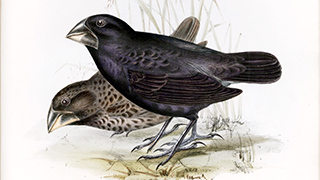
Weird Science
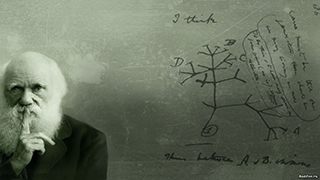
Treating Disease with Fecal Transplantation
Fossils of miniature humans (hobbits) discovered in Indonesia
Paleontology
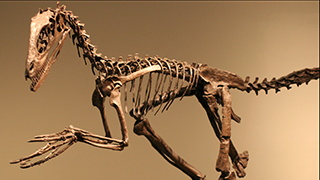
Dinosaur tail, complete with feathers, found preserved in amber.
Astronomy
Mysterious fast radio burst (FRB) detected in the distant universe.
Big Data & Informatics

Big Data: Buzzword or Big Deal?
Hacking the genome: Identifying anonymized human subjects using publicly available data.